Central Laboratory, Second Hospital, Jilin University, Changchun 130041, China.
Shenzhen Center for Chronic Disease Control, Shenzhen 518020, China.
Sci Rep. 2017 Apr 4;7:45827. doi: 10.1038/srep45827.
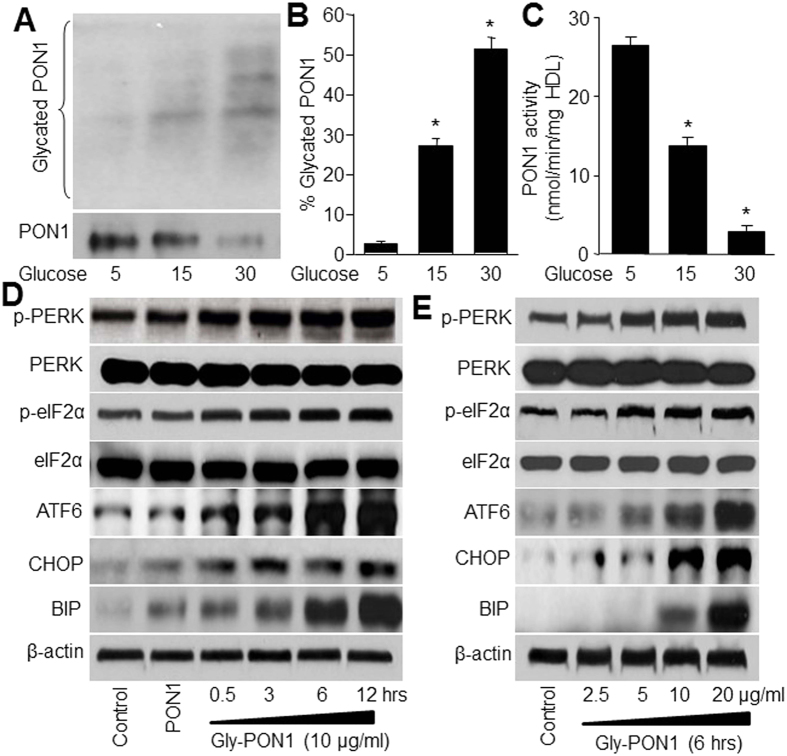
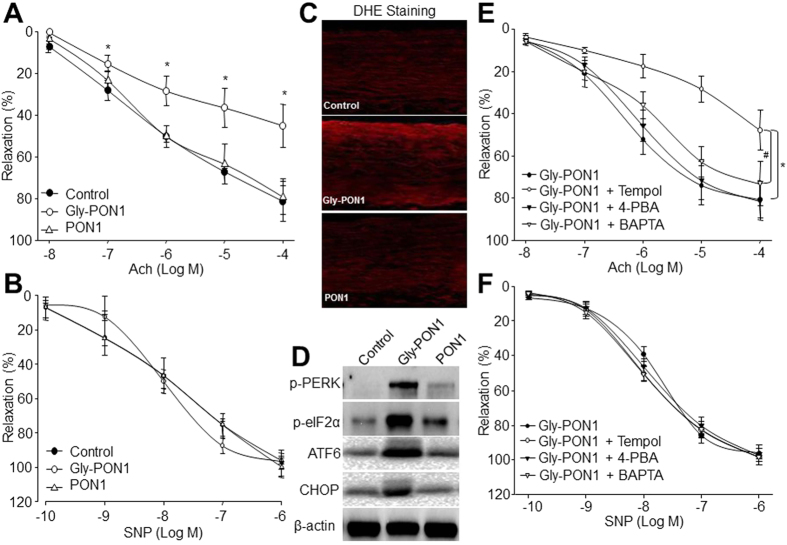
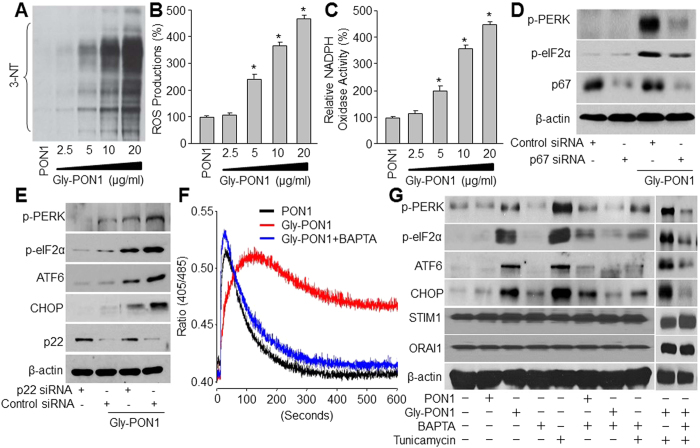
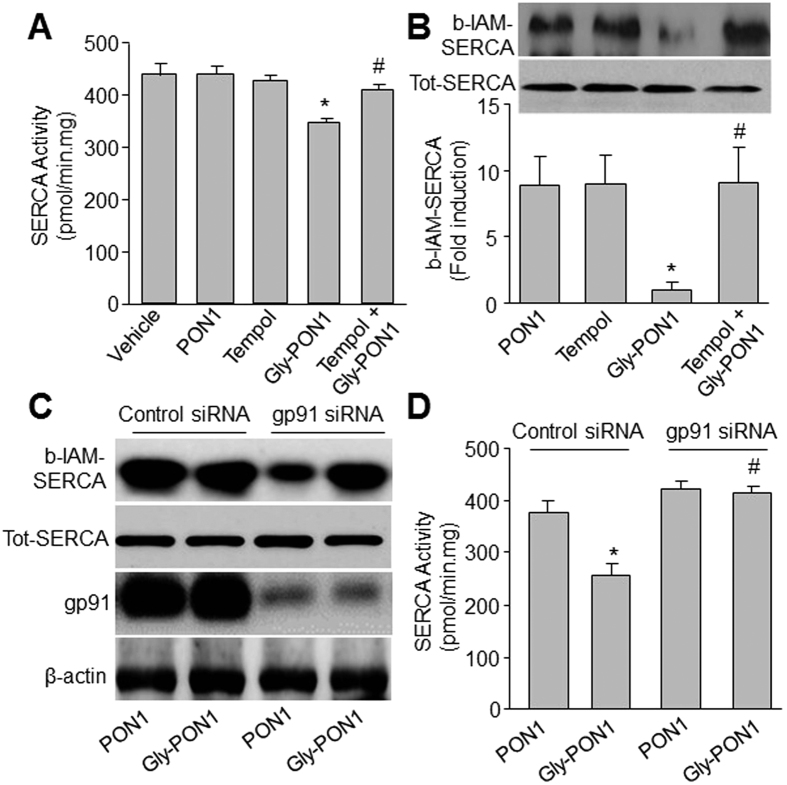
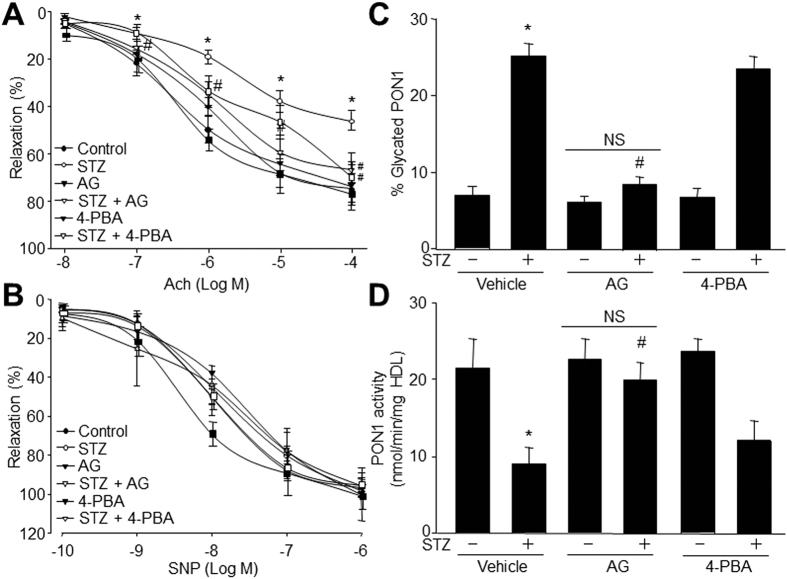
High-density lipoprotein (HDL) modulates low-density lipoprotein and cell membrane oxidation through the action of paraoxonase-1 (PON1). Endoplasmic reticulum (ER) stress has been linked to a wide range of human pathologies including diabetes, obesity, and atherosclerosis. Previous studies have reported that PON1 is glycated in diabetes. The aim of this study is to investigate whether and how PON1 glycation contributes to endothelial dysfunction in diabetes. ER stress markers were monitored by western blot. Endothelial function was determined by organ bath. Incubation of recombinant PON1 proteins with high glucose increased PON1 glycation and reduced PON1 activity. Exposure of HUVECs to glycated PON1 induced prolonged ER stress and reduced SERCA activity, which were abolished by tempol, apocynin, BAPTA, and p67 and p22 siRNAs. Chronic administration of amino guanidine or 4-PBA prevented endothelial dysfunction in STZ-injected rats. Importantly, injection of glycated PON1 but not native PON1 induced aberrant ER stress and endothelial dysfunction in rats, which were attenuated by tempol, BAPTA, and 4-PBA. In conclusion, glycation of PON1 by hyperglycemia induces endothelial dysfunction through ER stress. In perspectives, PON1 glycation is a novel risk factor of hyperglycemia-induced endothelial dysfunction. Therefore, inhibition of oxidative stress, chelating intracellular Ca, and ER chaperone would be considered to reduce vascular complications in diabetes.
高密度脂蛋白(HDL)通过对氧磷酶-1(PON1)的作用调节低密度脂蛋白和细胞膜的氧化。内质网(ER)应激与包括糖尿病、肥胖症和动脉粥样硬化在内的多种人类病理有关。先前的研究报告称 PON1 在糖尿病中发生糖基化。本研究旨在探讨 PON1 糖基化是否以及如何导致糖尿病中的内皮功能障碍。通过 Western blot 监测 ER 应激标志物。通过器官浴确定内皮功能。重组 PON1 蛋白与高葡萄糖孵育会增加 PON1 糖基化并降低 PON1 活性。将糖基化的 PON1 暴露于 HUVECs 中会引起持续的 ER 应激和 SERCA 活性降低,而这些反应可以被 tempol、apocynin、BAPTA 和 p67 和 p22 siRNAs 所消除。STZ 注射大鼠中慢性给予氨基胍或 4-PBA 可预防内皮功能障碍。重要的是,糖基化的 PON1 而非天然 PON1 注射会引起大鼠异常的 ER 应激和内皮功能障碍,而这些反应可以被 tempol、BAPTA 和 4-PBA 所减弱。总之,高血糖引起的 PON1 糖基化通过 ER 应激引起内皮功能障碍。从观点来看,PON1 糖基化是高血糖诱导的内皮功能障碍的一个新的危险因素。因此,抑制氧化应激、螯合细胞内 Ca 和 ER 伴侣蛋白将被认为可减少糖尿病中的血管并发症。