Chen Peijuan, Lei Ling, Wang Jian, Zou Xuejing, Zhang Dongyan, Deng Ling, Wu Dehua
Department of Radiation Oncology, Nanfang Hospital, Southern Medical University, Guangzhou, China.
Hepatology Unit and Department of Infectious Diseases, Nanfang Hospital, Southern Medical University, Guangzhou, China.
Cancer Sci. 2017 Jun;108(6):1157-1168. doi: 10.1111/cas.13247. Epub 2017 Jun 13.
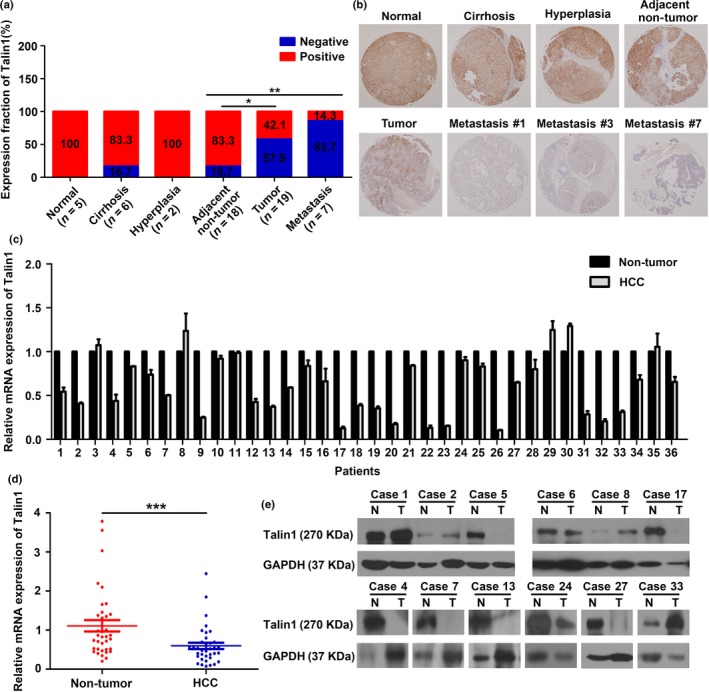
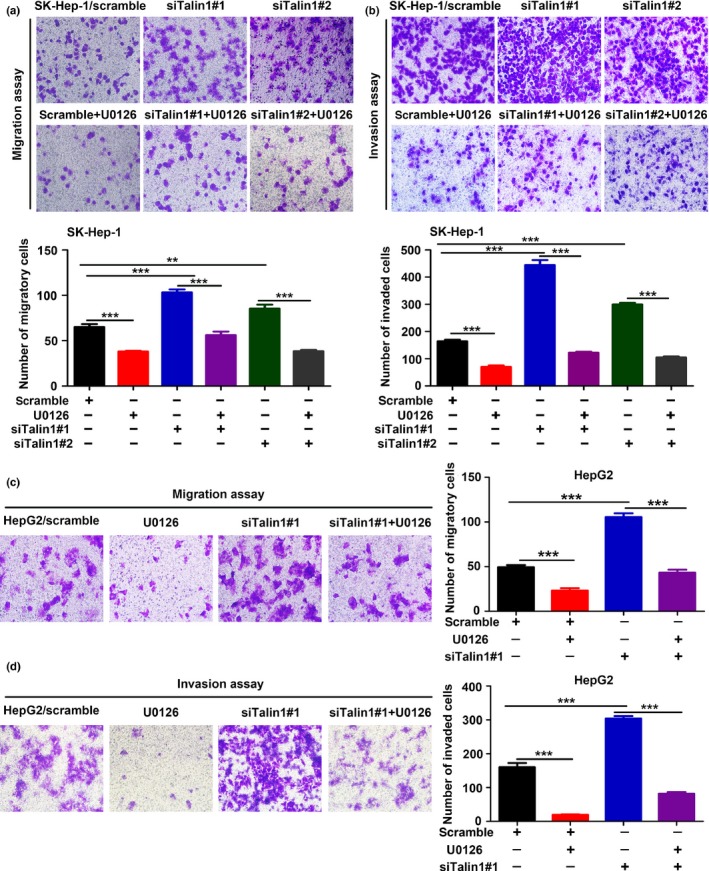
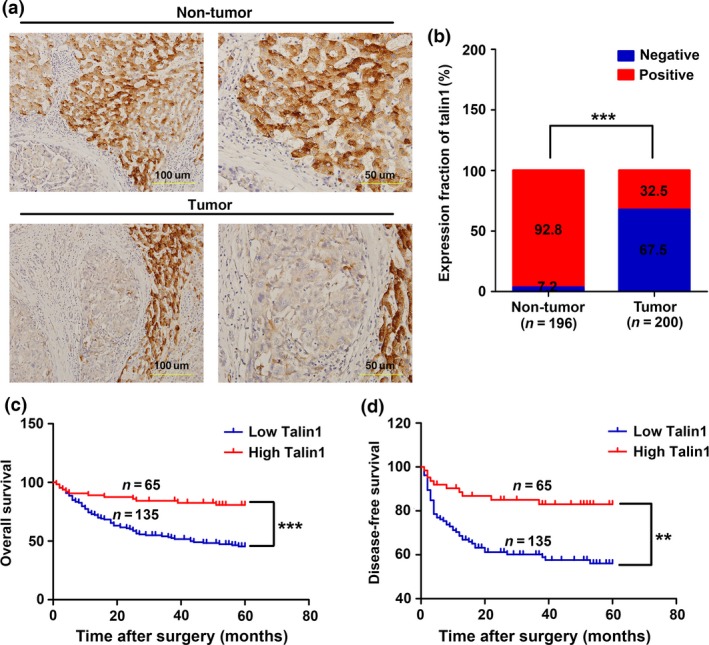
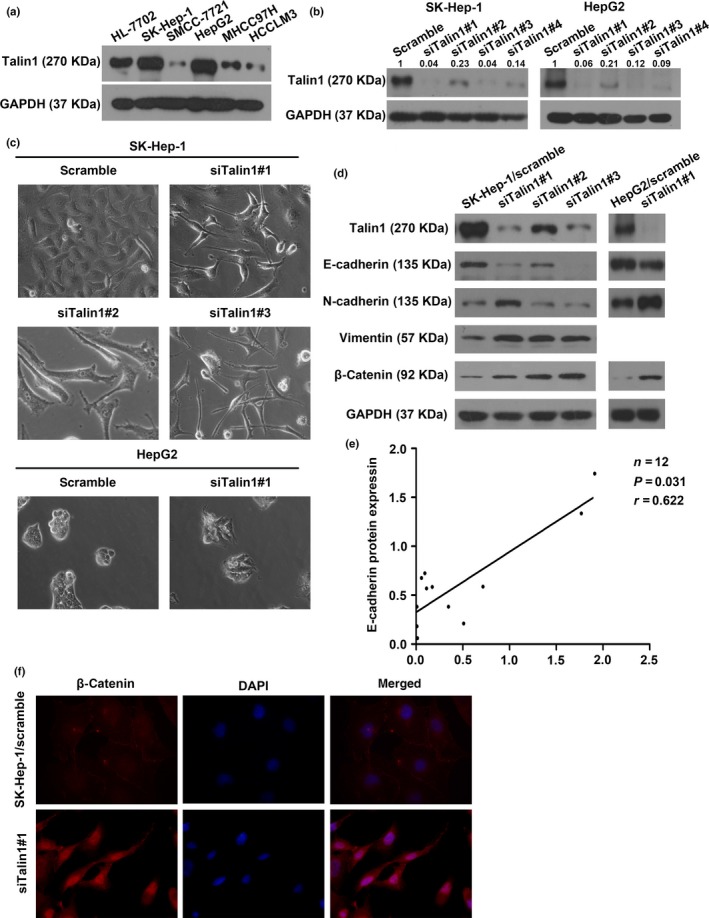
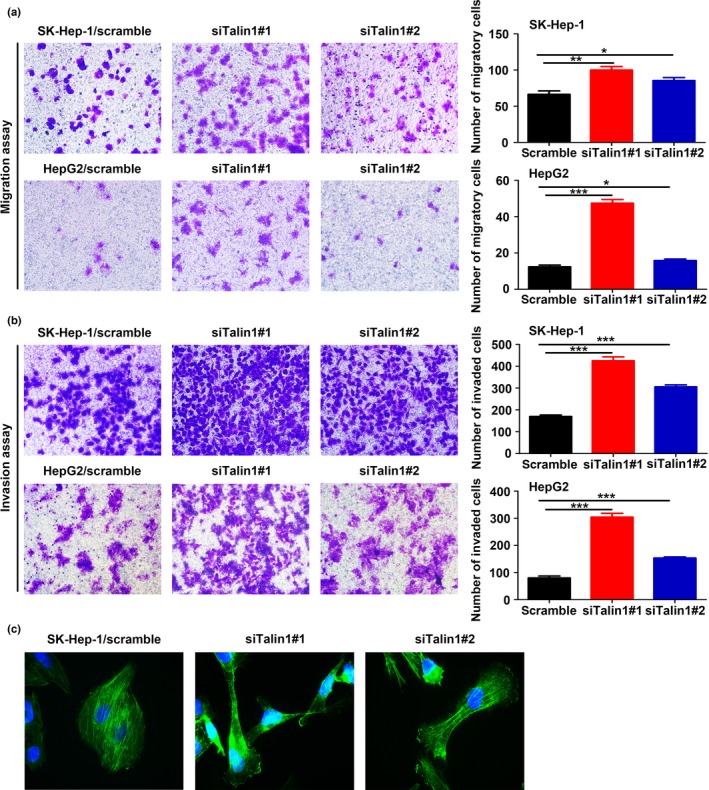
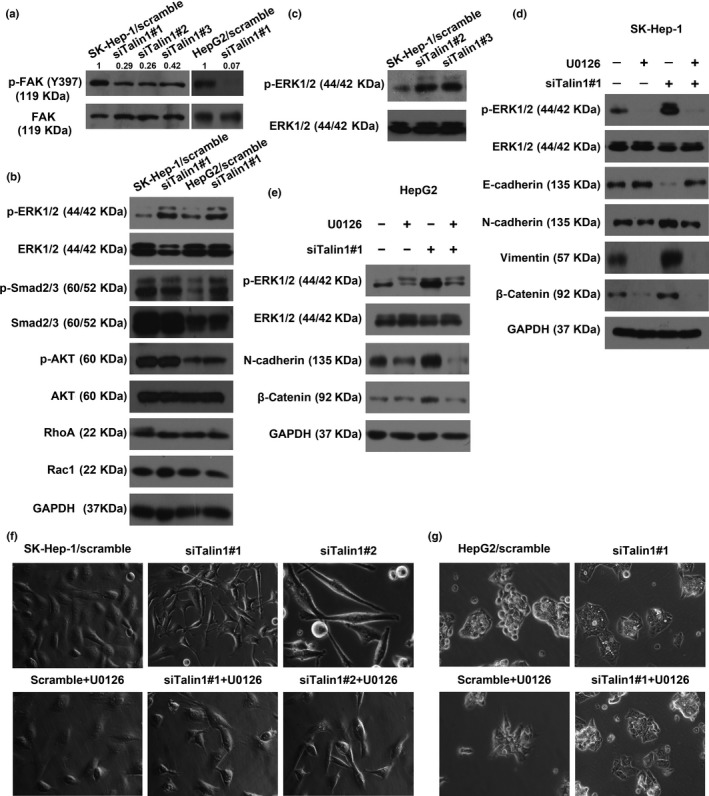
Talin1 is an adaptor protein that conjugates integrins to the cytoskeleton and regulates integrins and focal adhesion signaling. Several studies have found that Talin1 is overexpressed in several tumor types and promotes tumor progression. However, the explicit role of Talin1 in hepatocellular carcinoma (HCC) progression is still unclear and its functional mechanism remains largely unknown. In this study, we showed a trend of gradually decreasing expression of Talin1 from normal liver tissues to hepatocirrhosis, liver hyperplasia, the corresponding adjacent non-tumor, primary HCC, and eventually metastatic foci, indicating that Talin1 may correlate with HCC initiation to progression. Talin1 was significantly downregulated in HCC tissues compared with adjacent non-tumor tissues and low Talin1 expression was associated with HCC progression and poor prognosis. Furthermore, Talin1 knockdown induced epithelial-mesenchymal transition and promoted migration and invasion in SK-Hep-1 cells and HepG2 cells. Mechanistically, we found that the ERK pathway was responsible for these promoting effects of Talin1 knockdown in HCC cells. The promoting effects of Talin1 knockdown on epithelial-mesenchymal transition, migration, and invasion were reversed by U0126, a specific ERK1/2 inhibitor. Taken together, our results suggested that Talin1 might serve as a tumor suppressor in HCC and a potential prognostic biomarker for HCC patients.
踝蛋白1是一种衔接蛋白,可将整合素与细胞骨架结合,并调节整合素和粘着斑信号传导。多项研究发现,踝蛋白1在多种肿瘤类型中过表达,并促进肿瘤进展。然而,踝蛋白1在肝细胞癌(HCC)进展中的明确作用仍不清楚,其功能机制也 largely unknown。在本研究中,我们发现从正常肝组织到肝硬化、肝增生、相应的相邻非肿瘤组织、原发性HCC,最终到转移灶,踝蛋白1的表达呈逐渐下降趋势,表明踝蛋白1可能与HCC从起始到进展相关。与相邻非肿瘤组织相比,HCC组织中踝蛋白1显著下调,踝蛋白1低表达与HCC进展和不良预后相关。此外,敲低踝蛋白1可诱导SK-Hep-1细胞和HepG2细胞发生上皮-间质转化,并促进其迁移和侵袭。机制上,我们发现ERK通路负责敲低踝蛋白1对HCC细胞的这些促进作用。特异性ERK1/2抑制剂U0126可逆转敲低踝蛋白1对上皮-间质转化、迁移和侵袭的促进作用。综上所述,我们的结果表明,踝蛋白1可能作为HCC的肿瘤抑制因子以及HCC患者潜在的预后生物标志物。