Xu Hui, Sun Mingzhu, Zhao Xin
Institute of Robotics and Automatic Information System, Nankai University, Tianjin, China.
Tianjin Key Laboratory of Intelligent Robotics, Nankai University, Tianjin, China.
PLoS One. 2017 Apr 4;12(4):e0174946. doi: 10.1371/journal.pone.0174946. eCollection 2017.
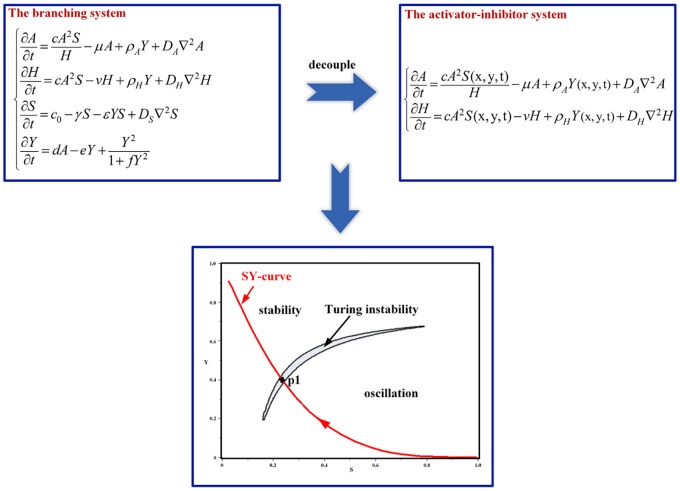
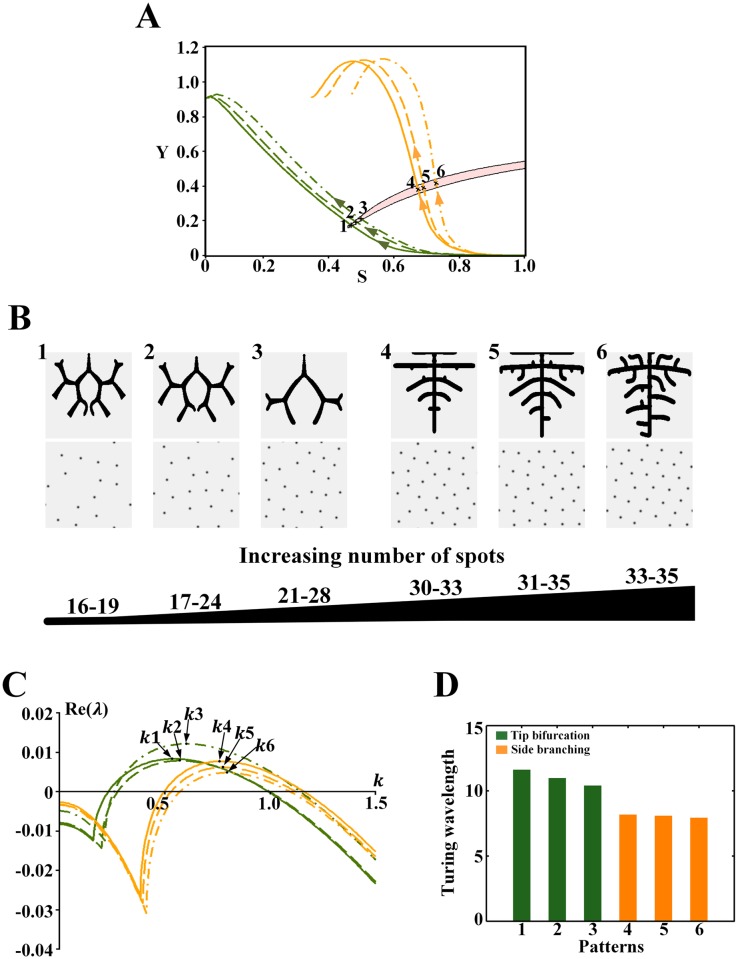
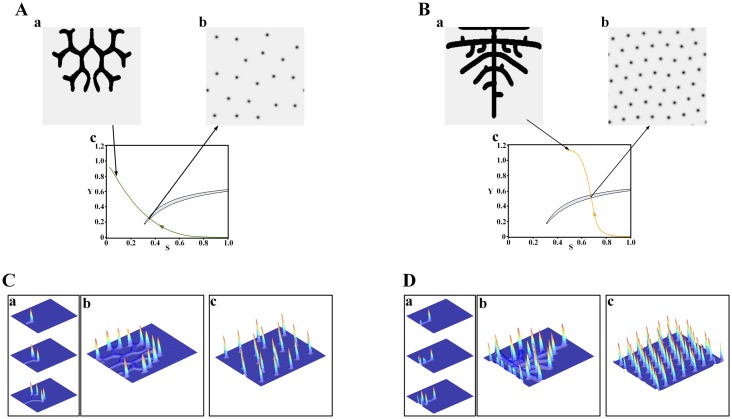
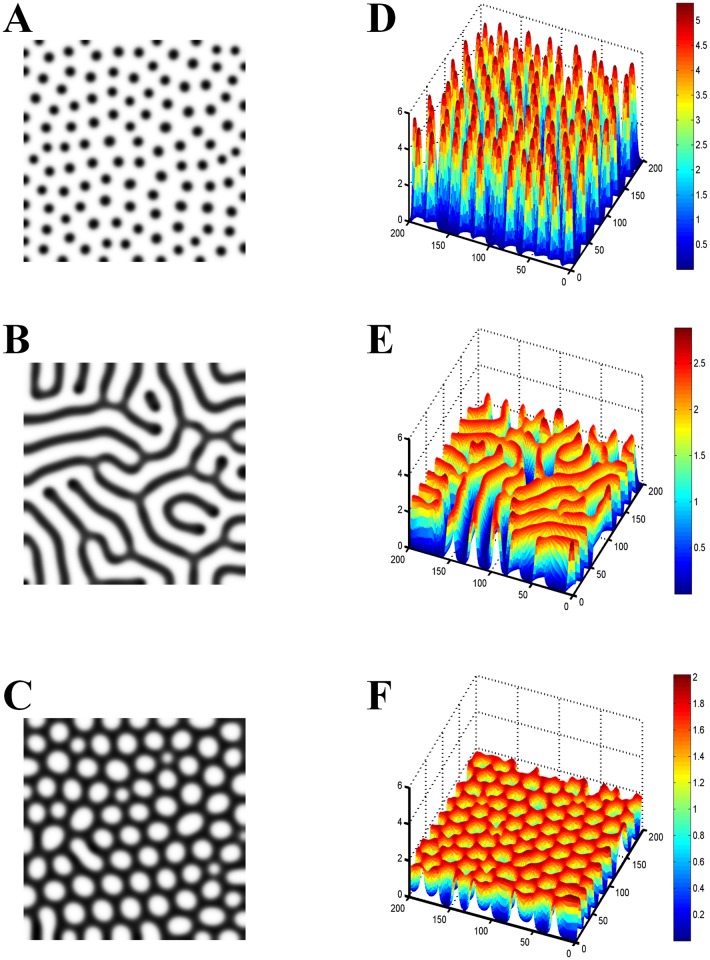
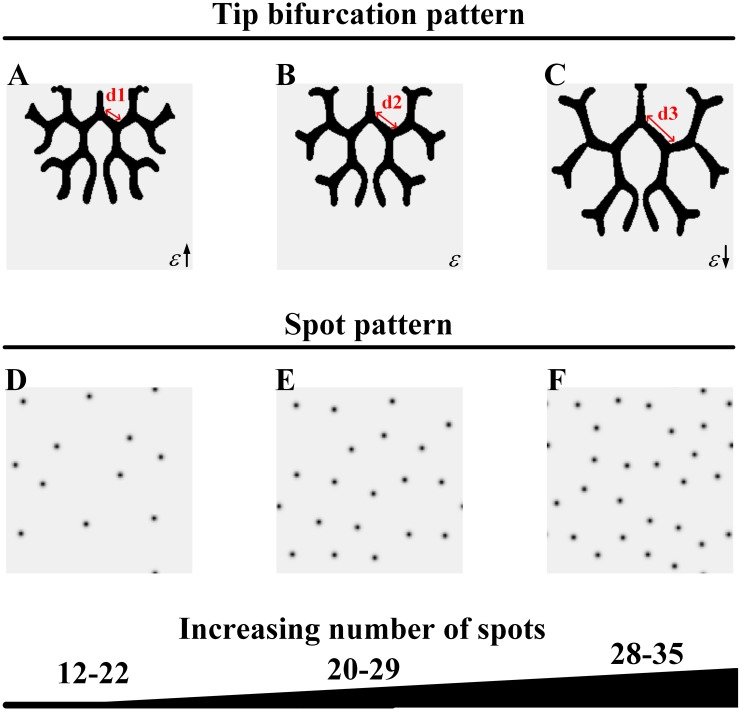
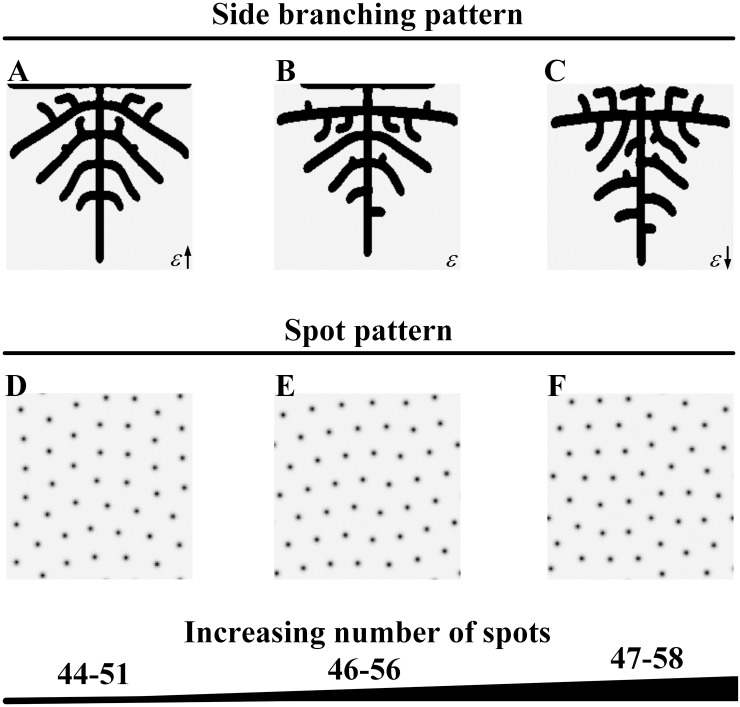
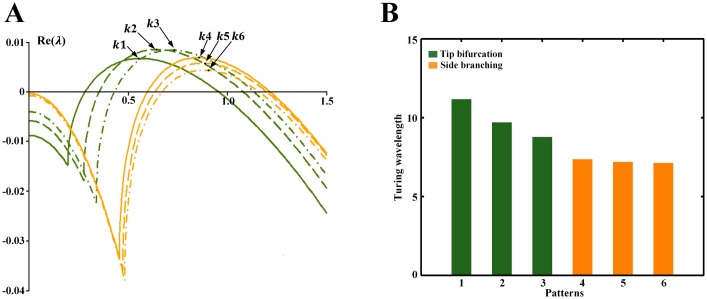
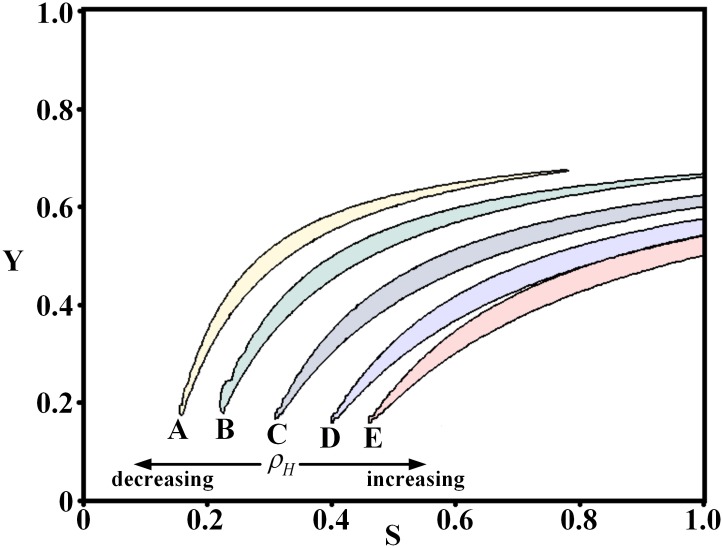
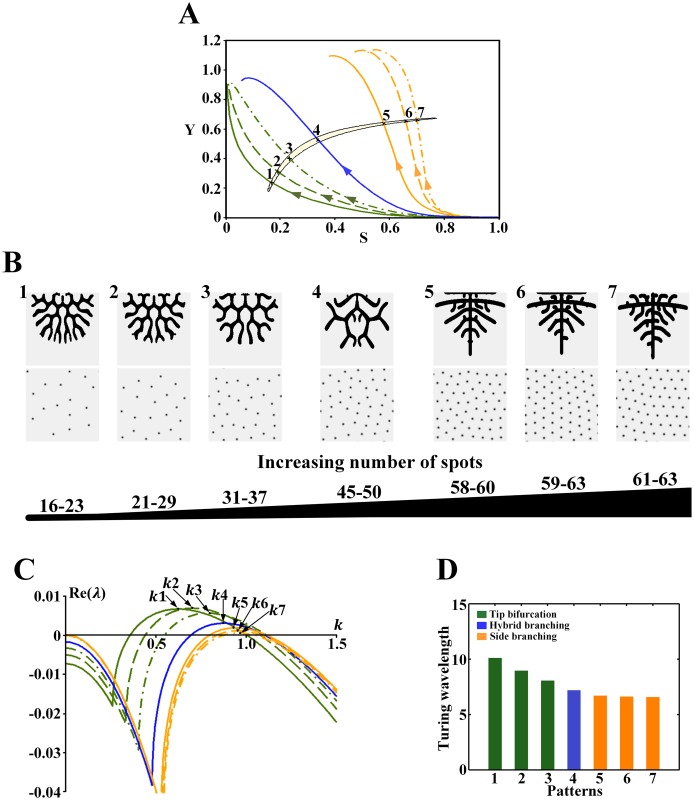
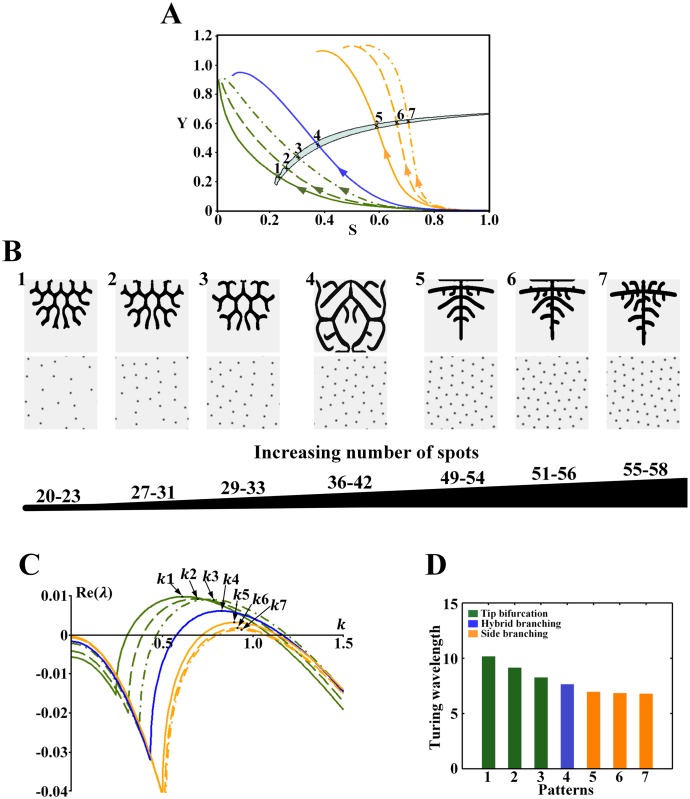
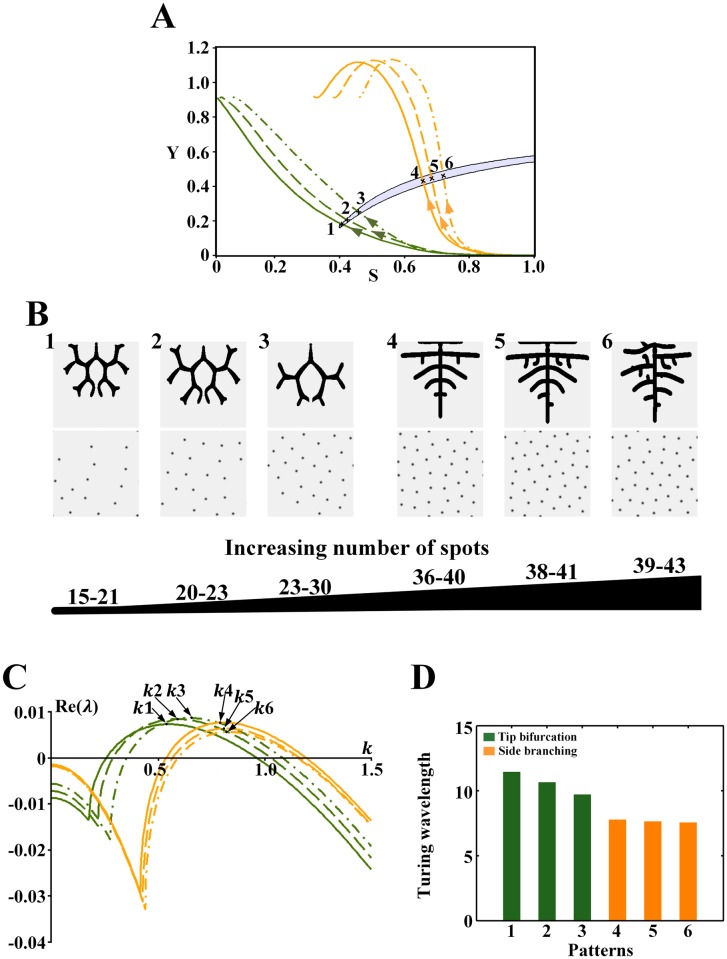
The mammalian lung develops through branching morphogenesis. Two primary forms of branching, which occur in order, in the lung have been identified: tip bifurcation and side branching. However, the mechanisms of lung branching morphogenesis remain to be explored. In our previous study, a biological mechanism was presented for lung branching pattern formation through a branching model. Here, we provide a mathematical mechanism underlying the branching patterns. By decoupling the branching model, we demonstrated the existence of Turing instability. We performed Turing instability analysis to reveal the mathematical mechanism of the branching patterns. Our simulation results show that the Turing patterns underlying the branching patterns are spot patterns that exhibit high local morphogen concentration. The high local morphogen concentration induces the growth of branching. Furthermore, we found that the sparse spot patterns underlie the tip bifurcation patterns, while the dense spot patterns underlies the side branching patterns. The dispersion relation analysis shows that the Turing wavelength affects the branching structure. As the wavelength decreases, the spot patterns change from sparse to dense, the rate of tip bifurcation decreases and side branching eventually occurs instead. In the process of transformation, there may exists hybrid branching that mixes tip bifurcation and side branching. Since experimental studies have reported that branching mode switching from side branching to tip bifurcation in the lung is under genetic control, our simulation results suggest that genes control the switch of the branching mode by regulating the Turing wavelength. Our results provide a novel insight into and understanding of the formation of branching patterns in the lung and other biological systems.
哺乳动物的肺通过分支形态发生发育而成。在肺中已确定有两种依次发生的主要分支形式:顶端分叉和侧支分支。然而,肺分支形态发生的机制仍有待探索。在我们之前的研究中,通过一个分支模型提出了一种肺分支模式形成的生物学机制。在此,我们提供了分支模式背后的数学机制。通过对分支模型进行解耦,我们证明了图灵不稳定性的存在。我们进行图灵不稳定性分析以揭示分支模式的数学机制。我们的模拟结果表明,分支模式背后的图灵模式是呈现高局部形态发生素浓度的斑点模式。高局部形态发生素浓度诱导分支生长。此外,我们发现稀疏斑点模式是顶端分叉模式的基础,而密集斑点模式是侧支分支模式的基础。色散关系分析表明,图灵波长影响分支结构。随着波长减小,斑点模式从稀疏变为密集,顶端分叉速率降低,最终发生侧支分支。在转变过程中,可能存在混合顶端分叉和侧支分支的混合分支。由于实验研究报道肺中分支模式从侧支分支转变为顶端分叉受基因控制,我们的模拟结果表明基因通过调节图灵波长来控制分支模式的转变。我们的结果为肺及其他生物系统中分支模式的形成提供了新的见解和理解。