Yang Wan, Wen Liang, Li Shen-Long, Chen Kai, Zhang Wen-Yi, Shaman Jeffrey
Department of Environmental Health Sciences, Mailman School of Public Health, Columbia University, New York, New York, United States.
Institute of Disease Control and Prevention, Academy of Military Medical Sciences, Beijing, P.R. China.
PLoS Comput Biol. 2017 Apr 4;13(4):e1005474. doi: 10.1371/journal.pcbi.1005474. eCollection 2017 Apr.
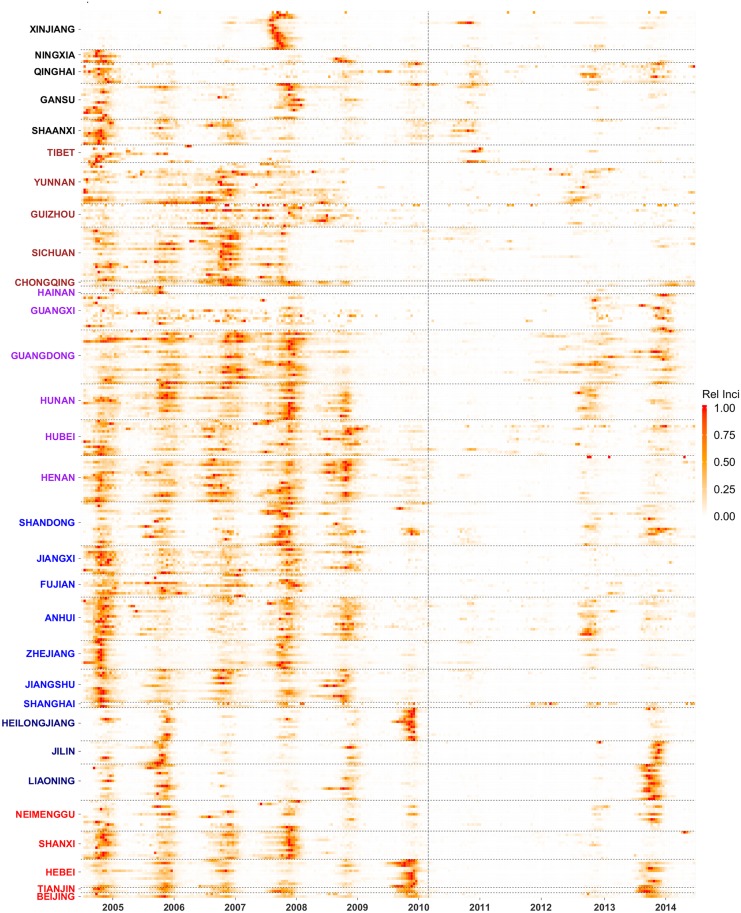
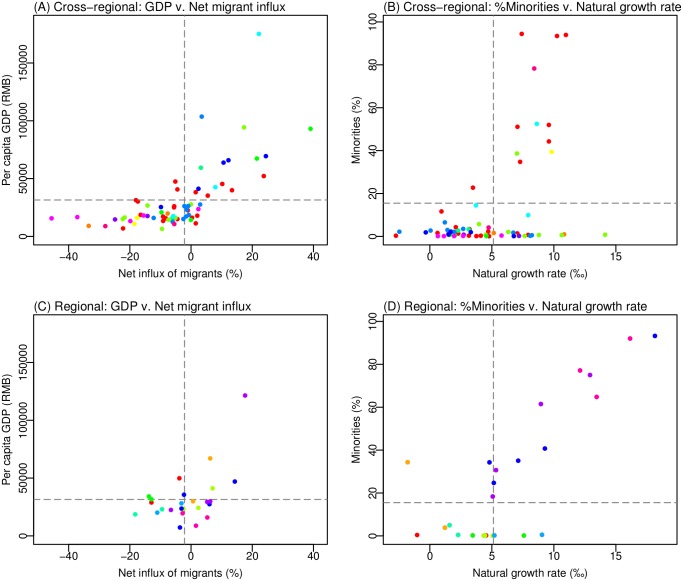
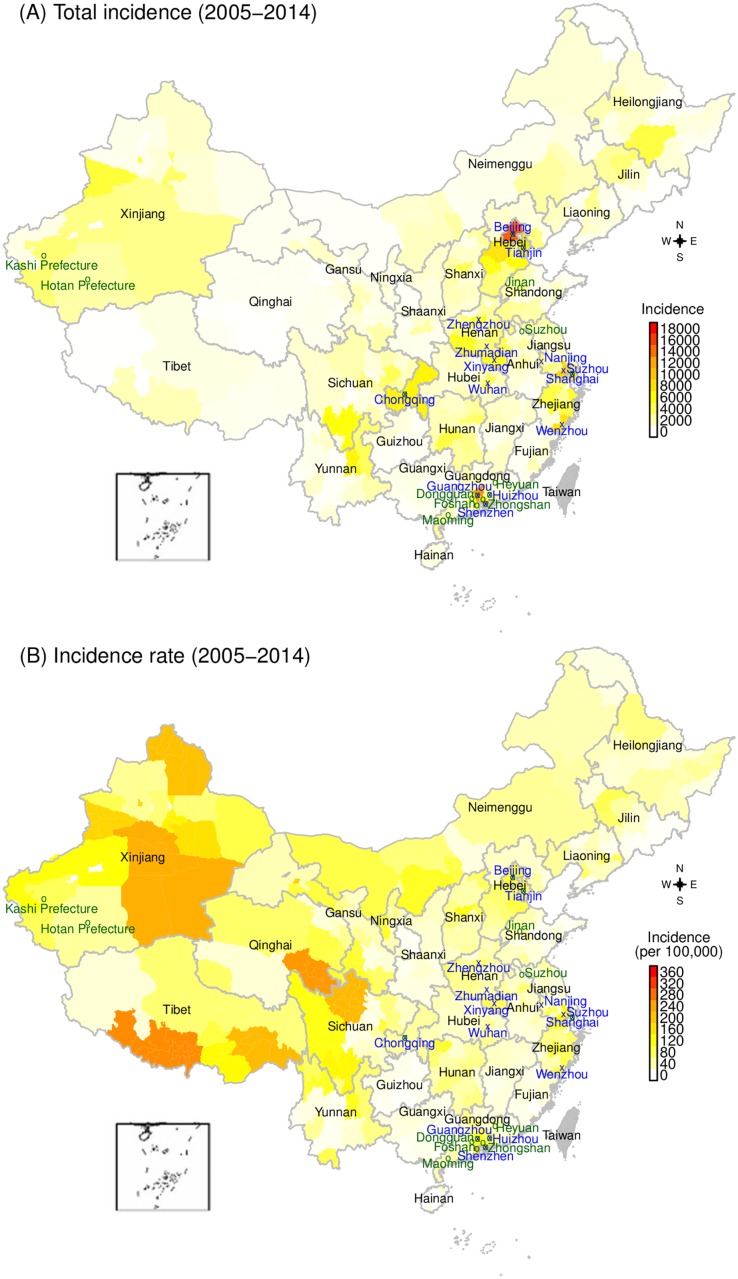
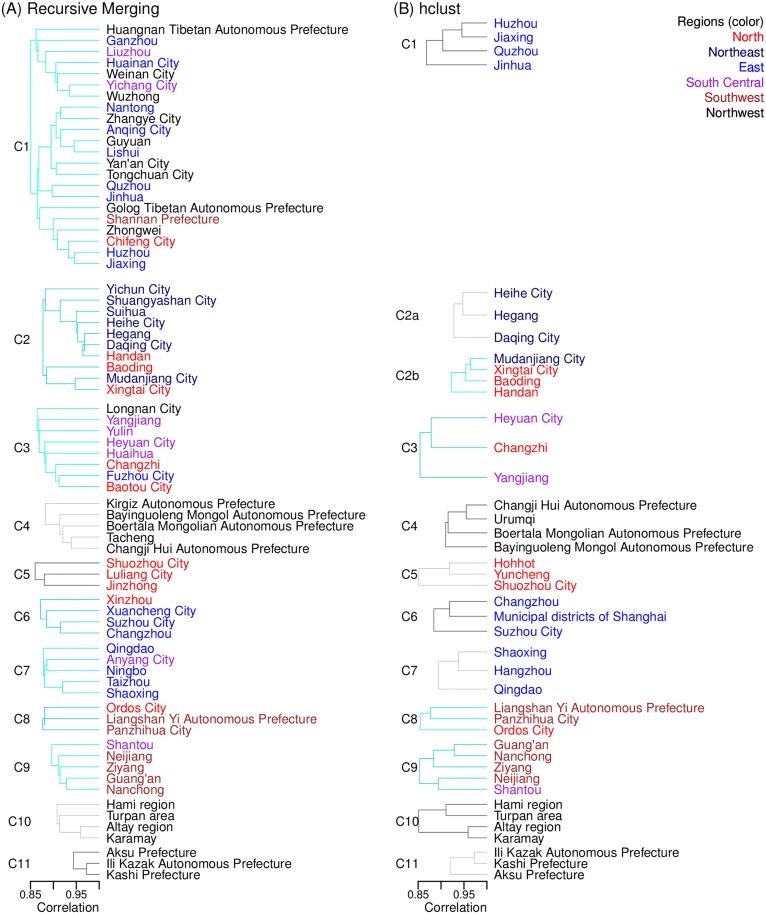
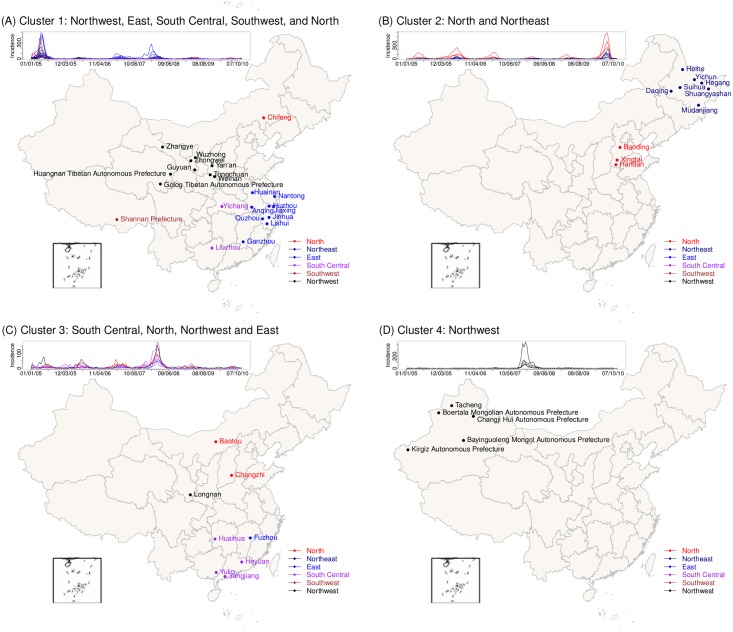
Measles is a highly contagious and severe disease. Despite mass vaccination, it remains a leading cause of death in children in developing regions, killing 114,900 globally in 2014. In 2006, China committed to eliminating measles by 2012; to this end, the country enhanced its mandatory vaccination programs and achieved vaccination rates reported above 95% by 2008. However, in spite of these efforts, during the last 3 years (2013-2015) China documented 27,695, 52,656, and 42,874 confirmed measles cases. How measles manages to spread in China-the world's largest population-in the mass vaccination era remains poorly understood. To address this conundrum and provide insights for future public health efforts, we analyze the geospatial pattern of measles transmission across China during 2005-2014. We map measles incidence and incidence rates for each of the 344 cities in mainland China, identify the key socioeconomic and demographic features associated with high disease burden, and identify transmission clusters based on the synchrony of outbreak cycles. Using hierarchical cluster analysis, we identify 21 epidemic clusters, of which 12 were cross-regional. The cross-regional clusters included more underdeveloped cities with large numbers of emigrants than would be expected by chance (p = 0.011; bootstrap sampling), indicating that cities in these clusters were likely linked by internal worker migration in response to uneven economic development. In contrast, cities in regional clusters were more likely to have high rates of minorities and high natural growth rates than would be expected by chance (p = 0.074; bootstrap sampling). Our findings suggest that multiple highly connected foci of measles transmission coexist in China and that migrant workers likely facilitate the transmission of measles across regions. This complex connection renders eradication of measles challenging in China despite its high overall vaccination coverage. Future immunization programs should therefore target these transmission foci simultaneously.
麻疹是一种传染性极强的严重疾病。尽管进行了大规模疫苗接种,但它仍是发展中地区儿童死亡的主要原因,2014年全球有114,900人死于麻疹。2006年,中国承诺到2012年消除麻疹;为此,该国加强了强制疫苗接种计划,并在2008年实现了报告的疫苗接种率超过95%。然而,尽管做出了这些努力,在过去3年(2013 - 2015年)中国记录的确诊麻疹病例分别为27,695例、52,656例和42,874例。在大规模疫苗接种时代,麻疹如何在中国这个世界上人口最多的国家传播,目前仍知之甚少。为了解决这一难题并为未来的公共卫生工作提供见解,我们分析了2005 - 2014年期间中国麻疹传播的地理空间模式。我们绘制了中国大陆344个城市中每个城市的麻疹发病率和发病率,确定与高疾病负担相关的关键社会经济和人口特征,并根据疫情周期的同步性确定传播集群。使用层次聚类分析,我们识别出21个疫情集群,其中12个是跨区域的。跨区域集群中欠发达城市和移民数量比预期的随机情况更多(p = 0.011;自助抽样),这表明这些集群中的城市可能因经济发展不平衡导致的内部劳动力迁移而相互关联。相比之下,区域集群中的城市少数民族比例高和自然增长率高的可能性比预期的随机情况更大(p = 0.074;自助抽样)。我们的研究结果表明,中国存在多个高度相连的麻疹传播焦点,农民工可能促进了麻疹在不同地区的传播。这种复杂的联系使得尽管中国总体疫苗接种覆盖率很高,但消除麻疹仍具有挑战性。因此,未来的免疫计划应同时针对这些传播焦点。