Leger Kasey J, Leonard David, Nielson Danelle, de Lemos James A, Mammen Pradeep P A, Winick Naomi J
Department of Pediatrics, Seattle Children's Hospital, University of Washington School of Medicine, Seattle, WA
Department of Clinical Research, Children's Medical Center, Dallas, TX.
J Am Heart Assoc. 2017 Apr 4;6(4):e004653. doi: 10.1161/JAHA.116.004653.
Biomarkers for early detection of anthracycline (AC)-induced cardiotoxicity may allow cardioprotective intervention before irreversible damage. Circulating microRNAs (miRNAs) are promising biomarkers of cardiovascular disease, however, have not been studied in the setting of AC-induced cardiotoxicity. This study aimed to identify AC-induced alterations in plasma miRNA expression in children and correlate expression with markers of cardiac injury.
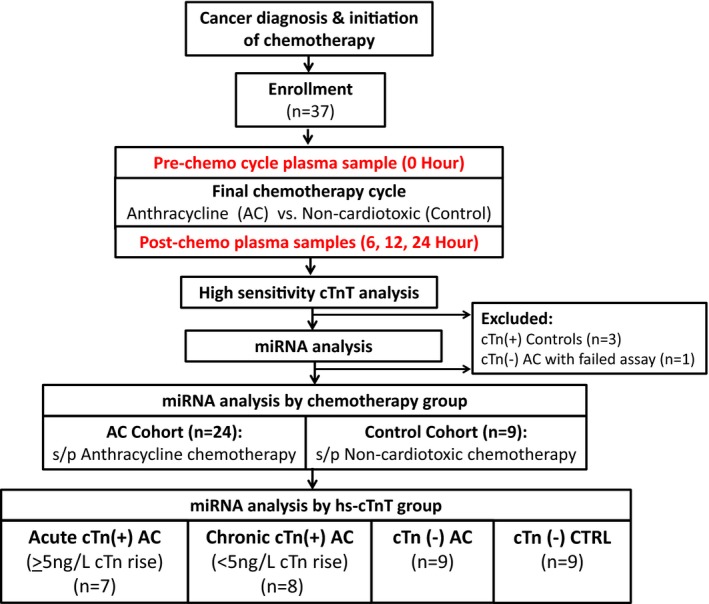
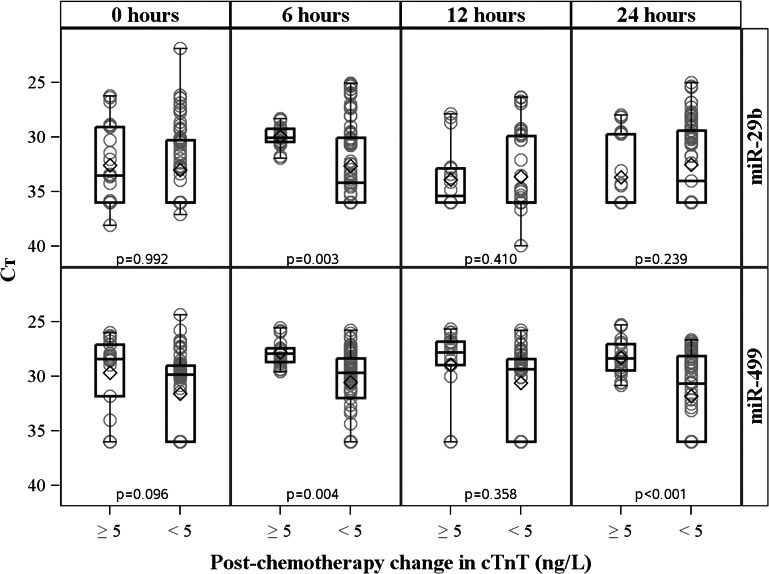
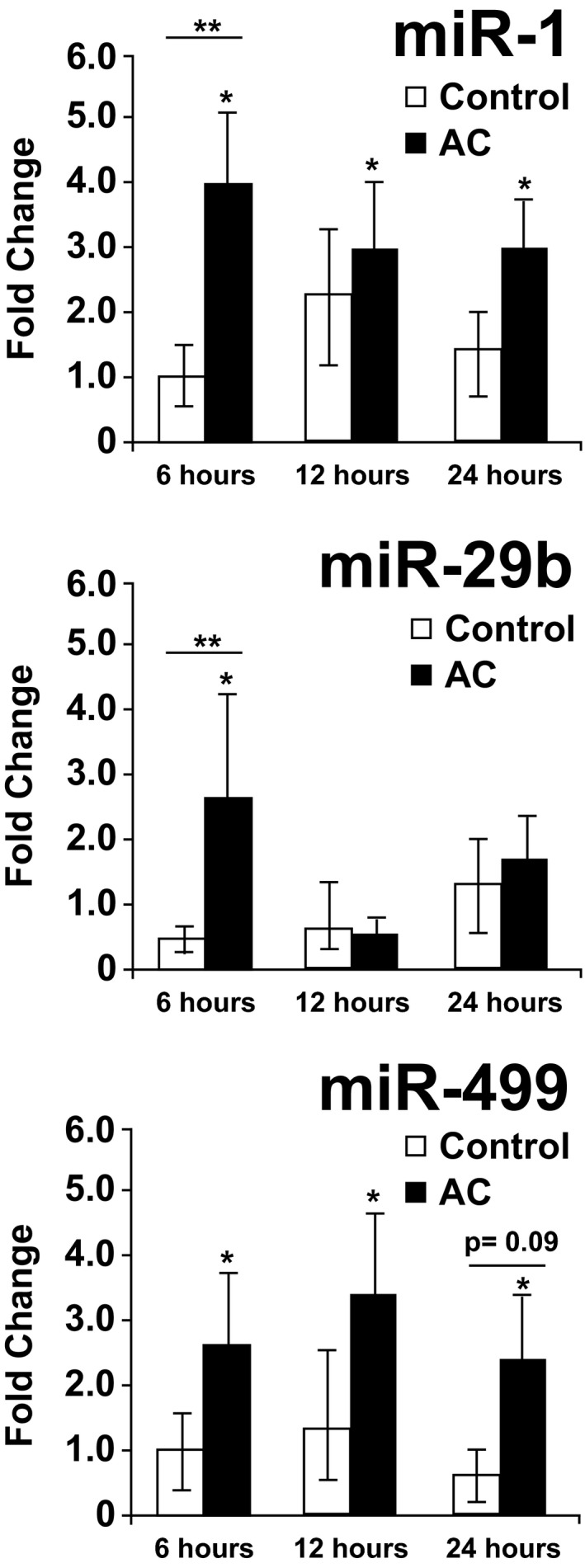
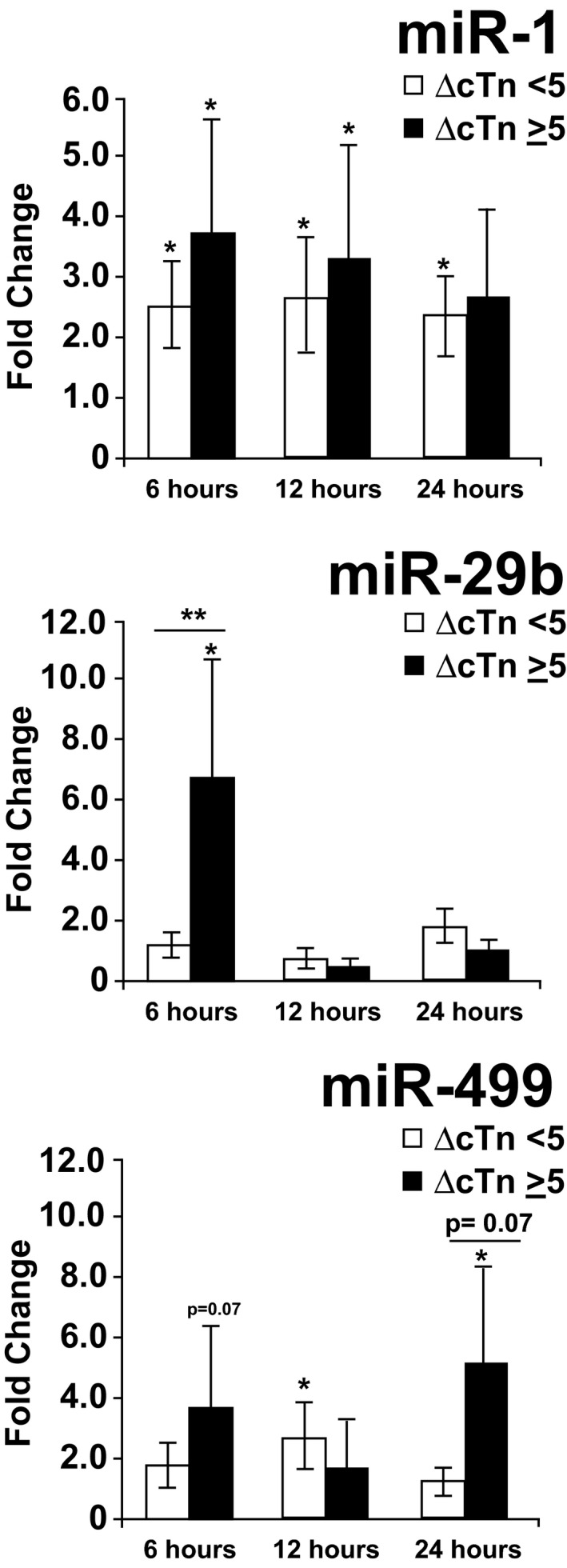
Candidate plasma profiling of 24 miRNAs was performed in 33 children before and after a cycle of AC (n=24) or noncardiotoxic chemotherapy (n=9). Relative miRNA changes between the pre- and postcycle time points (6, 12, and 24 hours) were determined within each treatment group and compared across groups. Plasma miRNA expression patterns were further explored with respect to AC dose and high-sensitivity troponin T. Greater chemotherapy-induced dysregulation was observed in this panel of candidate, cardiac-related plasma miRNAs in patients receiving anthracyclines compared with those receiving noncardiotoxic chemotherapy (24-hour MANOVA; =0.024). Specifically, plasma miRs-29b and -499 were upregulated 6 to 24 hours post-AC, and their postchemotherapy expression significantly correlated with AC dose. Patients with acute cardiomyocyte injury (high-sensitivity troponin T increase ≥5 ng/L from baseline) demonstrated higher expression of miR-29b and miR-499 post-AC compared with those without.
In this pilot study, cardiac-related plasma miRNAs are dysregulated following ACs. Plasma miR-29b and -499 are acutely elevated post-AC, with dose response relationships observed with anthracycline dose and markers of cardiac injury. Further evaluation of miRNAs may provide mechanistic insight into AC-induced cardiotoxicity and yield biomarkers to facilitate earlier intervention to mitigate cardiotoxicity.
用于早期检测蒽环类药物(AC)所致心脏毒性的生物标志物可能有助于在发生不可逆损伤之前进行心脏保护干预。循环微小RNA(miRNA)是很有前景的心血管疾病生物标志物,然而,尚未在AC所致心脏毒性的背景下进行研究。本研究旨在确定AC诱导的儿童血浆miRNA表达变化,并将表达与心脏损伤标志物相关联。
在33名儿童接受AC治疗周期(n = 24)或非心脏毒性化疗(n = 9)之前和之后,对24种miRNA进行了候选血浆分析。在每个治疗组中确定周期前和周期后时间点(6、12和24小时)之间的相对miRNA变化,并在各组之间进行比较。进一步探讨了血浆miRNA表达模式与AC剂量和高敏肌钙蛋白T的关系。与接受非心脏毒性化疗的患者相比,接受蒽环类药物治疗的患者在这组候选的、与心脏相关的血浆miRNA中观察到更大的化疗诱导的失调(24小时多变量方差分析;P = 0.024)。具体而言,血浆miR-29b和-499在AC治疗后6至24小时上调,其化疗后表达与AC剂量显著相关。与未发生急性心肌细胞损伤的患者相比,发生急性心肌细胞损伤(高敏肌钙蛋白T较基线升高≥5 ng/L)的患者在AC治疗后miR-29b和miR-499的表达更高。
在这项初步研究中,AC治疗后与心脏相关的血浆miRNA失调。血浆miR-29b和-499在AC治疗后急性升高,观察到与蒽环类药物剂量和心脏损伤标志物的剂量反应关系。对miRNA的进一步评估可能为AC所致心脏毒性提供机制性见解,并产生生物标志物以促进早期干预以减轻心脏毒性。