University of Tuebingen, Department of Biology, Auf der Morgenstelle 24, D-70726 Tuebingen, Germany.
Sci Rep. 2017 Apr 5;7:45874. doi: 10.1038/srep45874.
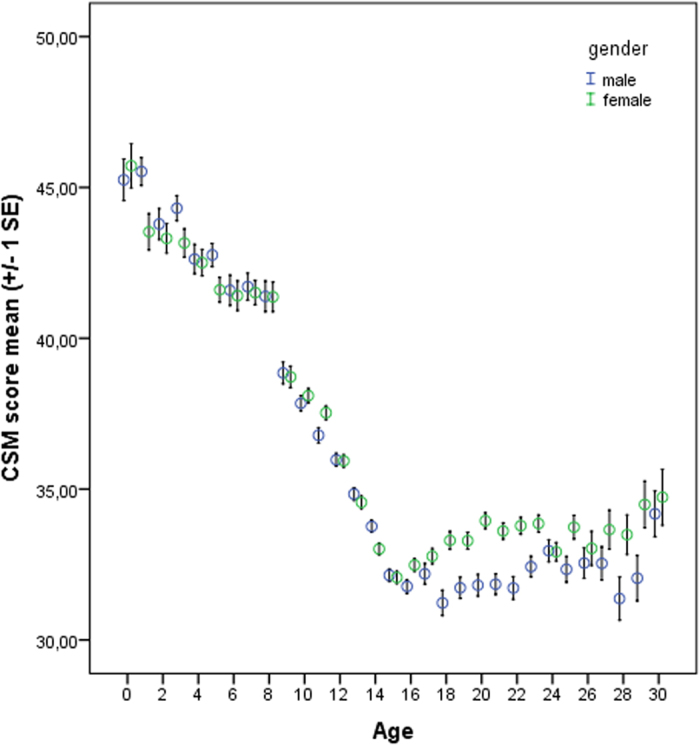
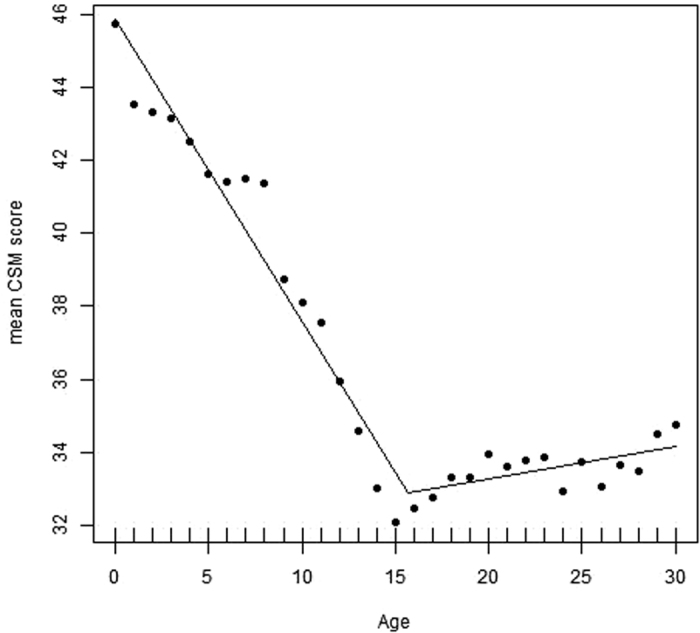
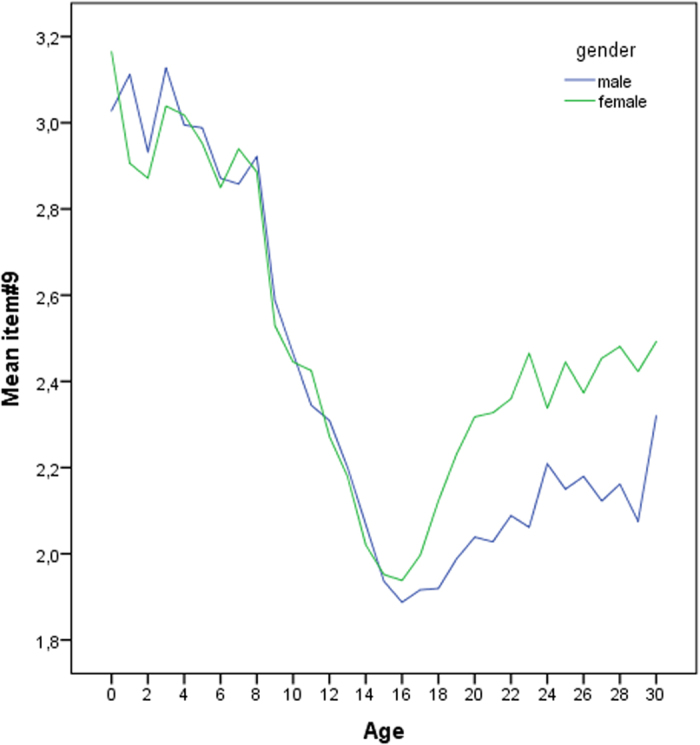
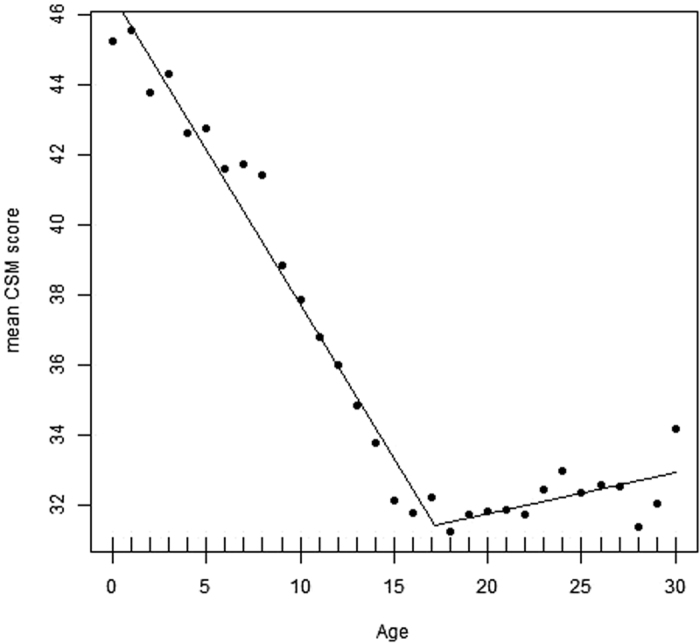
Morningness-eveningness or chronotype changes significantly throughout the life span. This has been reported for the transition during adolescence in some studies, and to a lesser extent in early adulthood. Primary and pre-school children have been under investigation in fewer studies. This is the first comprehensive study covering the age range from very young children until early adulthood (0-30 years) based on the same measurement instrument. Here, we show that the turn towards eveningness starts at an early age in German children. Based on 26,214 cross-sectional data, we further show that at the end of adolescence, morningness-eveningness does not significantly change during early adulthood. Sex differences arise during puberty and remain until 30 years. The breaking point for the turn towards morningness is 15.7 years in girls and 17.2 boys. At the age of 0-1 years, there are about 70% morning types, and about 1% evening types, while at the age of 16 years, only 5% are morning types and 19% are evening types.
在整个生命周期中,早晨型-晚上型或昼夜类型会发生显著变化。一些研究报告称,在青春期期间会发生这种转变,而在成年早期则变化较小。在较少的研究中对小学生和学前儿童进行了调查。这是第一项基于同一测量工具涵盖从幼儿到成年早期(0-30 岁)的年龄范围的综合研究。在这里,我们表明,德国儿童的傍晚型倾向开始于较早的年龄。基于 26214 项横断面数据,我们进一步表明,在青春期结束时,成年早期的早晨型-晚上型变化不明显。性差异在青春期出现,并持续到 30 岁。向早晨型转变的转折点在女孩中为 15.7 岁,在男孩中为 17.2 岁。在 0-1 岁时,大约有 70%的人是早晨型,约有 1%的人是晚上型,而在 16 岁时,只有 5%的人是早晨型,19%的人是晚上型。