College of Biomedical Engineering, South-Central University for Nationalities, Wuhan, 430074, China.
Key Laboratory of Biomedical Information Engineering of Education Ministry, Institute of Biomedical Engineering, Xi'an Jiaotong University, Xi'an 710049, China.
Sci Rep. 2017 Apr 6;7:46088. doi: 10.1038/srep46088.
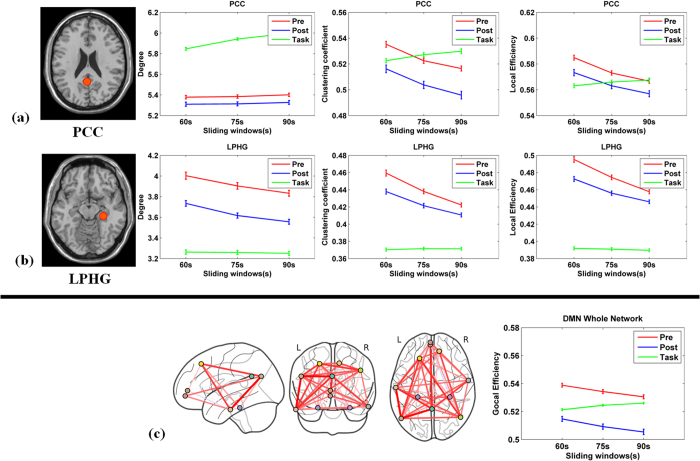
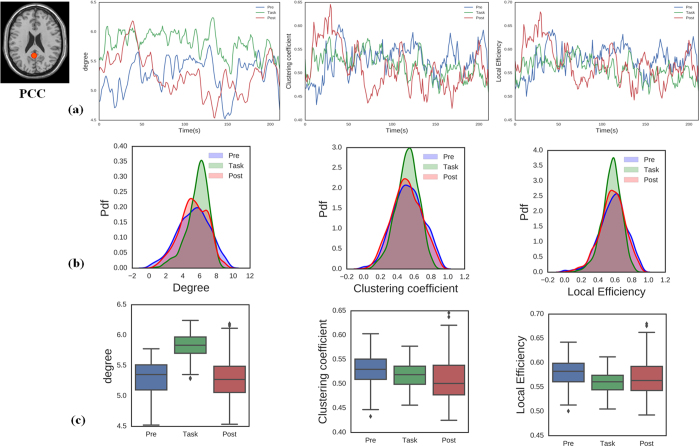
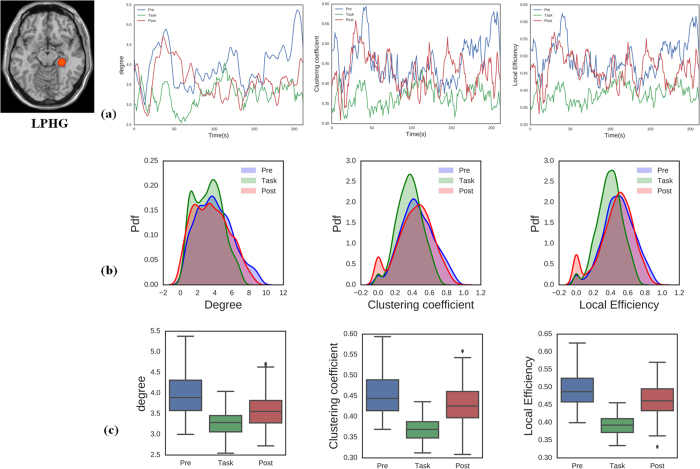
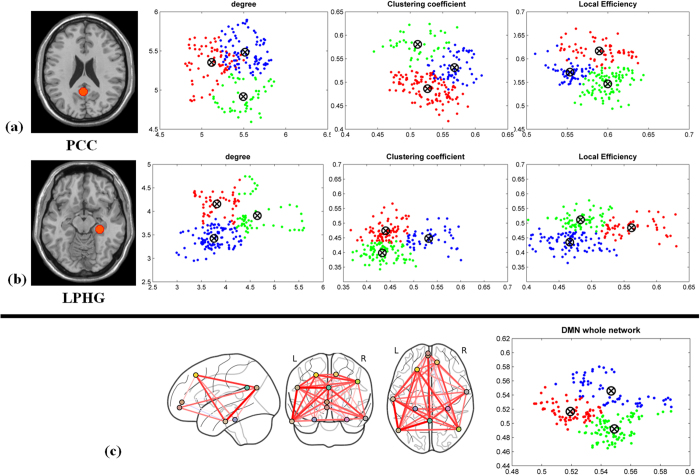
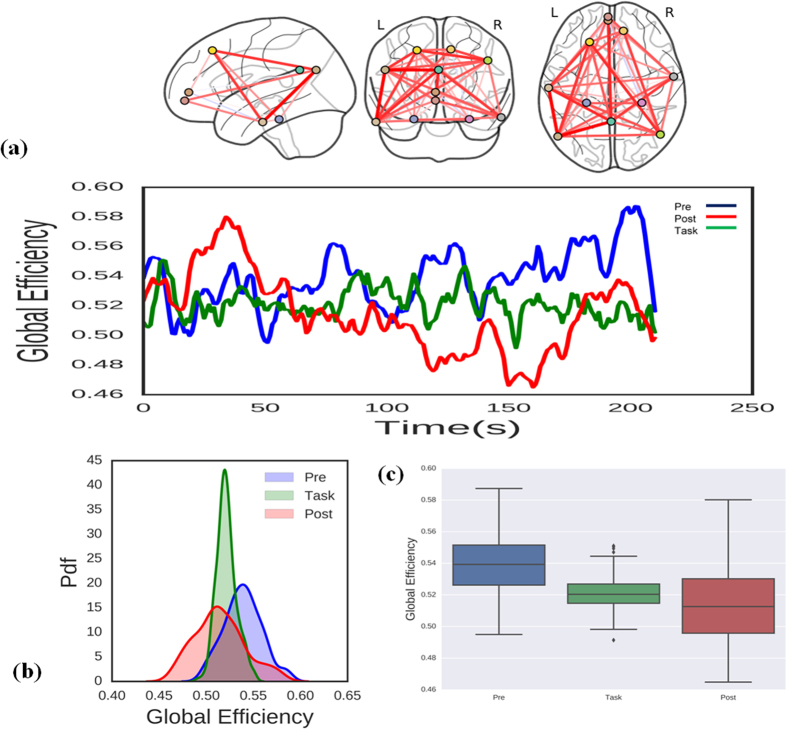
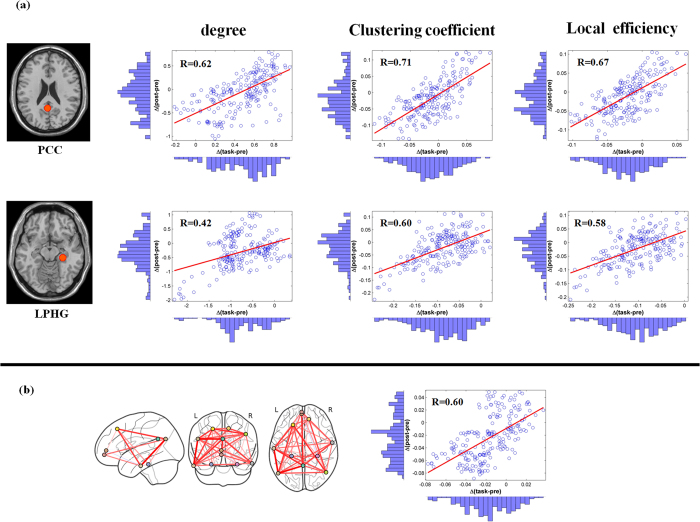
The default mode network (DMN) is a complex dynamic network that is critical for understanding cognitive function. However, whether dynamic topological reconfiguration of the DMN occurs across different brain states, and whether this potential reorganization is associated with prior learning or experience is unclear. To better understand the temporally changing topology of the DMN, we investigated both nodal and global dynamic DMN-topology metrics across different brain states. We found that DMN topology changes over time and those different patterns are associated with different brain states. Further, the nodal and global topological organization can be rebuilt by different brain states. These results indicate that the post-task, resting-state topology of the brain network is dynamically altered as a function of immediately prior cognitive experience, and that these modulated networks are assembled in the subsequent state. Together, these findings suggest that the changing topology of the DMN may play an important role in characterizing brain states.
默认模式网络(DMN)是一个复杂的动态网络,对于理解认知功能至关重要。然而,DMN 是否会在不同的大脑状态下发生动态拓扑重配置,以及这种潜在的重新组织是否与先前的学习或经验有关尚不清楚。为了更好地理解 DMN 的时间变化拓扑结构,我们研究了不同大脑状态下的节点和全局动态 DMN-拓扑度量。我们发现 DMN 的拓扑结构随时间而变化,这些不同的模式与不同的大脑状态有关。此外,不同的大脑状态可以重建节点和全局拓扑组织。这些结果表明,作为之前认知经验的函数,大脑网络在任务后静息状态的拓扑结构是动态改变的,并且这些调节后的网络在随后的状态中被组装。总之,这些发现表明,DMN 的不断变化的拓扑结构可能在表征大脑状态方面发挥重要作用。