Farrar Diane, Simmonds Mark, Bryant Maria, Lawlor Debbie A, Dunne Fidelma, Tuffnell Derek, Sheldon Trevor A
Bradford Institute for Health Research, Bradford Institute for Health Research, Bradford Royal Infirmary, Bradford, United Kingdom.
Department of Health Sciences, University of York, York, United Kingdom.
PLoS One. 2017 Apr 6;12(4):e0175288. doi: 10.1371/journal.pone.0175288. eCollection 2017.
Easily identifiable risk factors including: obesity and ethnicity at high risk of diabetes are commonly used to indicate which women should be offered the oral glucose tolerance test (OGTT) to diagnose gestational diabetes (GDM). Evidence regarding these risk factors is limited however. We conducted a systematic review (SR) and meta-analysis and individual participant data (IPD) analysis to evaluate the performance of risk factors in identifying women with GDM.
We searched MEDLINE, Medline in Process, Embase, Maternity and Infant Care and the Cochrane Central Register of Controlled Trials (CENTRAL) up to August 2016 and conducted additional reference checking. We included observational, cohort, case-control and cross-sectional studies reporting the performance characteristics of risk factors used to identify women at high risk of GDM. We had access to IPD from the Born in Bradford and Atlantic Diabetes in Pregnancy cohorts, all pregnant women in the two cohorts with data on risk factors and OGTT results were included.
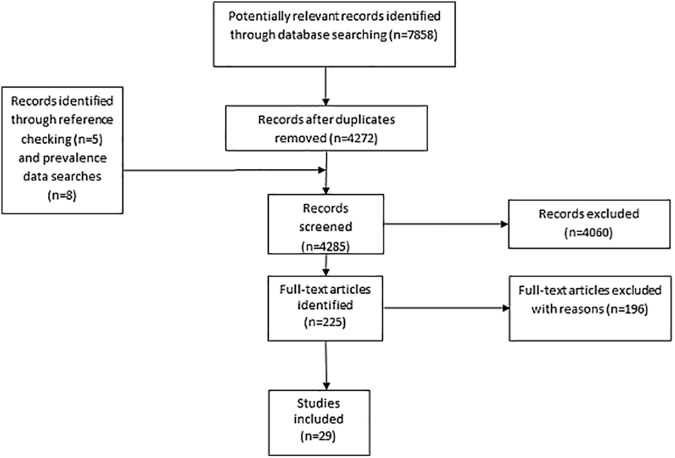
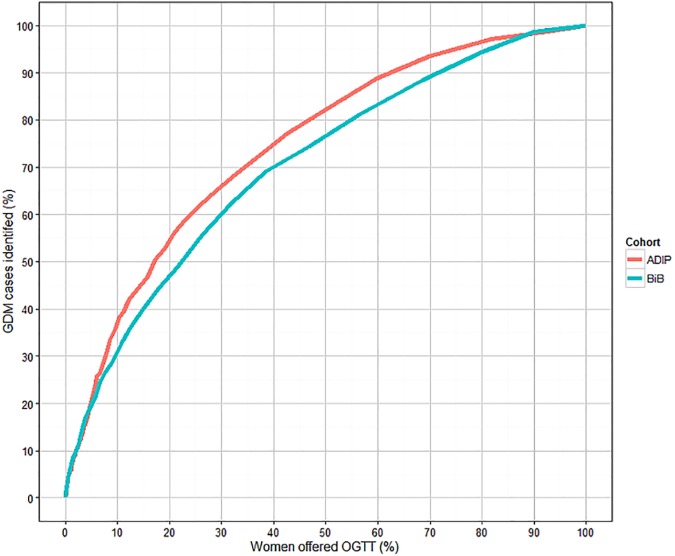
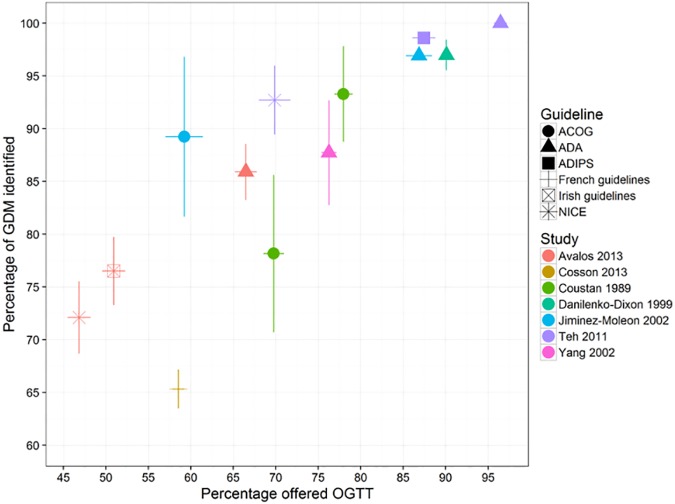
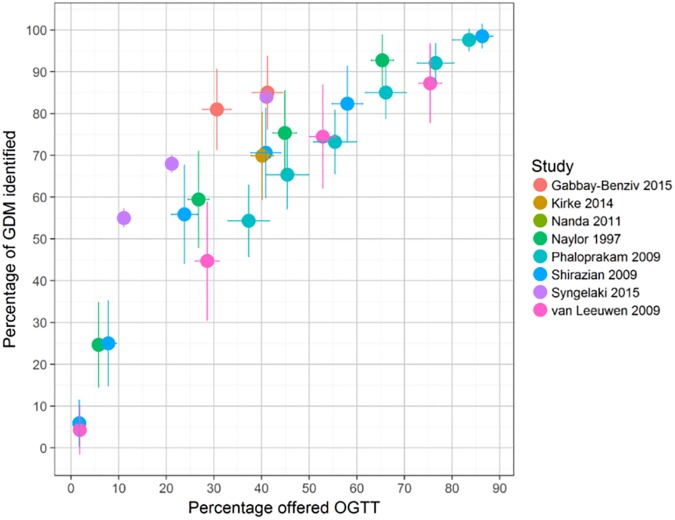
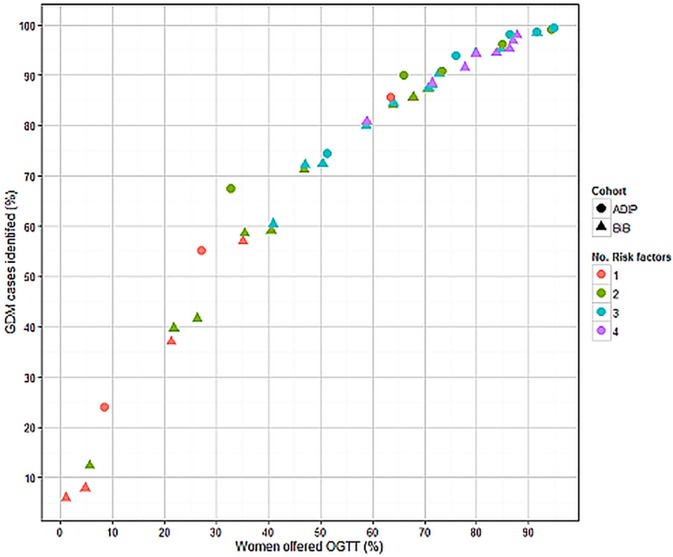
Twenty nine published studies with 211,698 women for the SR and a further 14,103 women from two birth cohorts (Born in Bradford and the Atlantic Diabetes in Pregnancy study) for the IPD analysis were included. Six studies assessed the screening performance of guidelines; six examined combinations of risk factors; eight evaluated the number of risk factors and nine examined prediction models or scores. Meta-analysis using data from published studies suggests that irrespective of the method used, risk factors do not identify women with GDM well. Using IPD and combining risk factors to produce the highest sensitivities, results in low specificities (and so higher false positives). Strategies that use the risk factors of age (>25 or >30) and BMI (>25 or 30) perform as well as other strategies with additional risk factors included.
Risk factor screening methods are poor predictors of which pregnant women will be diagnosed with GDM. A simple approach of offering an OGTT to women 25 years or older and/or with a BMI of 25kg/m2 or more is as good as more complex risk prediction models. Research to identify more accurate (bio)markers is needed. Systematic Review Registration: PROSPERO CRD42013004608.
易于识别的风险因素包括:肥胖以及患糖尿病风险较高的种族,这些因素通常用于确定哪些女性应接受口服葡萄糖耐量试验(OGTT)以诊断妊娠期糖尿病(GDM)。然而,关于这些风险因素的证据有限。我们进行了一项系统评价(SR)和荟萃分析以及个体参与者数据(IPD)分析,以评估风险因素在识别患有GDM的女性方面的表现。
我们检索了截至2016年8月的MEDLINE、MEDLINE在研数据库、Embase、母婴护理数据库以及Cochrane对照试验中心注册库(CENTRAL),并进行了额外的参考文献核对。我们纳入了报告用于识别GDM高危女性的风险因素表现特征的观察性、队列、病例对照和横断面研究。我们获取了来自布拉德福德出生队列和妊娠糖尿病大西洋队列的个体参与者数据,纳入了这两个队列中所有有风险因素数据和OGTT结果的孕妇。
纳入了29项已发表研究,共211,698名女性用于系统评价,另有来自两个出生队列(布拉德福德出生队列和妊娠糖尿病大西洋研究)的14,103名女性用于个体参与者数据分析。六项研究评估了指南的筛查表现;六项研究检查了风险因素的组合;八项研究评估了风险因素的数量;九项研究检查了预测模型或评分。使用已发表研究数据进行的荟萃分析表明,无论使用何种方法,风险因素都不能很好地识别患有GDM的女性。使用个体参与者数据并结合风险因素以产生最高敏感性,会导致特异性较低(因此假阳性较高)。使用年龄(>25岁或>30岁)和体重指数(BMI)(>25或30)等风险因素的策略与包含其他风险因素的其他策略表现相当。
风险因素筛查方法对哪些孕妇会被诊断为GDM的预测能力较差。对25岁及以上和/或BMI为25kg/m²及以上的女性提供OGTT的简单方法与更复杂的风险预测模型一样好。需要开展研究以确定更准确的(生物)标志物。系统评价注册号:PROSPERO CRD42013004608。