Affiliated Cancer Hospital & Institute, Guangzhou Medical University, Guangzhou, China.
Key Laboratory of Protein Modification and Degradation, School of Basic Medical Sciences, Guangzhou Medical University, Guangzhou, China.
J Cell Mol Med. 2017 Oct;21(10):2441-2451. doi: 10.1111/jcmm.13166. Epub 2017 Apr 7.
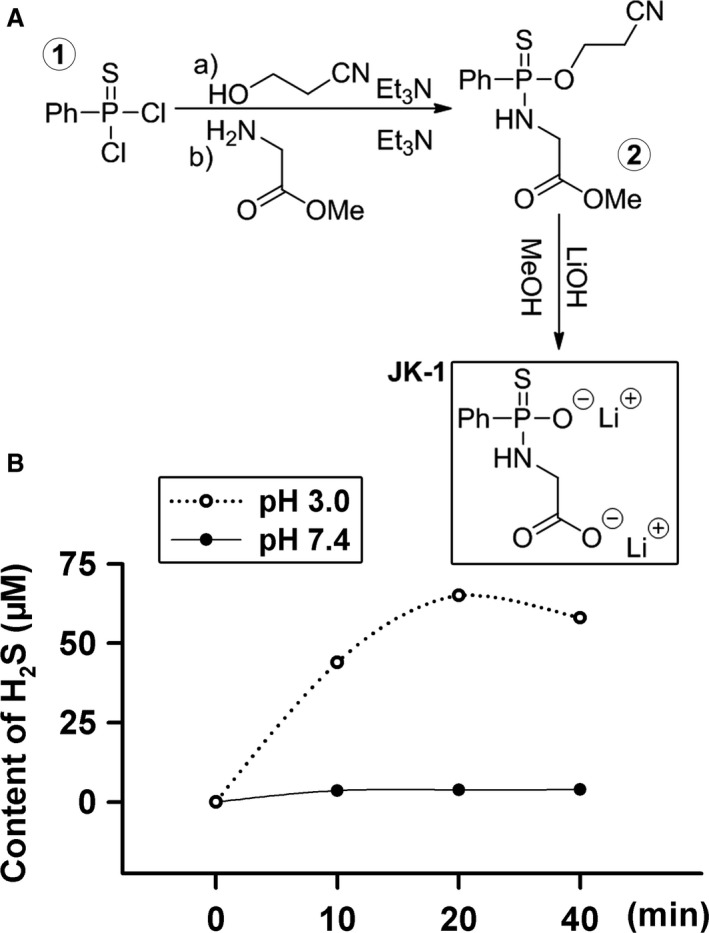
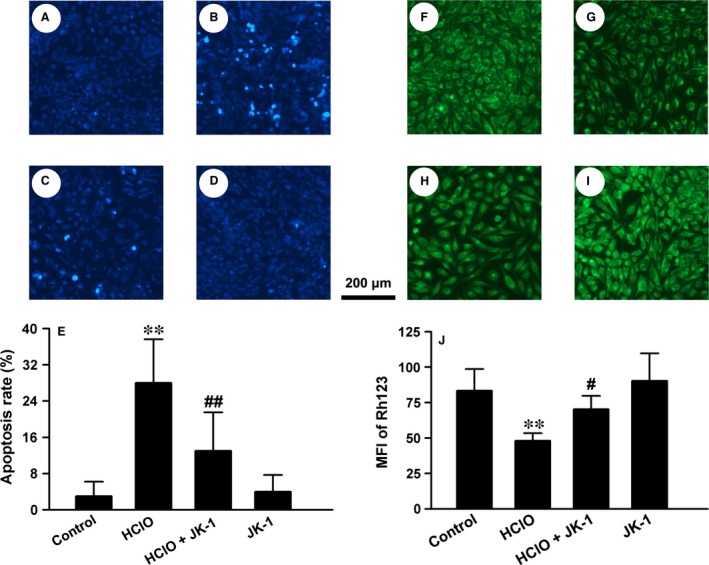
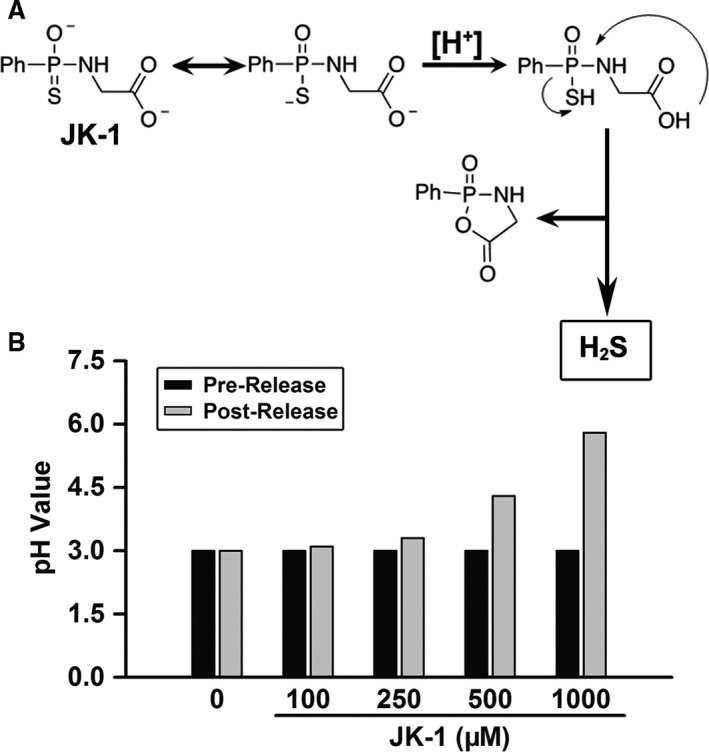
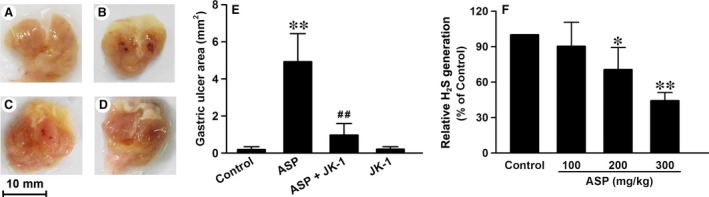
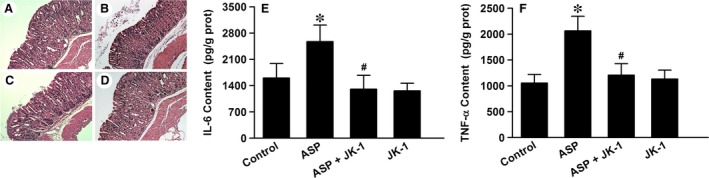
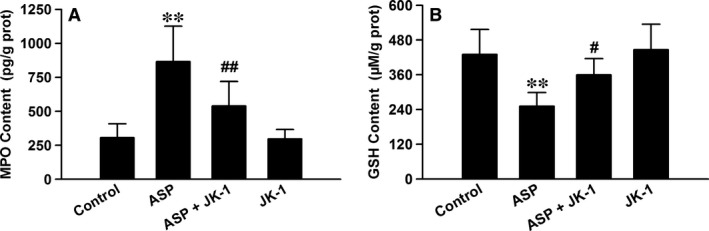
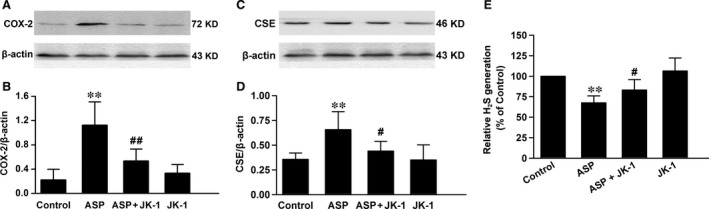
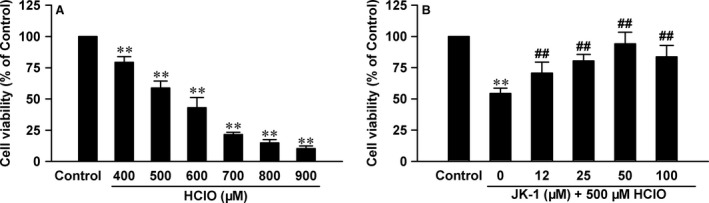
Hydrogen sulphide (H S) serves as a vital gastric mucosal defence under acid condition. Non-steroidal anti-inflammatory drugs (NSAIDs) are among widely prescribed medications with effects of antipyresis, analgesia and anti-inflammation. However, their inappropriate use causes gastric lesions and endogenous H S deficiency. In this work, we reported the roles of a novel pH-controlled H S donor (JK-1) in NSAID-related gastric lesions. We found that JK-1 could release H S under mild acidic pH and increase solution pH value. Intragastrical administration of aspirin (ASP), one of NSAIDs, to mice elicited significant gastric lesions, evidenced by mucosal festering and bleeding. It also led to infiltration of inflammatory cells and resultant releases of IL-6 and TNF-α, as well as oxidative injury including myeloperoxidase (MPO) induction and GSH depletion. In addition, the ASP administration statistically inhibited H S generation in gastric mucosa, while up-regulated cyclooxygenase (COX)-2 and cystathionine gamma lyase (CSE) expression. Importantly, these adverse effects of ASP were prevented by the intragastrical pre-administration of JK-1. However, JK-1 alone did not markedly alter the property of mouse stomachs. Furthermore, in vitro cellular experiments showed the exposure of gastric mucosal epithelial (GES-1) cells to HClO, imitating MPO-driven oxidative injury, decreased cell viability, increased apoptotic rate and damaged mitochondrial membrane potential, which were reversed by pre-treatment with JK-1. In conclusion, JK-1 was proved to be an acid-sensitive H S donor and could attenuate ASP-related gastric lesions through reconstruction of endogenous gastric defence. This work indicates the possible treatment of adverse effects of NSAIDs with pH-controlled H S donors in the future.
硫化氢 (H S) 在酸性条件下作为胃黏膜的重要防御物质。非甾体抗炎药 (NSAIDs) 是广泛应用于解热、镇痛和抗炎的药物之一。然而,它们的不当使用会导致胃损伤和内源性 H S 缺乏。在这项工作中,我们报告了一种新型 pH 控制的 H S 供体 (JK-1) 在 NSAID 相关胃损伤中的作用。我们发现,JK-1 可以在温和的酸性 pH 条件下释放 H S,并增加溶液的 pH 值。给小鼠胃内给予阿司匹林 (ASP),一种 NSAIDs,会引起明显的胃损伤,表现为黏膜溃烂和出血。它还导致炎症细胞浸润,导致白细胞介素 6 (IL-6) 和肿瘤坏死因子-α (TNF-α) 的释放,以及包括髓过氧化物酶 (MPO) 诱导和 GSH 耗竭在内的氧化损伤。此外,ASP 给药在统计学上抑制了胃黏膜中 H S 的产生,同时上调了环氧化酶 (COX)-2 和胱硫醚 γ 裂解酶 (CSE) 的表达。重要的是,这些 ASP 的不良作用可以通过 JK-1 的胃内预先给药来预防。然而,JK-1 本身并没有显著改变小鼠胃的特性。此外,体外细胞实验表明,暴露于模拟 MPO 驱动的氧化损伤的 HClO 的胃黏膜上皮 (GES-1) 细胞,其细胞活力降低,凋亡率增加,线粒体膜电位受损,这些都可以通过预先用 JK-1 处理来逆转。总之,JK-1 被证明是一种酸敏感的 H S 供体,可以通过重建内源性胃防御来减轻 ASP 相关的胃损伤。这项工作表明,未来可能可以使用 pH 控制的 H S 供体来治疗 NSAIDs 的不良反应。