Murdoch Childrens Research Institute, The Royal Children's Hospital, Parkville, Australia.
Department of Paediatrics, The University of Melbourne, Parkville, Australia.
Mol Oncol. 2018 Aug;12(8):1219-1232. doi: 10.1002/1878-0261.12062. Epub 2018 Jul 6.
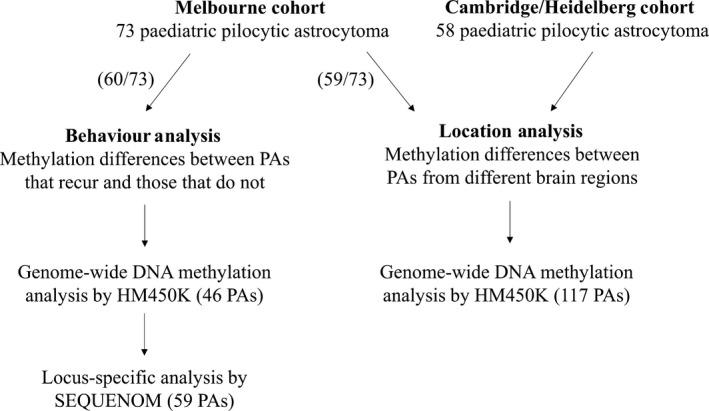
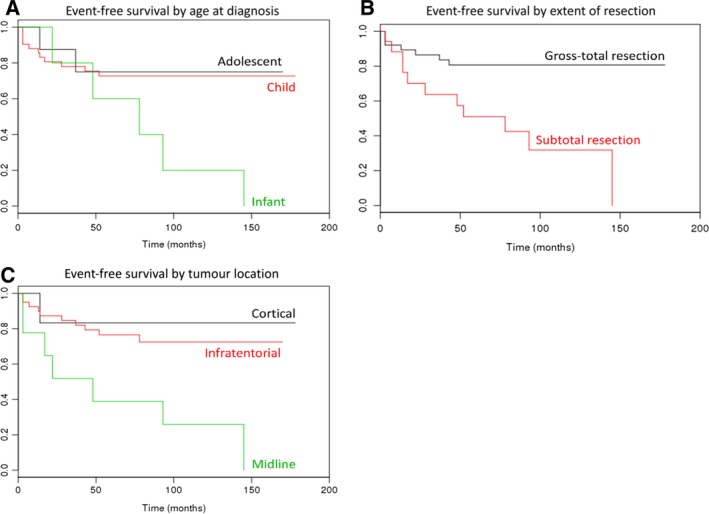
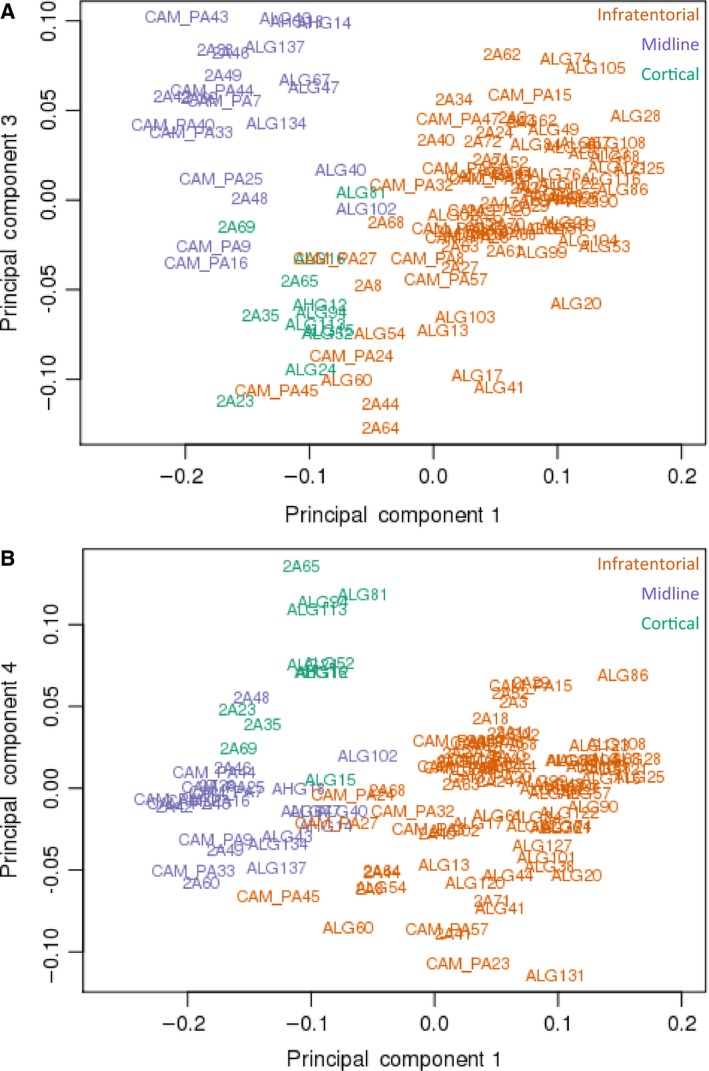
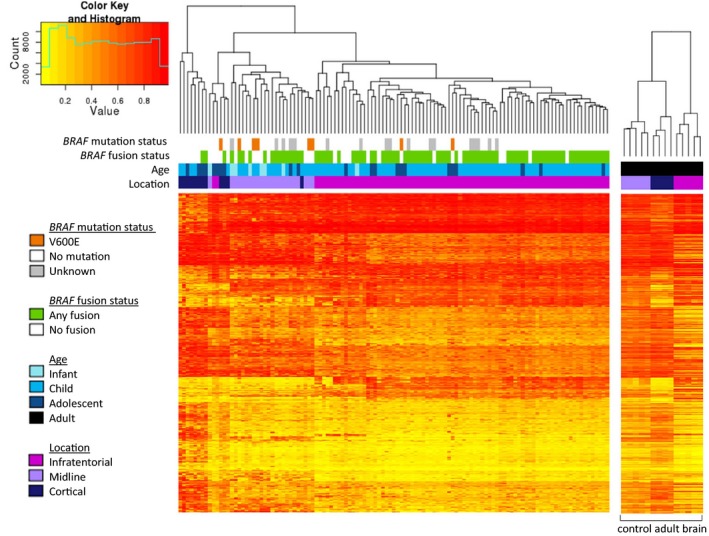
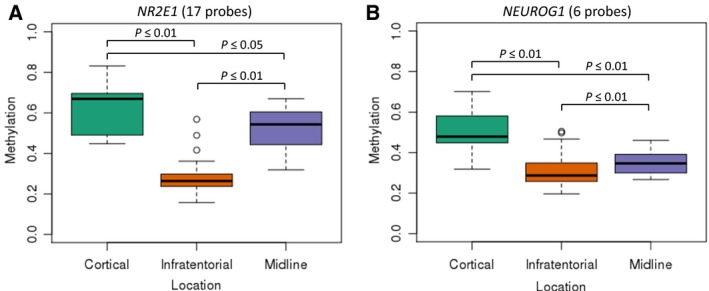
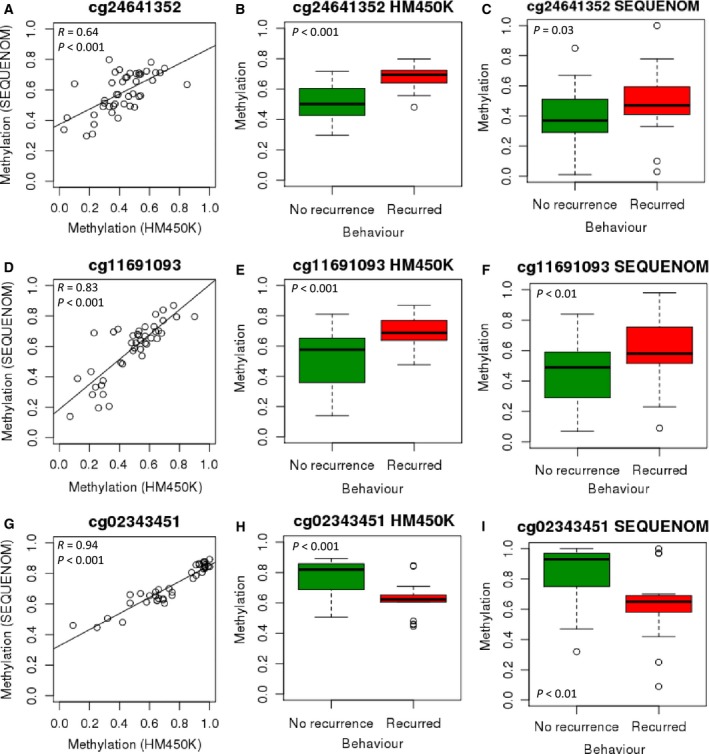
Childhood pilocytic astrocytomas (PA) are low-grade tumours with an excellent prognosis. However, a minority, particularly those in surgically inaccessible locations, have poorer long-term outcome. At present, it is unclear whether anatomical location in isolation, or in combination with underlying biological variation, determines clinical behaviour. Here, we have tested the utility of DNA methylation profiling to inform tumour biology and to predict behaviour in paediatric PA. Genome-wide DNA methylation profiles were generated for 117 paediatric PAs. Using a combination of analyses, we identified DNA methylation variants specific to tumour location and predictive of behaviour. Receiver-operating characteristic analysis was used to test the predictive utility of clinical and/or DNA methylation features to classify tumour behaviour at diagnosis. Unsupervised analysis distinguished three methylation clusters associated with tumour location (cortical, midline and infratentorial). Differential methylation of 5404 sites identified enrichment of genes involved in 'embryonic nervous system development'. Specific hypermethylation of NEUROG1 and NR2E1 was identified as a feature of cortical tumours. A highly accurate method to classify tumours according to behaviour, which combined three clinical features (age, location and extent of resection) and methylation level at a single site, was identified. Our findings show location-specific epigenetic profiles for PAs, potentially reflecting their cell type of origin. This may account for differences in clinical behaviour according to location independent of histopathology. We also defined an accurate method to predict tumour behaviour at diagnosis. This warrants further testing in similar patient cohorts.
儿童毛细胞型星形细胞瘤(PA)是低级别肿瘤,预后良好。然而,少数肿瘤,特别是那些手术无法触及的位置,长期预后较差。目前,尚不清楚解剖位置是单独还是与潜在的生物学差异相结合,决定了临床行为。在这里,我们测试了 DNA 甲基化谱分析在告知肿瘤生物学和预测儿童 PA 行为方面的效用。为 117 例儿童 PA 生成了全基因组 DNA 甲基化图谱。通过结合分析,我们确定了特定于肿瘤位置并可预测行为的 DNA 甲基化变体。使用受试者工作特征分析来测试临床和/或 DNA 甲基化特征对诊断时肿瘤行为进行分类的预测效用。无监督分析将三个与肿瘤位置相关的甲基化簇区分开来(皮质、中线和幕下)。5404 个位点的差异甲基化鉴定出参与“胚胎神经系统发育”的基因富集。皮质肿瘤的特征是 NEUROG1 和 NR2E1 的特异性高甲基化。根据行为对肿瘤进行分类的高度准确方法,该方法结合了三个临床特征(年龄、位置和切除范围)和单个位点的甲基化水平。我们的发现显示 PA 具有位置特异性的表观遗传谱,这可能反映了它们的细胞起源类型。这可以解释位置独立于组织病理学的临床行为差异。我们还定义了一种准确的方法来预测诊断时的肿瘤行为。这需要在类似的患者队列中进一步测试。