Hundal Jasreet, Miller Christopher A, Griffith Malachi, Griffith Obi L, Walker Jason, Kiwala Susanna, Graubert Aaron, McMichael Joshua, Coffman Adam, Mardis Elaine R
McDonnell Genome Institute at Washington University School of Medicine, St. Louis, Missouri 63108.
Department of Medicine, Division of Oncology, Washington University School of Medicine, St. Louis, Missouri 63110.
Cold Spring Harb Symp Quant Biol. 2016;81:105-111. doi: 10.1101/sqb.2016.81.030726. Epub 2017 Apr 7.
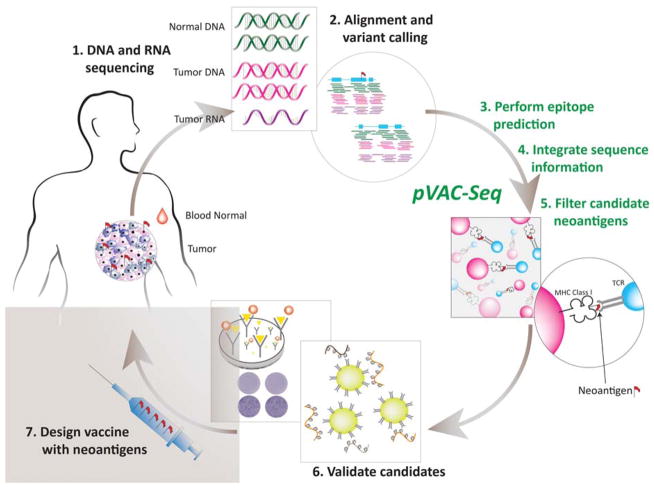
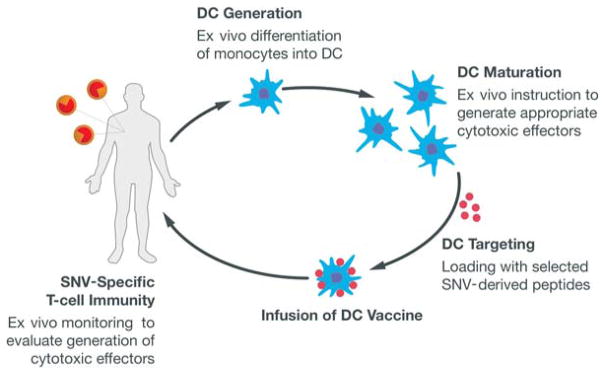
The application of modern high-throughput genomics to the study of cancer genomes has exploded in the past few years, yielding unanticipated insights into the myriad and complex combinations of genomic alterations that lead to the development of cancers. Coincident with these genomic approaches have been computational analyses that are capable of multiplex evaluations of genomic data toward specific therapeutic end points. One such approach is called "immunogenomics" and is now being developed to interpret protein-altering changes in cancer cells in the context of predicted preferential binding of these altered peptides by the patient's immune molecules, specifically human leukocyte antigen (HLA) class I and II proteins. One goal of immunogenomics is to identify those cancer-specific alterations that are likely to elicit an immune response that is highly specific to the patient's cancer cells following stimulation by a personalized vaccine. The elements of such an approach are outlined herein and constitute an emerging therapeutic option for cancer patients.
在过去几年中,现代高通量基因组学在癌症基因组研究中的应用呈爆发式增长,使人们对导致癌症发生的无数复杂基因组改变组合有了意想不到的深入了解。与这些基因组方法同时出现的是计算分析,它能够针对特定治疗终点对基因组数据进行多重评估。其中一种方法被称为“免疫基因组学”,目前正在开发中,用于在预测患者免疫分子(特别是人类白细胞抗原(HLA)I类和II类蛋白)对这些改变的肽段优先结合的背景下,解释癌细胞中蛋白质改变的变化。免疫基因组学的一个目标是识别那些癌症特异性改变,这些改变在个性化疫苗刺激后可能引发对患者癌细胞高度特异性的免疫反应。本文概述了这种方法的要素,它构成了癌症患者一种新兴的治疗选择。