Park Hye-Jin, Song Minjung
Department of Food Science and Biotechnology, College of BioNano Technology, Gachon University, Gyeonggi 13120, Korea.
Department of Food Biotechnology, Division of Bioindustry, College of Medical and Life Sciences, Silla University, Busan 46958, Korea.
Prev Nutr Food Sci. 2017 Mar;22(1):50-55. doi: 10.3746/pnf.2017.22.1.50. Epub 2017 Mar 31.
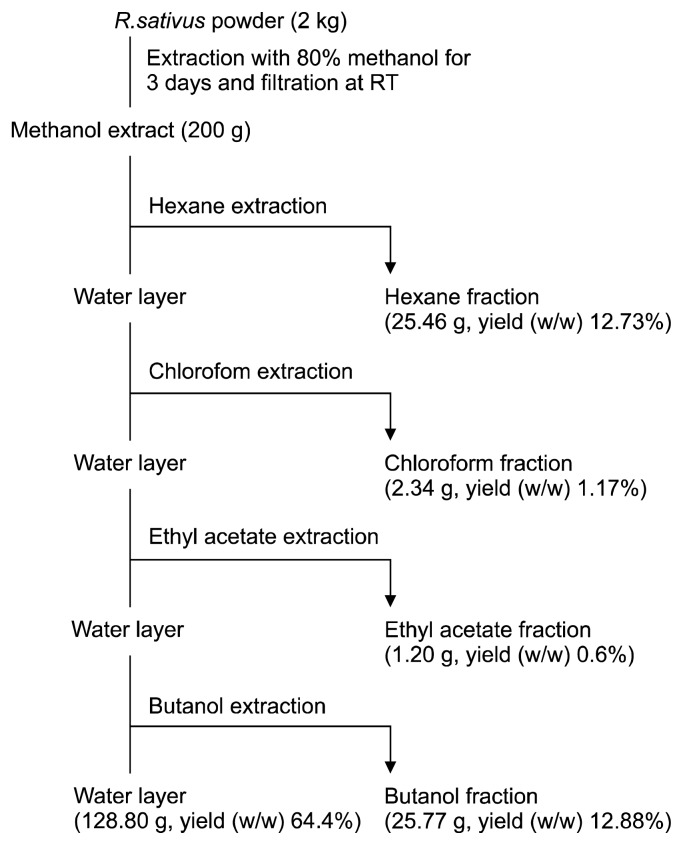
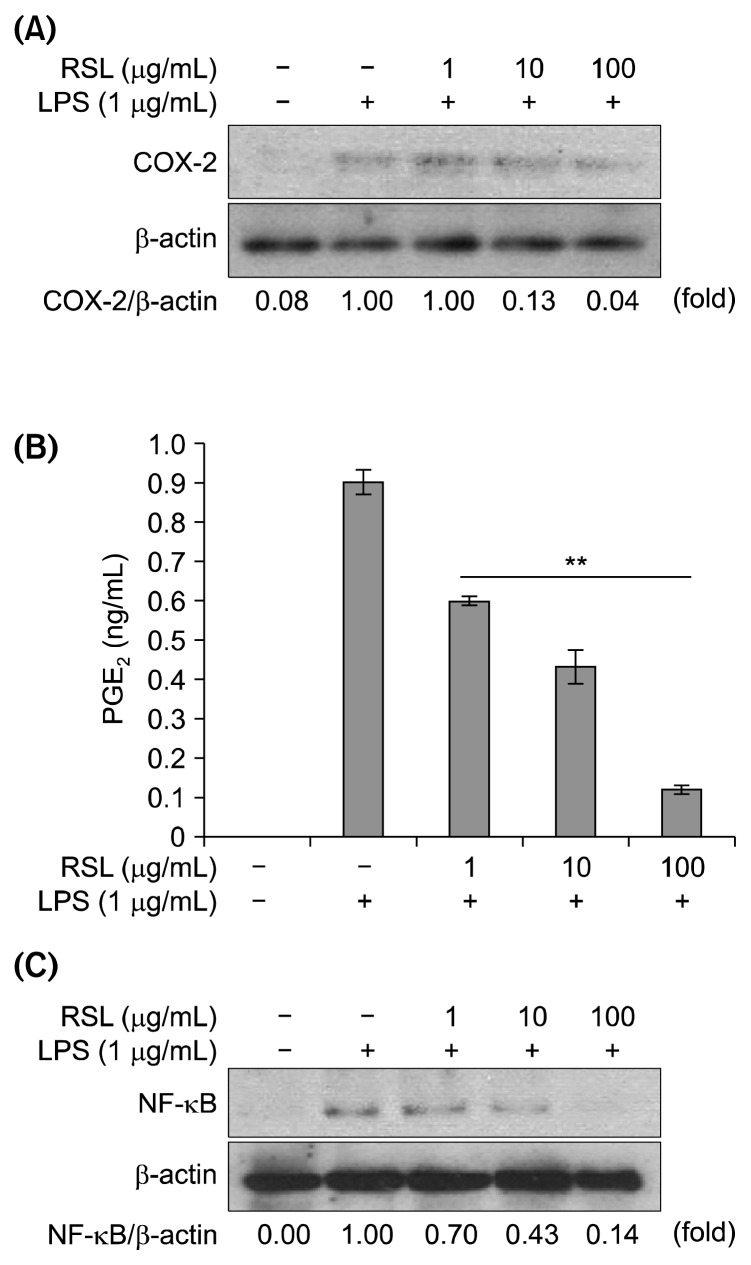
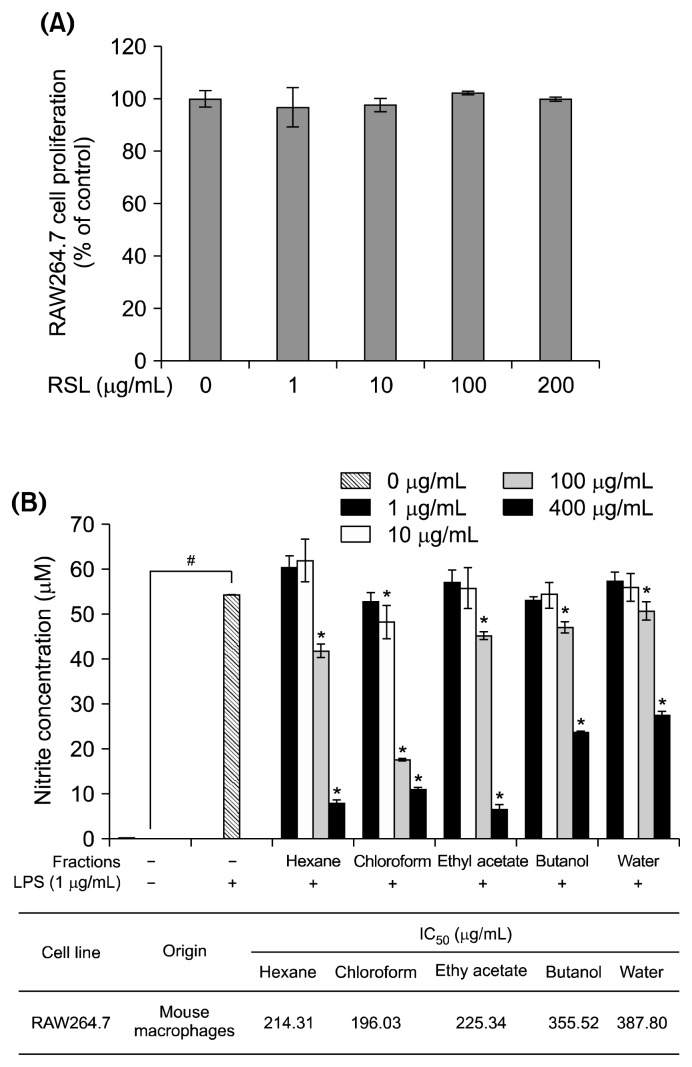
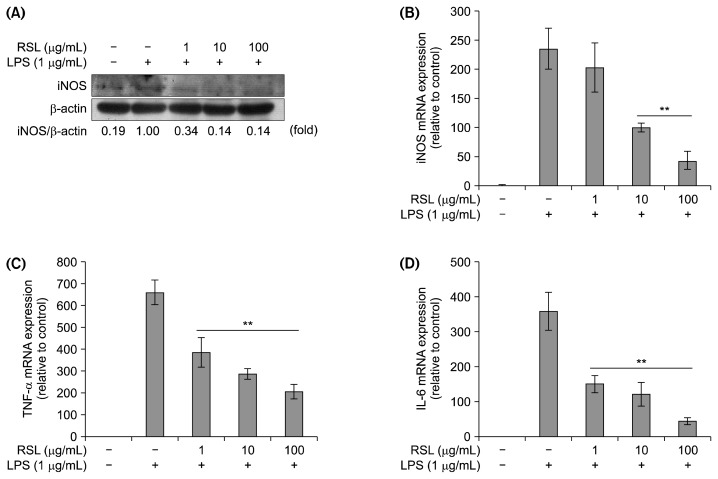
L. (RS) is a cruciferous vegetable that is widely consumed in Korea. The anticancer activity of leaves of RS (RSL) extract has been investigated; however, no studies focused on its anti-inflammatory effects. Therefore, the aim of the current study was to evaluate the anti-inflammatory effects of RSL extract. In brief, RSL powder was fractionated into -hexane, chloroform, ethyl acetate, -butanol, and water-soluble fractions. Lipopolysaccharide (LPS)-stimulated RAW264.7 cells were treated with each fraction for initial screening. It was found that the chloroform fraction significantly inhibited nitric oxide release in LPS-stimulated RAW264.7 cells with a half maximal inhibitory concentration value of 196 μg/mL. In addition, the mRNA and protein expression levels of inducible nitric oxide synthase, measured using reverse transcriptase-polymerase chain reaction and western blotting, respectively, were reduced in a concentration-dependent manner. Moreover, the inflammatory cyclooxygenase-2 enzyme expression decreased. Furthermore, the expression of nuclear factor-kappa B (NF-κB), the key regulator of the transcriptional activation of the inflammatory cytokine genes, was reduced by the RSL chloroform fraction. Therefore, the results of our study suggest that RSL exhibits anti-inflammatory effects in LPS-stimulated macrophages via NF-κB inactivation.
L.(RS)是一种十字花科蔬菜,在韩国被广泛食用。已对RS叶(RSL)提取物的抗癌活性进行了研究;然而,尚无研究关注其抗炎作用。因此,本研究的目的是评估RSL提取物的抗炎作用。简而言之,RSL粉末被分离为正己烷、氯仿、乙酸乙酯、正丁醇和水溶性部分。用各部分处理脂多糖(LPS)刺激的RAW264.7细胞进行初步筛选。发现氯仿部分显著抑制LPS刺激的RAW264.7细胞中一氧化氮的释放,半数最大抑制浓度值为196μg/mL。此外,分别使用逆转录聚合酶链反应和蛋白质印迹法测定的诱导型一氧化氮合酶的mRNA和蛋白质表达水平呈浓度依赖性降低。此外,炎性环氧化酶-2酶的表达下降。此外,RSL氯仿部分降低了炎性细胞因子基因转录激活的关键调节因子核因子-κB(NF-κB)的表达。因此,我们的研究结果表明,RSL通过使NF-κB失活在LPS刺激的巨噬细胞中表现出抗炎作用。