Department of Health and Rehabilitation, Unit of Physiotherapy, Institute of Neuroscience and Physiology, Sahlgrenska Academy, University of Gothenburg, Gothenburg, Sweden.
Närhälsan Rehabilitation FaR-teamet central and western Gothenburg, Region Västra Götaland, Gothenburg, Sweden.
PLoS One. 2017 Apr 12;12(4):e0175190. doi: 10.1371/journal.pone.0175190. eCollection 2017.
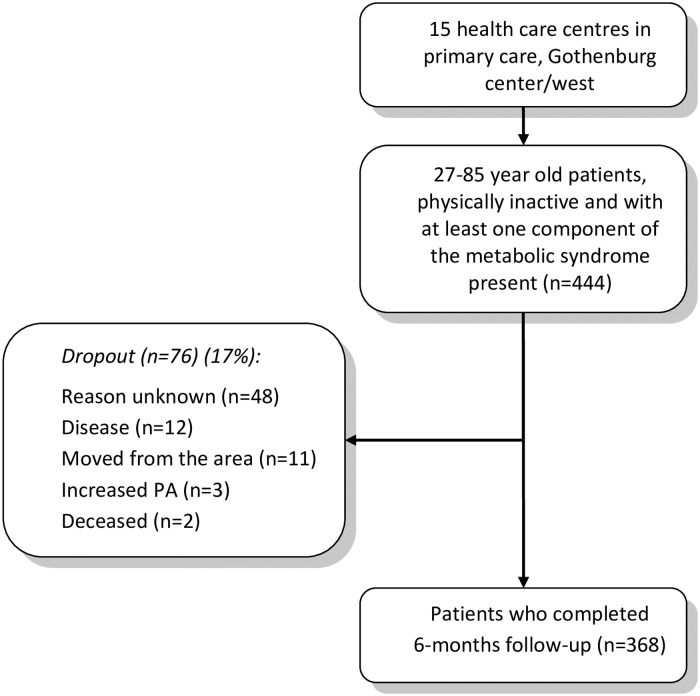
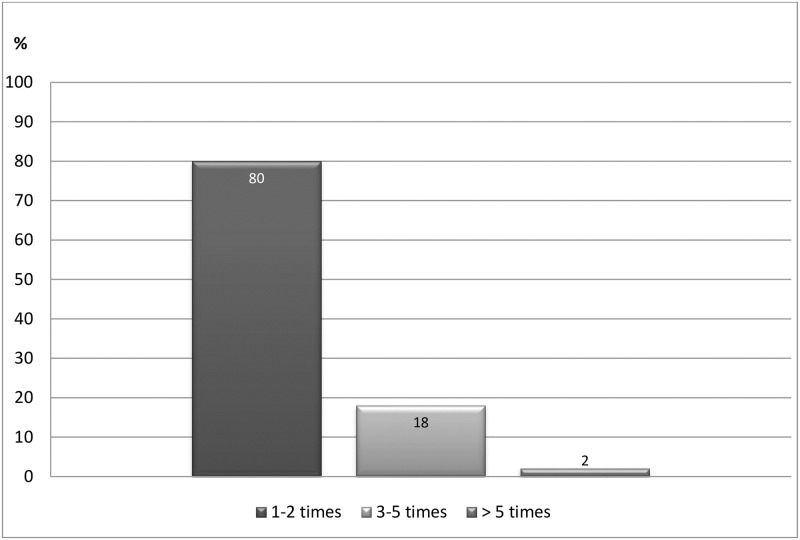
There is strong evidence that inadequate physical activity (PA) leads to an increased risk of lifestyle-related diseases and premature mortality. Physical activity on prescription (PAP) is a method to increase the level of PA of patients in primary care, but needs further evaluation. The aim of this observational study was to explore the association between PAP-treatment and the PA level of patients with metabolic risk factors and the relationship between changes in the PA level and health outcomes at the 6 month follow-up. This study included 444 patients in primary care, aged 27-85 years (56% females), who were physically inactive with at least one component of metabolic syndrome. The PAP-treatment model included: individualized dialogue concerning PA, prescribed PA, and a structured follow-up. A total of 368 patients (83%) completed the 6 months of follow-up. Of these patients, 73% increased their PA level and 42% moved from an inadequate PA level to sufficient, according to public health recommendations. There were significant improvements (p≤ 0.05) in the following metabolic risk factors: body mass index, waist circumference, systolic blood pressure, fasting plasma glucose, cholesterol, and low density lipoprotein. There were also significant improvements regarding health-related quality of life, assessed by the Short Form 36, in: general health, vitality, social function, mental health, role limitation-physical/emotional, mental component summary, and physical component summary. Regression analysis showed a significant association between changes in the PA level and health outcomes. During the first 6-month period, the caregiver provided PAP support 1-2 times. This study indicates that an individual-based model of PAP-treatment has the potential to change people's PA behavior with improved metabolic risk factors and self-reported quality of life at the 6 month follow-up. Thus, PAP seems to be feasible in a clinical primary care practice, with minimum effort from healthcare professionals.
有强有力的证据表明,身体活动不足会增加与生活方式相关疾病和过早死亡的风险。处方性身体活动(PAP)是一种增加初级保健患者身体活动水平的方法,但需要进一步评估。本观察性研究的目的是探讨 PAP 治疗与代谢风险因素患者的身体活动水平之间的关系,以及身体活动水平的变化与 6 个月随访时健康结果之间的关系。本研究纳入了 444 名年龄在 27-85 岁之间(女性占 56%)、至少有一个代谢综合征成分的身体不活跃的初级保健患者。PAP 治疗模型包括:针对身体活动的个体化对话、规定的身体活动以及结构化随访。共有 368 名患者(83%)完成了 6 个月的随访。其中,73%的患者增加了身体活动水平,42%的患者根据公共卫生建议从不充足的身体活动水平提高到了充足的水平。代谢风险因素有显著改善(p≤0.05):体重指数、腰围、收缩压、空腹血糖、胆固醇和低密度脂蛋白。健康相关生活质量也有显著改善,通过 36 项简短健康调查问卷评估,表现在:一般健康、活力、社会功能、心理健康、身体功能限制/情绪、心理成分综合评分和生理成分综合评分。回归分析显示,身体活动水平的变化与健康结果之间存在显著关联。在最初的 6 个月内,护理人员提供 1-2 次 PAP 支持。本研究表明,以个体为基础的 PAP 治疗模式有可能改变人们的身体活动行为,改善代谢风险因素和 6 个月随访时的自我报告生活质量。因此,PAP 在临床初级保健实践中似乎是可行的,医护人员只需付出最小的努力。