University of Hertfordshire, Hatfield, Hertfordshire, United Kingdom.
Center for Magnesium Education & Research, Pahoa, Hawaii, United States of America.
PLoS One. 2017 Apr 12;12(4):e0174817. doi: 10.1371/journal.pone.0174817. eCollection 2017.
Oral magnesium supplementation is commonly used to support a low magnesium diet. This investigation set out to determine whether magnesium in a cream could be absorbed transdermally in humans to improve magnesium status.
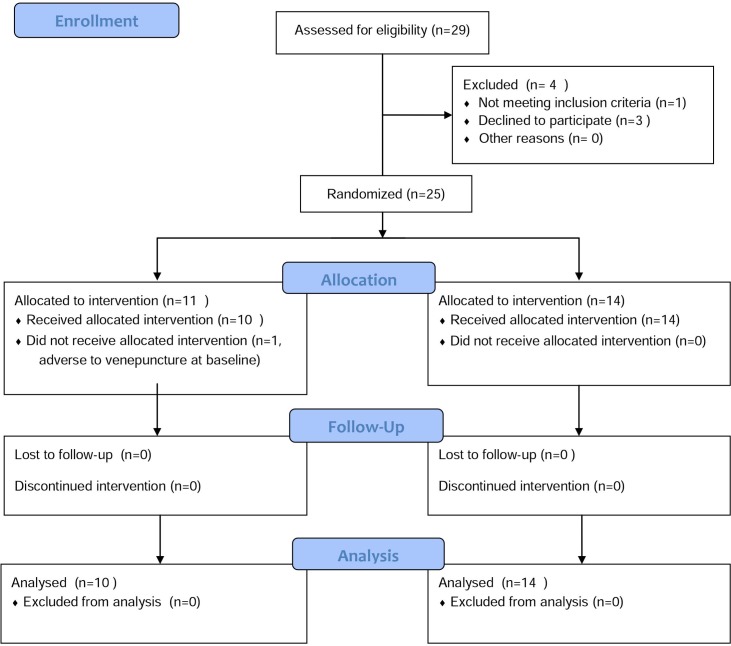
In this single blind, parallel designed pilot study, n = 25 participants (aged 34.3+/-14.8y, height 171.5+/-11cm, weight 75.9 +/-14 Kg) were randomly assigned to either a 56mg/day magnesium cream or placebo cream group for two weeks. Magnesium serum and 24hour urinary excretion were measured at baseline and at 14 days intervention. Food diaries were recorded for 8 days during this period. Mg test and placebo groups' serum and urinary Mg did not differ at baseline. After the Mg2+ cream intervention there was a clinically relevant increase in serum magnesium (0.82 to 0.89 mmol/l,p = 0.29) that was not seen in the placebo group (0.77 to 0.79 mmol/L), but was only statistically significant (p = 0.02)) in a subgroup of non-athletes. Magnesium urinary excretion increased from baseline slightly in the Mg2+ group but with no statistical significance (p = 0.48). The Mg2+ group showed an 8.54% increase in serum Mg2+ and a 9.1% increase in urinary Mg2+ while these figures for the placebo group were smaller, i.e. +2.6% for serum Mg2+ and -32% for urinary Mg2+. In the placebo group, both serum and urine concentrations showed no statistically significant change after the application of the placebo cream.
No previous studies have looked at transdermal absorbency of Mg2+ in human subjects. In this pilot study, transdermal delivery of 56 mg Mg/day (a low dose compared with commercial transdermal Mg2+ products available) showed a larger percentage rise in both serum and urinary markers from pre to post intervention compared with subjects using the placebo cream, but statistical significance was achieved only for serum Mg2+ in a subgroup of non-athletes. Future studies should look at higher dosage of magnesium cream for longer durations.
ISRCTN registry ID No. ISRTN15136969.
口服镁补充剂常用于支持低镁饮食。本研究旨在确定乳膏形式的镁是否可以经皮吸收进入人体以改善镁状态。
在这项单盲、平行设计的初步研究中,n = 25 名参与者(年龄 34.3+/-14.8 岁,身高 171.5+/-11cm,体重 75.9 +/-14 Kg)被随机分配到 56mg/天镁乳膏或安慰剂乳膏组,干预时间为两周。在基线和 14 天干预时测量血清和 24 小时尿镁排泄量。在此期间,记录了 8 天的饮食日记。Mg 试验和安慰剂组的血清和尿镁在基线时没有差异。在接受 Mg2+乳膏干预后,血清镁有临床相关的增加(0.82 至 0.89 mmol/L,p = 0.29),而安慰剂组(0.77 至 0.79 mmol/L)则没有增加,但在非运动员亚组中具有统计学意义(p = 0.02))。Mg2+组的尿镁排泄量略有增加,但无统计学意义(p = 0.48)。Mg2+组血清 Mg2+增加 8.54%,尿 Mg2+增加 9.1%,而安慰剂组的这些数字较小,即血清 Mg2+增加 2.6%,尿 Mg2+减少 32%。在安慰剂组中,在应用安慰剂乳膏后,血清和尿液浓度均无统计学意义的变化。
以前没有研究过镁在人体中的经皮吸收率。在这项初步研究中,与市售经皮镁产品相比,每天经皮给予 56 毫克 Mg(低剂量),与使用安慰剂乳膏的受试者相比,血清和尿液标志物的干预前后百分比升高更大,但仅在非运动员亚组中,血清 Mg2+具有统计学意义。未来的研究应关注更高剂量的镁乳膏和更长的持续时间。
ISRCTN 注册表 ID 号 ISRTN15136969。