Canchi Saranya, Sarntinoranont Malisa, Hong Yu, Flint Jeremy J, Subhash Ghatu, King Michael A
Department of Mechanical & Aerospace Engineering, University of Florida, Gainesville, Florida, United States of America.
Mcknight Brain Institute, University of Florida, Gainesville, Florida, United States of America.
PLoS One. 2017 Apr 12;12(4):e0175396. doi: 10.1371/journal.pone.0175396. eCollection 2017.
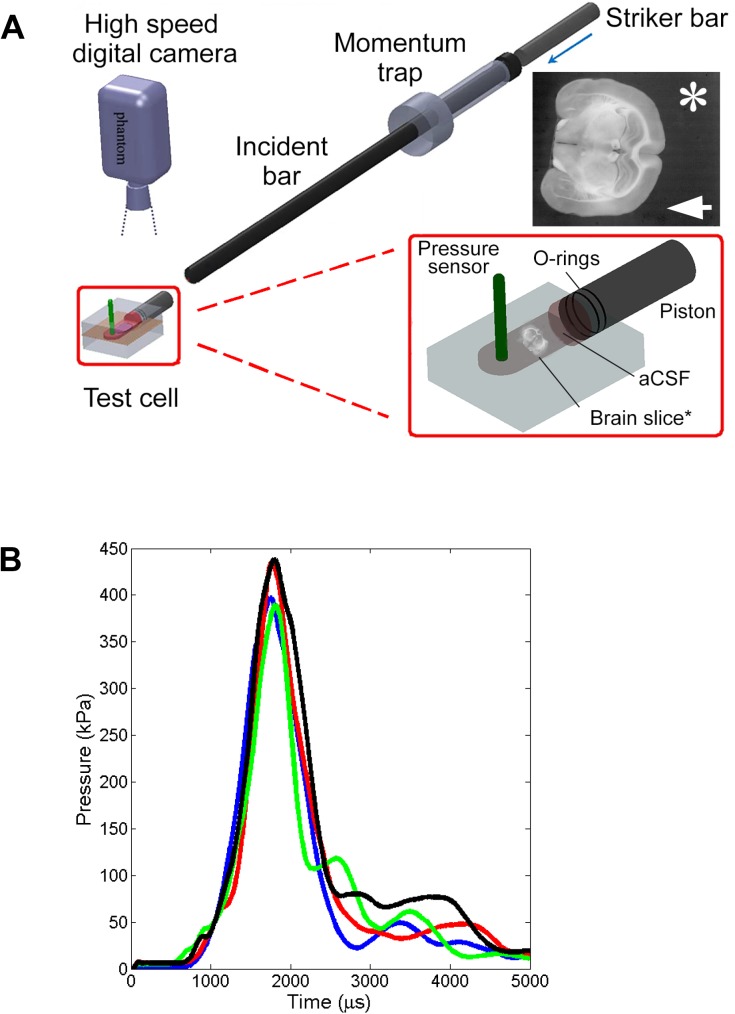
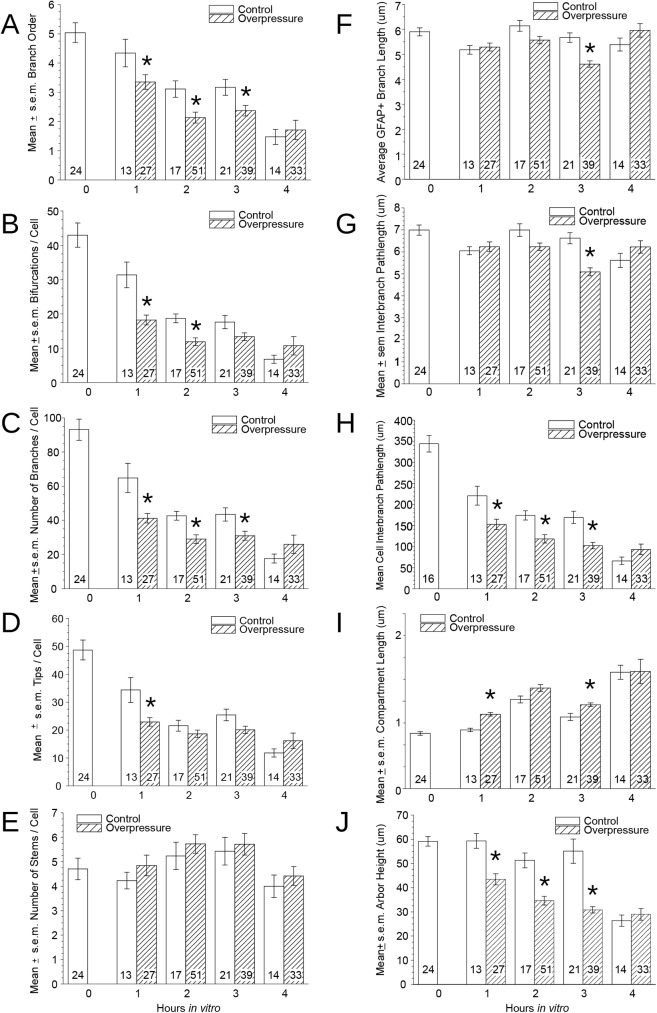
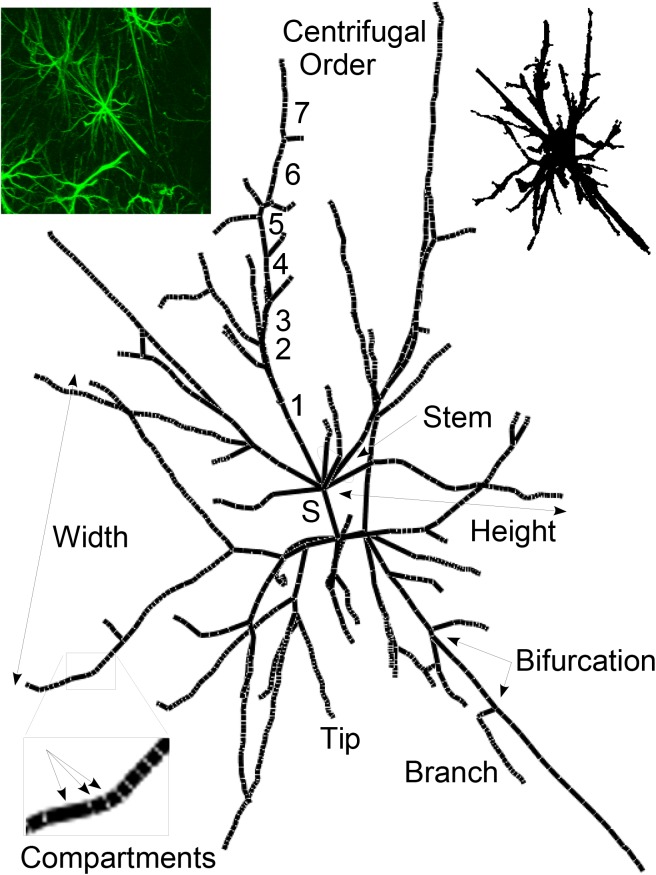
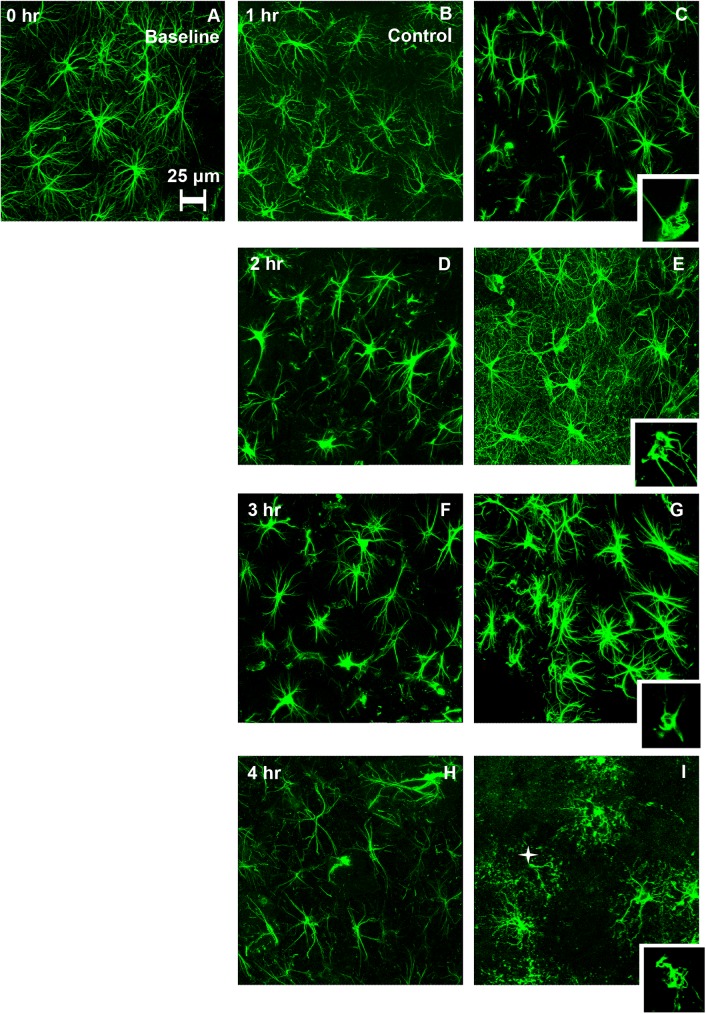
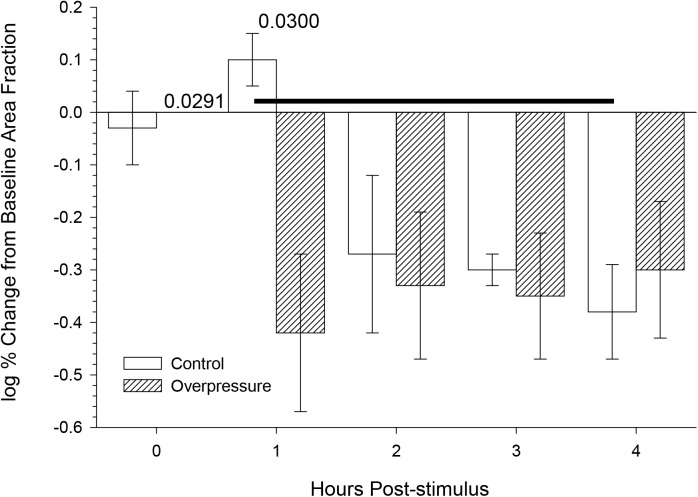
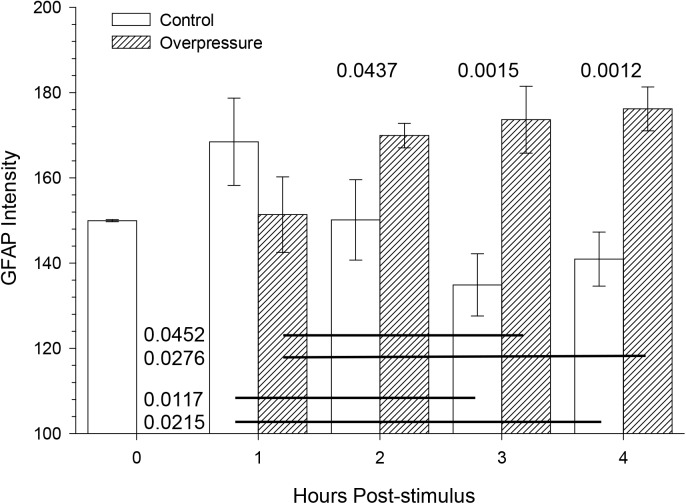
Exposure to explosive blasts can produce functional debilitation in the absence of brain pathology detectable at the scale of current diagnostic imaging. Transient (ms) overpressure components of the primary blast wave are considered to be potentially damaging to the brain. Astrocytes participate in neuronal metabolic maintenance, blood-brain barrier, regulation of homeostatic environment, and tissue remodeling. Damage to astrocytes via direct physical forces has the potential to disrupt local and global functioning of neuronal tissue. Using an ex vivo brain slice model, we tested the hypothesis that viable astrocytes within the slice could be injured simply by transit of a single blast wave consisting of overpressure alone. A polymer split Hopkinson pressure bar (PSHPB) system was adapted to impart a single positive pressure transient with a comparable magnitude to those that might be present inside the head. A custom built test chamber housing the brain tissue slice incorporated revised design elements to reduce fluid space and promote transit of a uniform planar waveform. Confocal microscopy, stereology, and morphometry of glial fibrillary acidic protein (GFAP) immunoreactivity revealed that two distinct astrocyte injury profiles were identified across a 4 hr post-test survival interval: (a) presumed conventional astrogliosis characterized by enhanced GFAP immunofluorescence intensity without significant change in tissue area fraction and (b) a process comparable to clasmatodendrosis, an autophagic degradation of distal processes that has not been previously associated with blast induced neurotrauma. Analysis of astrocyte branching revealed early, sustained, and progressive differences distinct from the effects of slice incubation absent overpressure testing. Astrocyte vulnerability to overpressure transients indicates a potential for significant involvement in brain blast pathology and emergent dysfunction. The testing platform can isolate overpressure injury phenomena to provide novel insight on physical and biological mechanisms.
暴露于爆炸冲击波下,在当前诊断成像尺度下可检测到无脑部病变的情况下,也会产生功能衰退。一次爆炸冲击波的瞬态(毫秒级)超压成分被认为可能对大脑造成损害。星形胶质细胞参与神经元的代谢维持、血脑屏障、稳态环境调节和组织重塑。通过直接物理力对星形胶质细胞造成的损伤有可能破坏神经元组织的局部和整体功能。我们使用离体脑片模型,测试了以下假设:脑片内活的星形胶质细胞可能仅通过由单纯超压组成的单个冲击波的通过而受到损伤。一种聚合物分离式霍普金森压杆(PSHPB)系统经过改装,可施加单个正压瞬态,其幅度与头部内部可能存在的瞬态相当。一个定制的容纳脑组织切片的测试室采用了改进的设计元素,以减少流体空间并促进均匀平面波形的传播。对胶质纤维酸性蛋白(GFAP)免疫反应性进行共聚焦显微镜、体视学和形态计量学分析发现,在测试后4小时的存活期内,确定了两种不同的星形胶质细胞损伤模式:(a)推测为传统的星形胶质细胞增生,其特征是GFAP免疫荧光强度增强,而组织面积分数无显著变化;(b)一个与树突自噬降解(clasmatodendrosis)相当的过程,此前该过程与爆炸诱导的神经创伤无关,树突自噬降解是远端突起的自噬性降解。对星形胶质细胞分支的分析揭示了与无超压测试的切片孵育效应不同的早期、持续和渐进性差异。星形胶质细胞对超压瞬态的易损性表明其在脑爆炸病理和突发功能障碍中可能有重要作用。该测试平台可以分离超压损伤现象,为物理和生物学机制提供新的见解。