Kajihara Nobuhiro, Kukidome Daisuke, Sada Kiminori, Motoshima Hiroyuki, Furukawa Noboru, Matsumura Takeshi, Nishikawa Takeshi, Araki Eiichi
Department of Metabolic Medicine, Kumamoto University, Kumamoto, Japan.
Center for Medical Education and Research, Faculty of Life Sciences, Kumamoto University, Kumamoto, Japan.
J Diabetes Investig. 2017 Nov;8(6):750-761. doi: 10.1111/jdi.12678. Epub 2017 May 24.
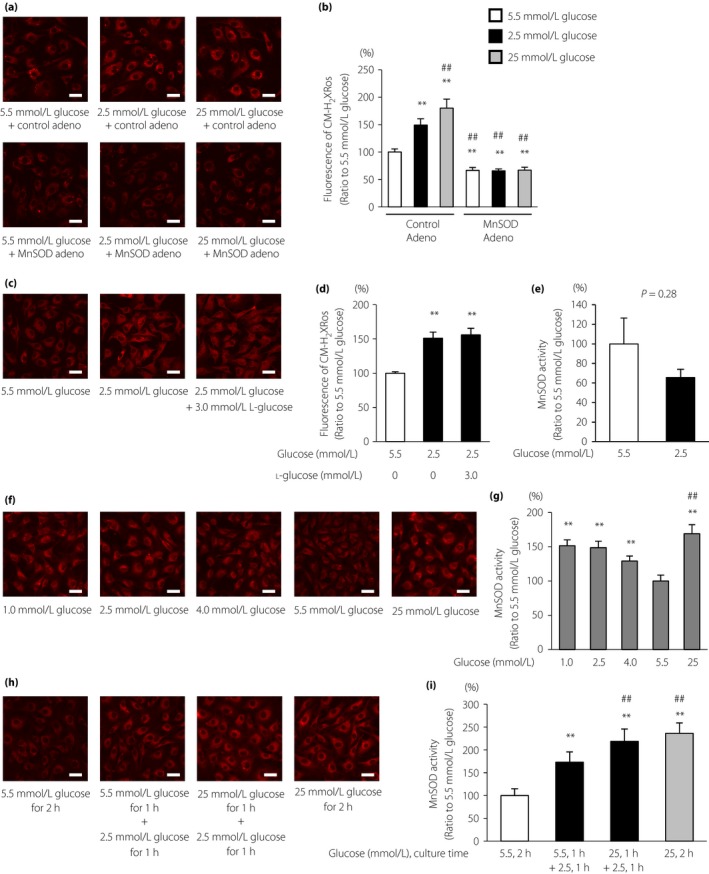
AIMS/INTRODUCTION: Overproduction of reactive oxygen species (ROS) in endothelial cells (ECs) plays a pivotal role in endothelial dysfunction. Mitochondrial ROS (mtROS) is one of the key players in the pathogenesis of diabetic vascular complications. Hypoglycemia is linked to increased ROS production and vascular events; however, the underlying mechanisms remain unclear. In the present study, we aimed to determine whether and how low glucose (LG) mediates mtROS generation in ECs, and to examine the impact of LG-induced mtROS on endothelial dysfunction.
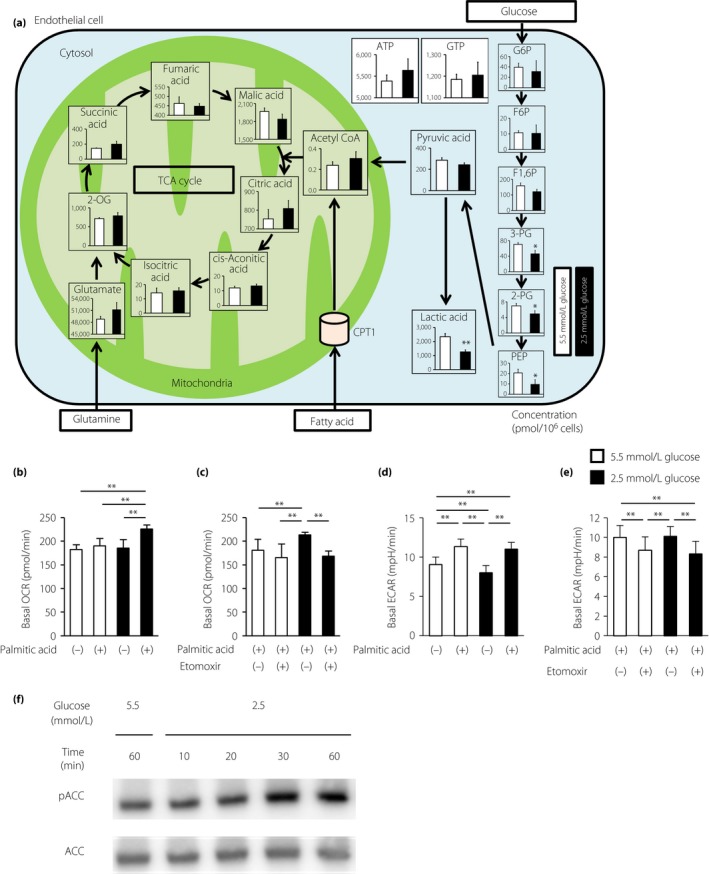
Metabolomic profiling, cellular oxygen consumption rate, mtROS, endothelial nitric oxide synthase phosphorylation, and the expression of vascular cell adhesion molecule-1 or intercellular adhesion molecule-1 were evaluated in bovine aortic ECs.
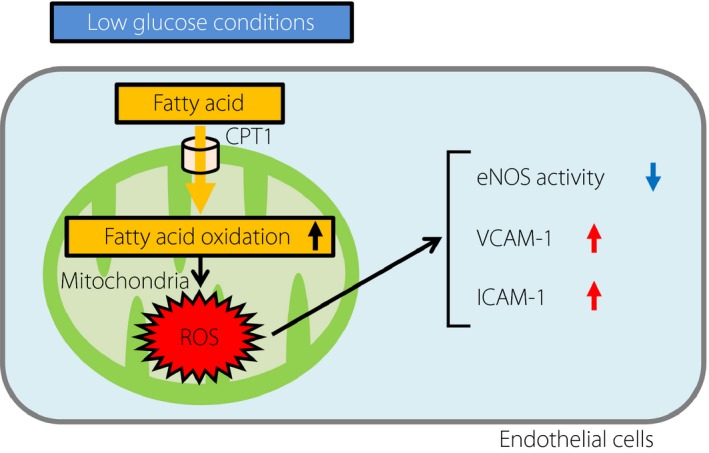
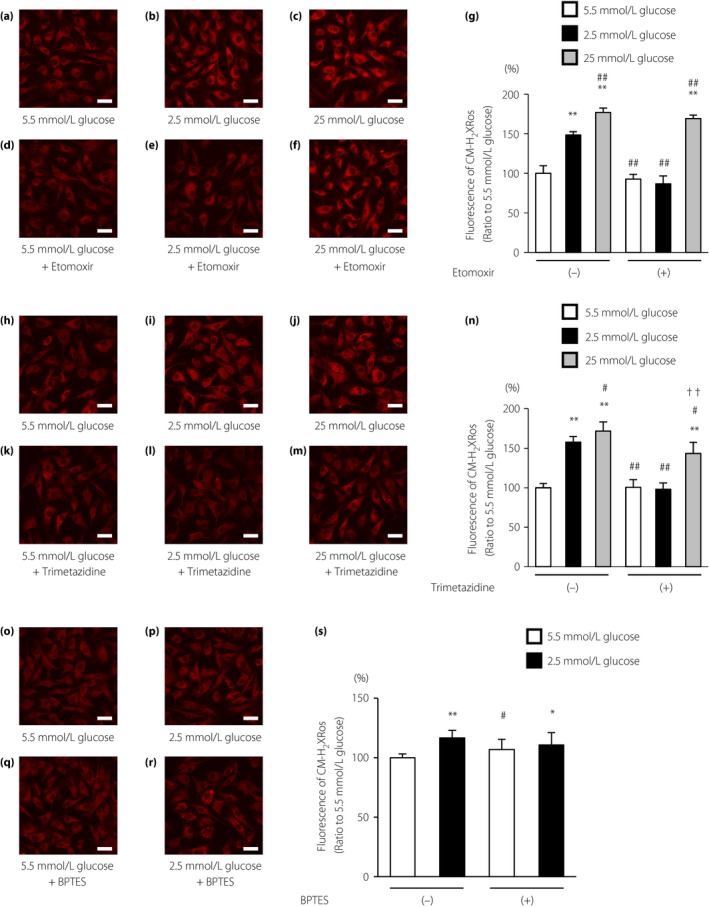
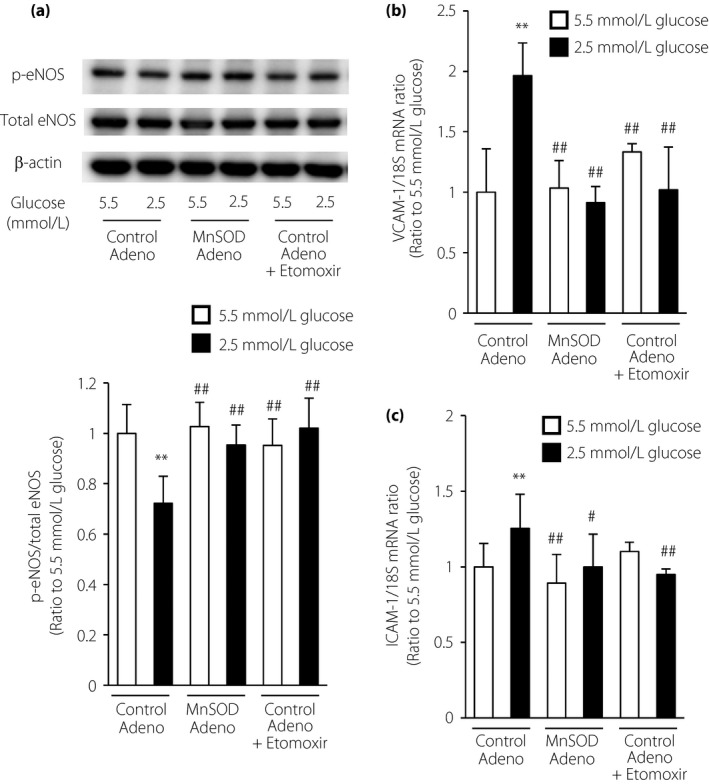
We found that LG increased mtROS generation in ECs; which was suppressed by overexpression of manganese superoxide dismutase. Comprehensive metabolic analysis using capillary electrophoresis-mass spectrometry and oxygen consumption rate assessment showed that the pathway from fatty acid to acetyl-CoA through fatty acid oxidation was upregulated in ECs under LG conditions. In addition, etomoxir, a specific inhibitor of the free fatty acid transporter, decreased LG-induced mtROS production. These results suggested that LG increased mtROS generation through activation of fatty acid oxidation. We further revealed that LG inhibited endothelial nitric oxide synthase phosphorylation, and increased the expression of vascular cell adhesion molecule-1 and intercellular adhesion molecule-1. These effects were suppressed either by overexpression of manganese superoxide dismutase or by treatment with etomoxir.
The activation of fatty acid oxidation followed by mtROS production could be one of the causes for endothelial dysfunction during hypoglycemia.
目的/引言:内皮细胞(ECs)中活性氧(ROS)的过度产生在内皮功能障碍中起关键作用。线粒体ROS(mtROS)是糖尿病血管并发症发病机制的关键因素之一。低血糖与ROS产生增加和血管事件有关;然而,其潜在机制仍不清楚。在本研究中,我们旨在确定低葡萄糖(LG)是否以及如何介导ECs中mtROS的产生,并研究LG诱导的mtROS对内皮功能障碍的影响。
在牛主动脉内皮细胞中评估代谢组学分析、细胞氧消耗率、mtROS、内皮型一氧化氮合酶磷酸化以及血管细胞黏附分子-1或细胞间黏附分子-1的表达。
我们发现LG增加了ECs中mtROS的产生;锰超氧化物歧化酶的过表达可抑制这种增加。使用毛细管电泳-质谱联用的综合代谢分析和氧消耗率评估表明,在LG条件下,ECs中从脂肪酸通过脂肪酸氧化到乙酰辅酶A的途径上调。此外,游离脂肪酸转运蛋白的特异性抑制剂依托莫昔降低了LG诱导的mtROS产生。这些结果表明,LG通过激活脂肪酸氧化增加了mtROS的产生。我们进一步发现,LG抑制内皮型一氧化氮合酶磷酸化,并增加血管细胞黏附分子-1和细胞间黏附分子-1的表达。锰超氧化物歧化酶的过表达或依托莫昔处理均可抑制这些作用。
脂肪酸氧化激活随后产生mtROS可能是低血糖期间内皮功能障碍的原因之一。