Yuan Xiaoning, Wei Yiyong, Villasante Aránzazu, Ng Johnathan J D, Arkonac Derya E, Chao Pen-Hsiu Grace, Vunjak-Novakovic Gordana
Department of Biomedical Engineering, Columbia University, New York, NY, USA.
Department of Biomedical Engineering, Columbia University, New York, NY, USA; Department of Orthopaedics, Ruijin Hospital, Shanghai Jiaotong University School of Medicine, Shanghai, China.
Biomaterials. 2017 Jul;132:59-71. doi: 10.1016/j.biomaterials.2017.04.004. Epub 2017 Apr 4.
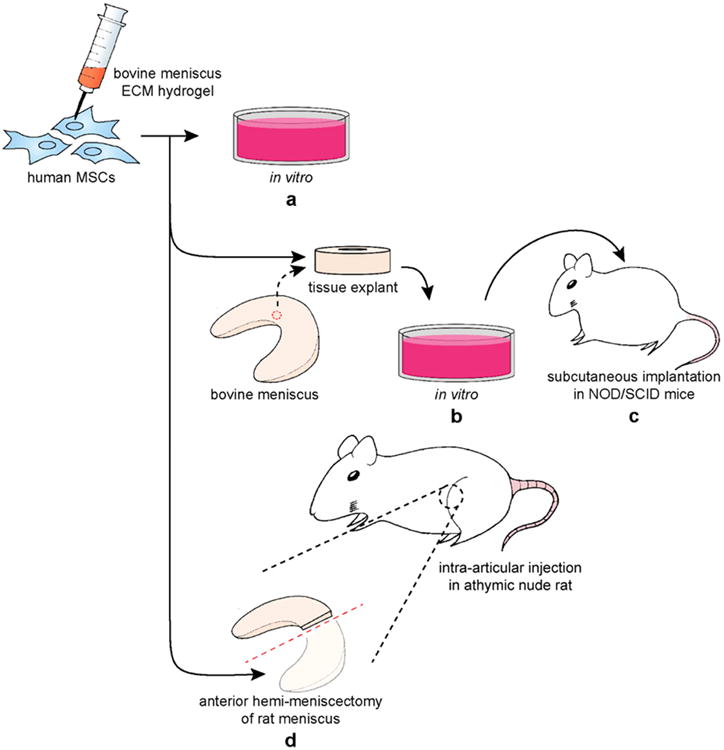
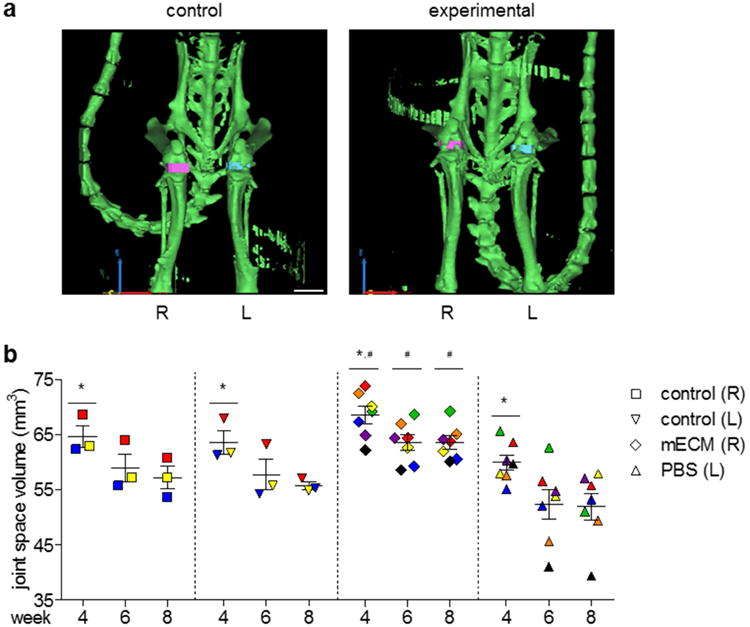
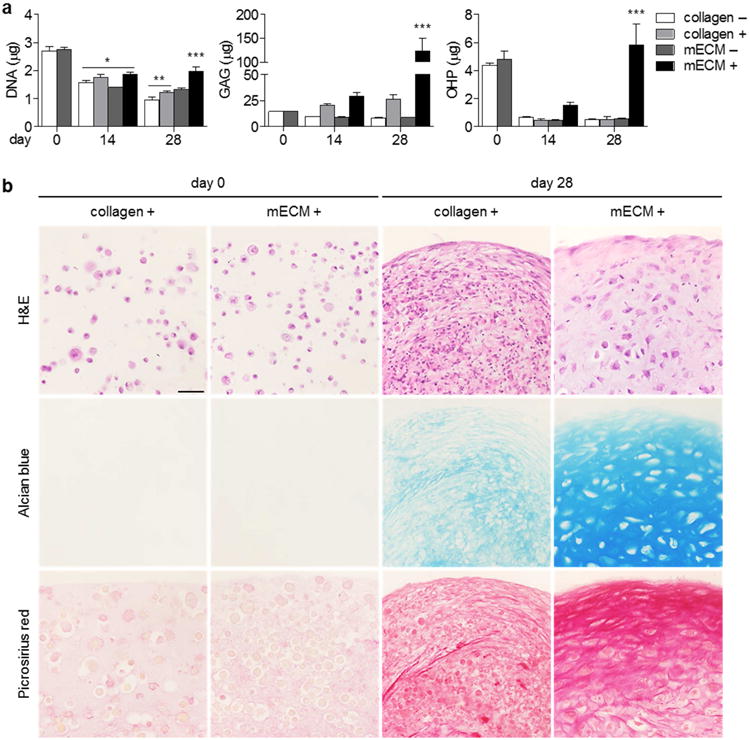
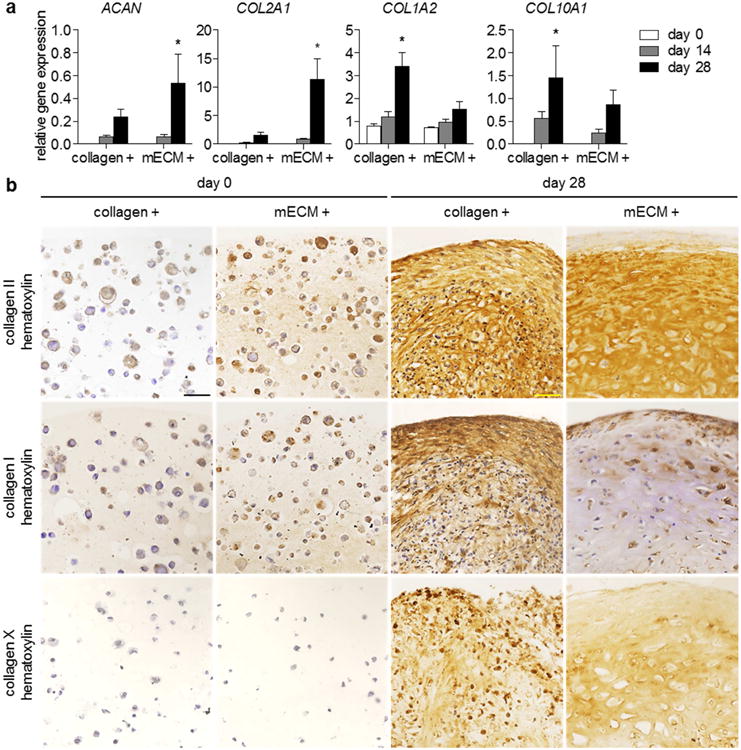
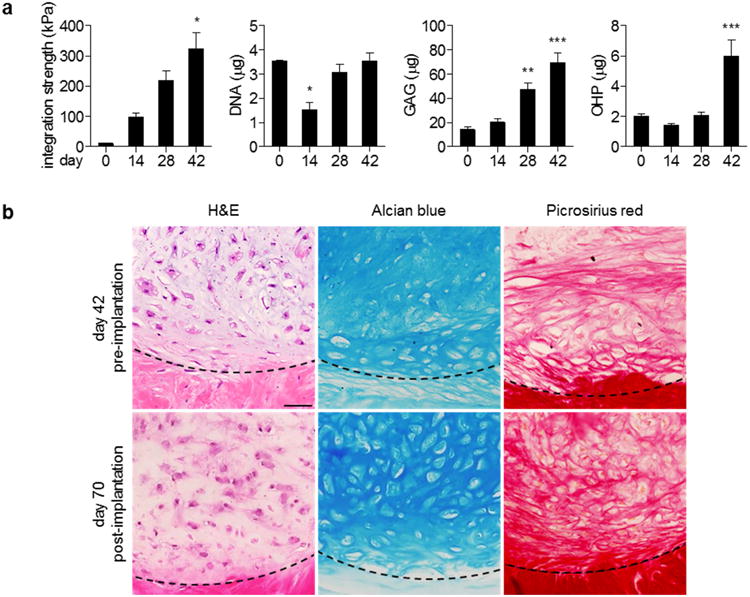
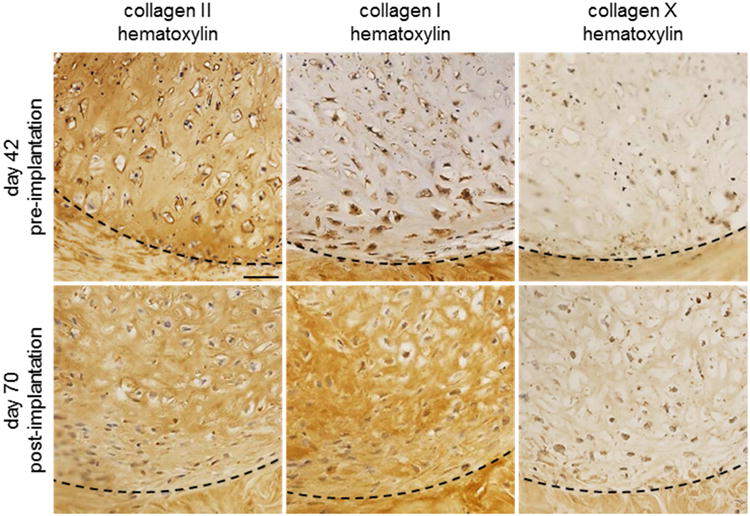
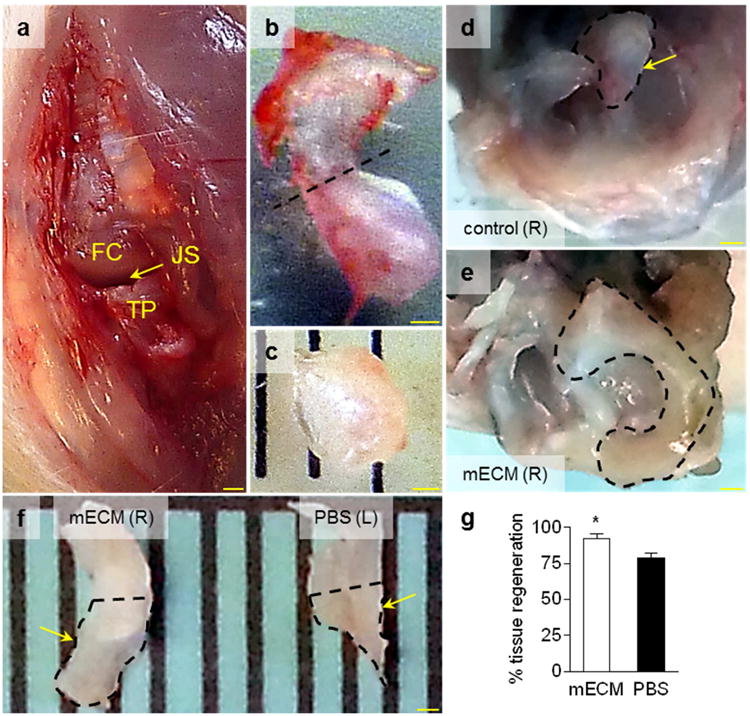
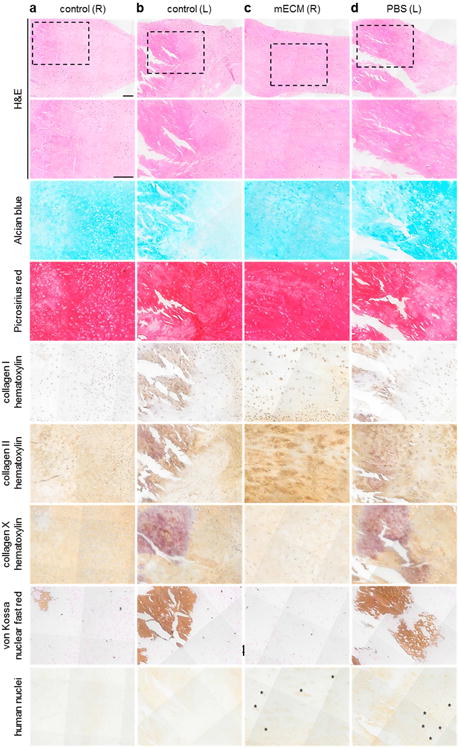
Interest in non-invasive injectable therapies has rapidly risen due to their excellent safety profile and ease of use in clinical settings. Injectable hydrogels can be derived from the extracellular matrix (ECM) of specific tissues to provide a biomimetic environment for cell delivery and enable seamless regeneration of tissue defects. We investigated the in situ delivery of human mesenchymal stem cells (hMSCs) in decellularized meniscus ECM hydrogel to a meniscal defect in a nude rat model. First, decellularized meniscus ECM hydrogel retained tissue-specific proteoglycans and collagens, and significantly upregulated expression of fibrochondrogenic markers by hMSCs versus collagen hydrogel alone in vitro. The meniscus ECM hydrogel in turn supported delivery of hMSCs for integrative repair of a full-thickness defect model in meniscal explants after in vitro culture and in vivo subcutaneous implantation. When applied to an orthotopic model of meniscal injury in nude rat, hMSCs in meniscus ECM hydrogel were retained out to eight weeks post-injection, contributing to tissue regeneration and protection from joint space narrowing, pathologic mineralization, and osteoarthritis development, as evidenced by macroscopic and microscopic image analysis. Based on these findings, we propose the use of tissue-specific meniscus ECM-derived hydrogel for the delivery of therapeutic hMSCs to treat meniscal injury.
由于其出色的安全性和在临床环境中的易用性,对非侵入性注射疗法的兴趣迅速上升。可注射水凝胶可来源于特定组织的细胞外基质(ECM),为细胞递送提供仿生环境,并实现组织缺损的无缝再生。我们在裸鼠模型中研究了脱细胞半月板ECM水凝胶中人骨髓间充质干细胞(hMSCs)向半月板缺损处的原位递送。首先,脱细胞半月板ECM水凝胶保留了组织特异性蛋白聚糖和胶原蛋白,并且与单独的胶原蛋白水凝胶相比,在体外显著上调了hMSCs中成纤维软骨生成标志物的表达。半月板ECM水凝胶反过来支持hMSCs的递送,用于体外培养和体内皮下植入后半月板外植体全层缺损模型的整合修复。当应用于裸鼠半月板损伤的原位模型时,半月板ECM水凝胶中的hMSCs在注射后长达八周仍能保留,有助于组织再生,并防止关节间隙变窄、病理性矿化和骨关节炎发展,宏观和微观图像分析证明了这一点。基于这些发现,我们建议使用组织特异性半月板ECM衍生的水凝胶来递送治疗性hMSCs以治疗半月板损伤。