He Li-Fang, Xu Hong-Wu, Chen Min, Xian Zhi-Rong, Wen Xiao-Fen, Chen Min-Na, Du Cai-Wen, Huang Wen-He, Wu Jun-Dong, Zhang Guo-Jun
The Breast Center, Cancer Hospital of Shantou University Medical College, Shantou 515041, Guangdong, China.
Changjiang Scholar Laboratory, Shantou University Medical College, Shantou 515041, Guangdong, China.
Oncotarget. 2017 Mar 14;8(11):17573-17585. doi: 10.18632/oncotarget.7466.
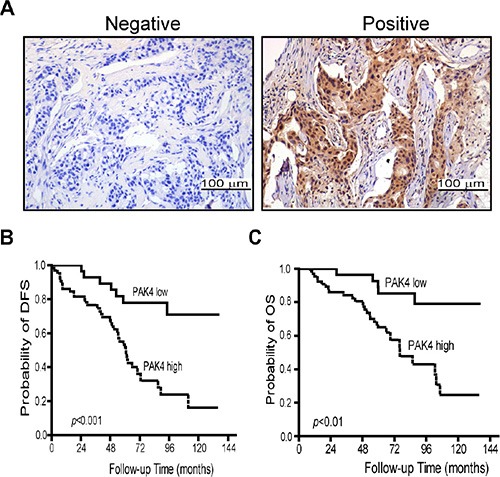
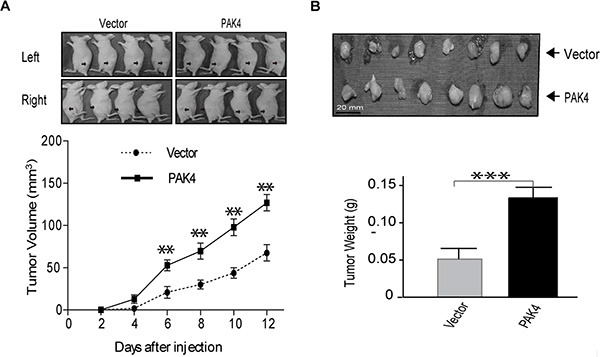
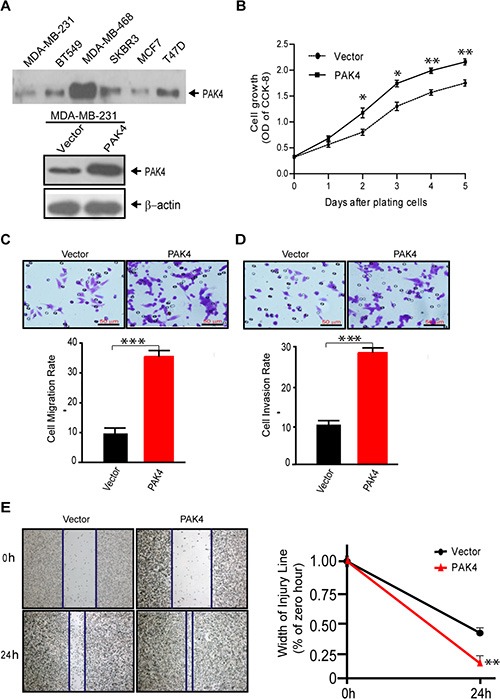
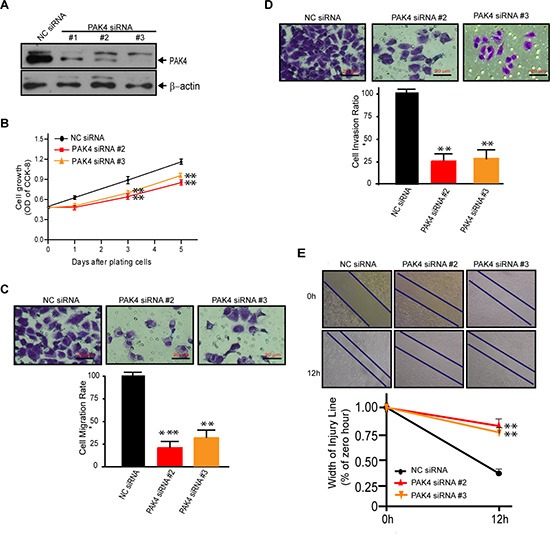
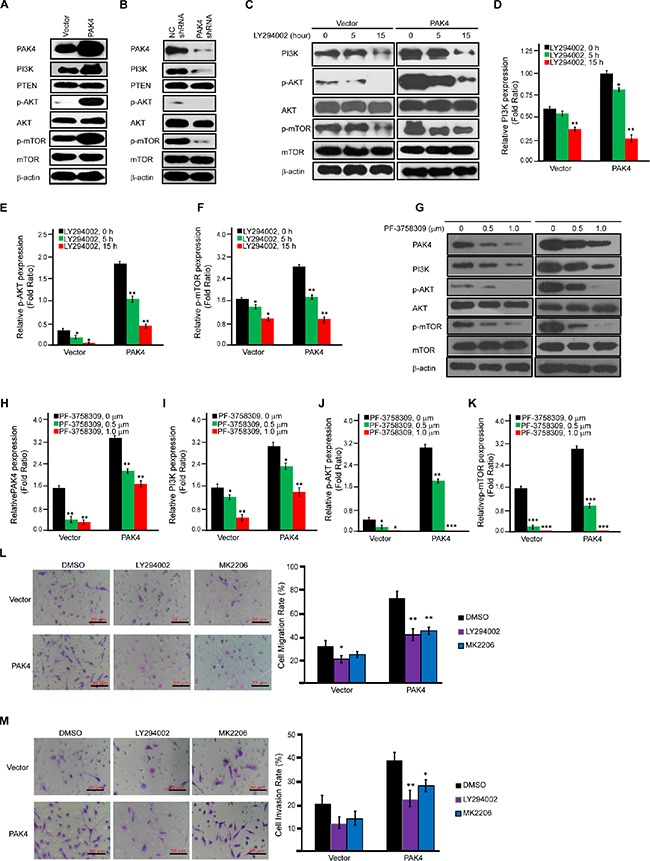
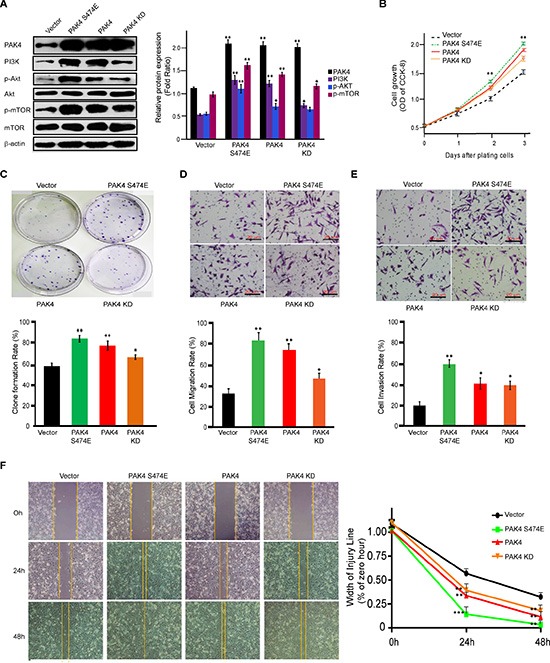
The p21-activated kinase 4 (PAK4) is sufficient to transform noncancerous mammary epithelial cells and to form tumors in the mammary glands of mice. The accumulated information suggests that PAK4 might be an oncogenic protein in breast cancer. In this study, we sought to identify the role for PAK4 in breast cancer progression. Immunohistochemical study revealed that high PAK4 expression is associated with larger tumor size, lymph node metastasis, and advanced stage cancer in 93 invasive breast carcinoma patients. Moreover, high PAK4 expression was significantly associated with poor overall and disease-free survival. PAK4 remained an independent adverse prognosticator after univariate and multivariate analysis. Ectopic expression of wild-type PAK4 in MDA-MB-231 cells activated PI3K/AKT signaling and resulted in the enhancement of the cell proliferation, migration, and invasion, whereas PAK4-induced effects were blocked by the PAK4 kinase inhibitor PF- 3758309, PAK4 siRNAs or the PI3K inhibitor LY294002. Furthermore, a kinase-active PAK4 (S474E) strongly induced PI3K/AKT activation, and promoted proliferation, migration and invasion in breast cancer cells. A kinase-inactive PAK4 KD (K350A/K351A) did partially upregulate PI3K/AKT, and promoted invasive phenotype. Taken together, these findings suggest that PAK4-activated PI3K/AKT signaling is both kinase-dependent and -independent, which contributes to breast cancer progression. Thus, our results imply that dual inhibition of PAK4 and PI3K/AKT signaling might be a potential therapeutic approach for breast cancer therapy.
p21激活激酶4(PAK4)足以使非癌性乳腺上皮细胞发生转化,并在小鼠乳腺中形成肿瘤。积累的信息表明,PAK4可能是乳腺癌中的一种致癌蛋白。在本研究中,我们试图确定PAK4在乳腺癌进展中的作用。免疫组织化学研究显示,在93例浸润性乳腺癌患者中,PAK4高表达与肿瘤体积较大、淋巴结转移及癌症晚期相关。此外,PAK4高表达与总体生存率和无病生存率差显著相关。单因素和多因素分析后,PAK4仍然是一个独立的不良预后因素。在MDA-MB-231细胞中异位表达野生型PAK4可激活PI3K/AKT信号通路,并导致细胞增殖、迁移和侵袭增强;而PAK4诱导的效应被PAK4激酶抑制剂PF-3758309、PAK4小干扰RNA或PI3K抑制剂LY294002阻断。此外,激酶活性的PAK4(S474E)强烈诱导PI3K/AKT激活,并促进乳腺癌细胞的增殖、迁移和侵袭。激酶失活的PAK4 KD(K350A/K351A)确实部分上调了PI3K/AKT,并促进了侵袭表型。综上所述,这些发现表明PAK4激活的PI3K/AKT信号通路既是激酶依赖性的,也是非依赖性的,这有助于乳腺癌进展。因此,我们的结果表明,双重抑制PAK4和PI3K/AKT信号通路可能是乳腺癌治疗的一种潜在治疗方法。