Parker Romy, Jelsma Jennifer, Stein Dan J
Department of Health & Rehabilitation Sciences, Faculty of Health Sciences, University of Cape Town, Anzio Road, Observatory, 7925, Cape Town, South Africa.
Department of Psychiatry & Mental Health, MRC Unit on Anxiety & Stress Disorders, Groote Schuur Hospital, Faculty of Health Sciences, University of Cape Town, Cape Town, South Africa.
BMC Womens Health. 2017 Apr 13;17(1):31. doi: 10.1186/s12905-017-0388-9.
Pain is one of the most commonly reported symptoms in people living with HIV/AIDS, whether or not they are receiving anti-retroviral therapy. A recent systematic review identified a paucity of studies exploring pain in women in low and middle income countries. The prevalence and characteristics of pain in women living with HIV/AIDS may differ from that of men as many chronic pain conditions are more prevalent in women. The aims of this study were to establish pain prevalence, characteristics and management in amaXhosa women living with HIV/AIDS. In addition, we aimed to identify whether there were associations between pain in this population and the psychosocial factors of employment, education, self-efficacy, depression, post-traumatic stress disorder, health related quality of life and childhood trauma.
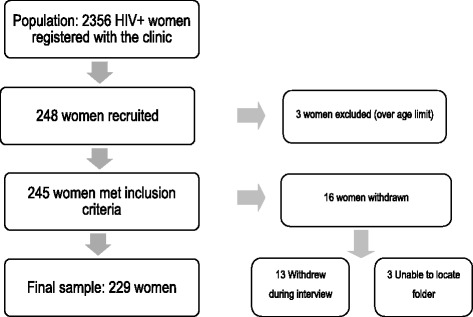
A cross-sectional study of 229 women who had undergone HIV testing and were registered patients at a community health centre was conducted. Data were collected by interview with a demographic questionnaire, the Brief Pain Inventory-Xhosa, Childhood Trauma Questionnaire-Xhosa, Harvard Trauma Questionnaire-Xhosa for PTSD, Self-Efficacy for Managing Chronic Disease 6-Item Scale-Xhosa; the EQ-5D health related quality of life instrument, and the Beck Depression Inventory.
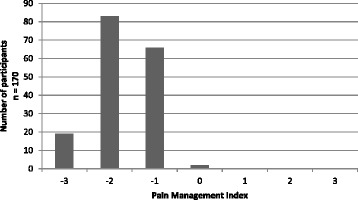
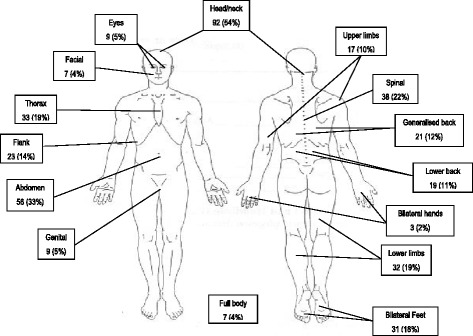
170 of the women had pain, a prevalence rate of 74.24% (95%CI 68.2 - 79.47%). The women reported significant pain with pain severity of 5.06 ± 1.57 and pain interference of 6.39 ± 1.96 out of 10. Only two women were receiving adequate pain management according to the pain management index. Participants reported a mean of 2.42 ± 1.21 different anatomical sites of pain. There were more unemployed participants in the group with pain and they had significantly fewer years of schooling. Those with pain had lower self-efficacy; health related quality of life and increased depression and PTSD symptom severity.
This study highlights that pain is a common problem for amaXhosa women living with HIV/AIDS. These data emphasise the need to prioritise pain assessment and management in amaXhosa women living with HIV/AIDS. Routinely assessing for the presence of pain in women with HIV/AIDS has the potential to improve pain management and minimise the impact of pain on function.
疼痛是艾滋病毒/艾滋病感染者最常报告的症状之一,无论他们是否正在接受抗逆转录病毒治疗。最近一项系统评价发现,在低收入和中等收入国家,探索女性疼痛情况的研究较少。感染艾滋病毒/艾滋病的女性的疼痛患病率和特征可能与男性不同,因为许多慢性疼痛病症在女性中更为普遍。本研究的目的是确定感染艾滋病毒/艾滋病的阿马科萨女性的疼痛患病率、特征及管理情况。此外,我们旨在确定该人群的疼痛与就业、教育、自我效能感、抑郁、创伤后应激障碍、健康相关生活质量和童年创伤等社会心理因素之间是否存在关联。
对229名接受过艾滋病毒检测并在社区卫生中心登记的女性进行了一项横断面研究。通过访谈收集数据,使用的问卷包括人口统计学问卷、科萨语简明疼痛量表、科萨语童年创伤问卷、科萨语用于创伤后应激障碍的哈佛创伤问卷、科萨语慢性病自我管理效能6项量表、EQ-5D健康相关生活质量工具以及贝克抑郁量表。
170名女性有疼痛症状,患病率为74.24%(95%置信区间为68.2 - 79.47%)。这些女性报告疼痛程度显著,疼痛严重程度评分为5.06 ± 1.57,疼痛干扰评分为6.39 ± 1.96(满分10分)。根据疼痛管理指数,只有两名女性得到了充分的疼痛管理。参与者报告平均有2.42 ± 1.21个不同的疼痛解剖部位。疼痛组中失业参与者更多,且受教育年限明显更少。有疼痛的人自我效能感较低;健康相关生活质量较差,抑郁和创伤后应激障碍症状严重程度增加。
本研究强调疼痛是感染艾滋病毒/艾滋病的阿马科萨女性的常见问题。这些数据强调了对感染艾滋病毒/艾滋病的阿马科萨女性的疼痛评估和管理进行优先排序的必要性。对感染艾滋病毒/艾滋病的女性常规评估疼痛情况有可能改善疼痛管理,并将疼痛对功能的影响降至最低。