D'Ambrosio Lorenzo, Palesandro Erica, Moretti Marina, Pelosi Giuseppe, Fabbri Alessandra, Carnevale Schianca Fabrizio, Aglietta Massimo, Grignani Giovanni
Division of Medical Oncology, Candiolo Cancer Institute - FPO, IRCCS, Strada Provinciale 142 Km 3.95, 10060, Candiolo, TO, Italy.
Department of Oncology, University of Torino Medical School, Strada Provinciale 142 Km 3.95, 10060, Candiolo, TO, Italy.
BMC Cancer. 2017 Apr 13;17(1):266. doi: 10.1186/s12885-017-3262-0.
Nuclear protein in testis (NUT) midline carcinoma is a rarely diagnosed and potentially under-recognized type of squamous carcinoma that is considered one of the most aggressive human solid tumors. Alpha-fetoprotein elevation has been associated with chronic liver diseases and a limited number of cancers. In particular, in presence of a mediastinal mass in a young man, alpha-fetoprotein elevation is considered nearly pathognomonic of a non-seminoma germ-cell tumor.
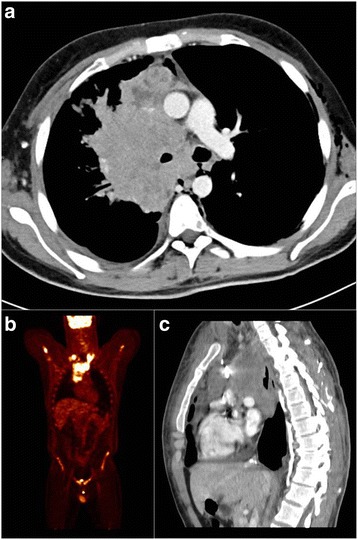
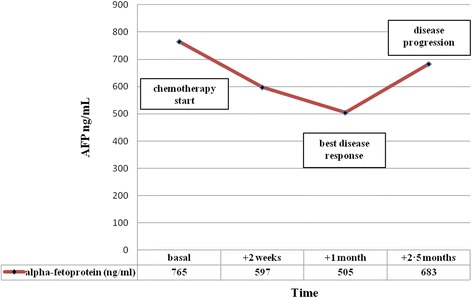
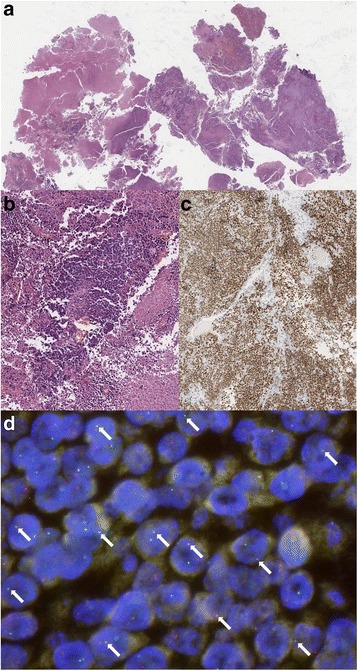
A 22-year old man without any comorbidity was diagnosed with a large mediastinal mass with skeletal and lymph node metastases. The clinical picture was dominated by a life-threatening superior vena cava syndrome with elevated alpha-fetoprotein and lactate dehydrogenase that supported the diagnostic suspicion of mediastinal germ-cell tumor. However, a biopsy showed a poorly-differentiated and diffusely necrotic carcinoma. We eventually reached the diagnosis of the peculiar entity of NUT midline carcinoma, but the differential diagnosis was quite challenging also because alpha-fetoprotein is not reported as a marker of NUT midline carcinoma. Notably, alpha-fetoprotein levels correlated with disease course.
The life-threatening aggressiveness of NUT midline carcinoma mandates to reach the right diagnosis in the shortest possible time. In this regard, poorly differentiated carcinomas lacking glandular differentiation mandate testing for NUT expression by immunohistochemistry. Awareness of a potentially misleading tumor marker elevation can help to broaden the differential diagnosis and establish the most appropriate treatment.
睾丸核蛋白(NUT)中线癌是一种诊断罕见且可能未被充分认识的鳞状细胞癌,被认为是人类最具侵袭性的实体肿瘤之一。甲胎蛋白升高与慢性肝病及少数癌症有关。特别是,在年轻男性出现纵隔肿块时,甲胎蛋白升高几乎被视为非精原细胞瘤性生殖细胞肿瘤的特征性表现。
一名22岁无任何合并症的男性被诊断为伴有骨骼和淋巴结转移的巨大纵隔肿块。临床表现以危及生命的上腔静脉综合征为主,甲胎蛋白和乳酸脱氢酶升高,这支持了纵隔生殖细胞肿瘤的诊断怀疑。然而,活检显示为低分化且弥漫性坏死的癌。我们最终确诊为NUT中线癌这一特殊实体,但鉴别诊断颇具挑战性,因为甲胎蛋白未被报道为NUT中线癌的标志物。值得注意的是,甲胎蛋白水平与病程相关。
NUT中线癌危及生命的侵袭性要求在尽可能短的时间内做出正确诊断。在这方面,缺乏腺性分化的低分化癌需要通过免疫组织化学检测NUT表达。认识到潜在误导性的肿瘤标志物升高有助于拓宽鉴别诊断范围并确立最合适的治疗方法。