Jeong Hoe-Su, Bhin Jinhyuk, Joon Kim Hyung, Hwang Daehee, Ryul Lee Dong, Kim Kye-Seong
Hanyang University College of Medicine, Graduate School of Biomedical Science and Engineering, Seoul, Republic of Korea.
Department of Chemical Engineering, POSTECH, Pohang, Republic of Korea.
Exp Mol Med. 2017 Apr 14;49(4):e315. doi: 10.1038/emm.2017.2.
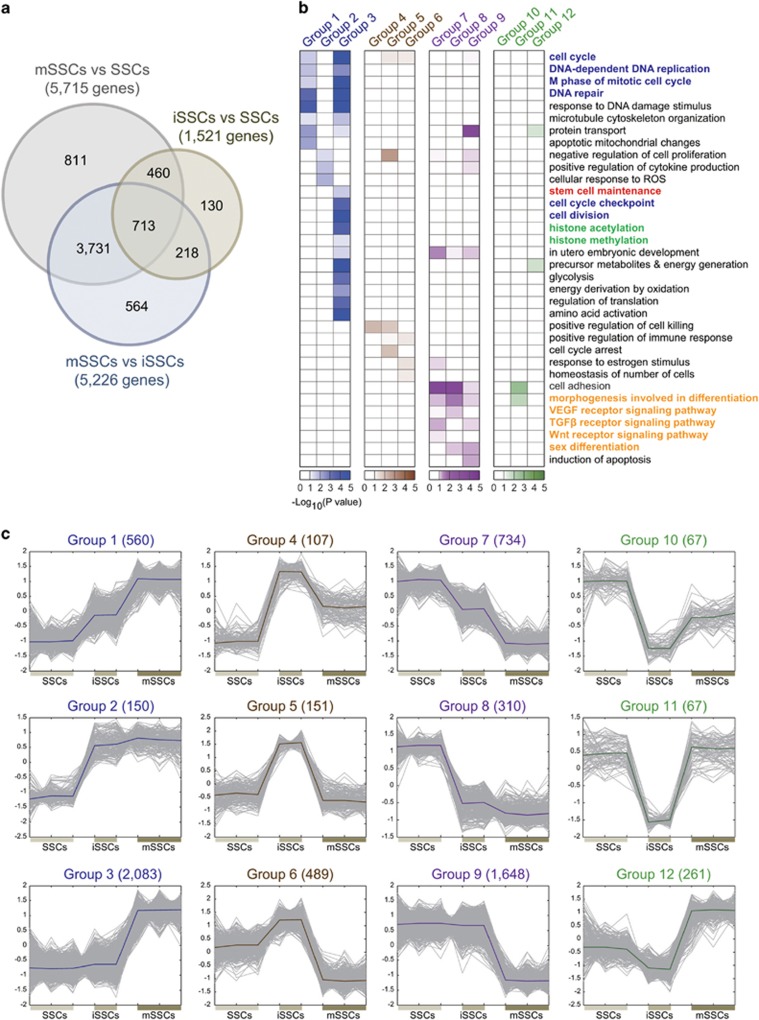
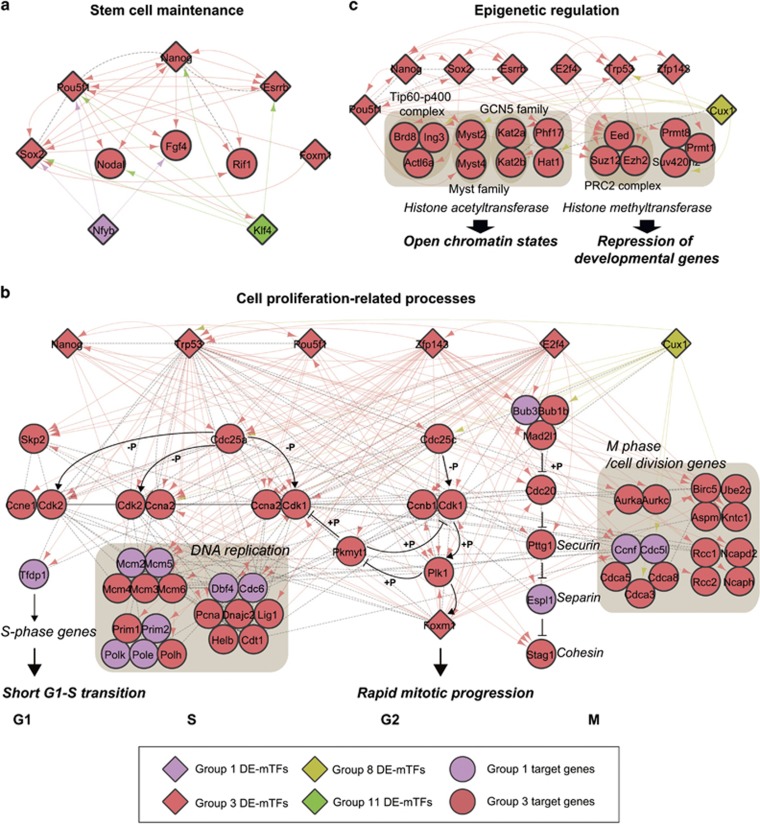
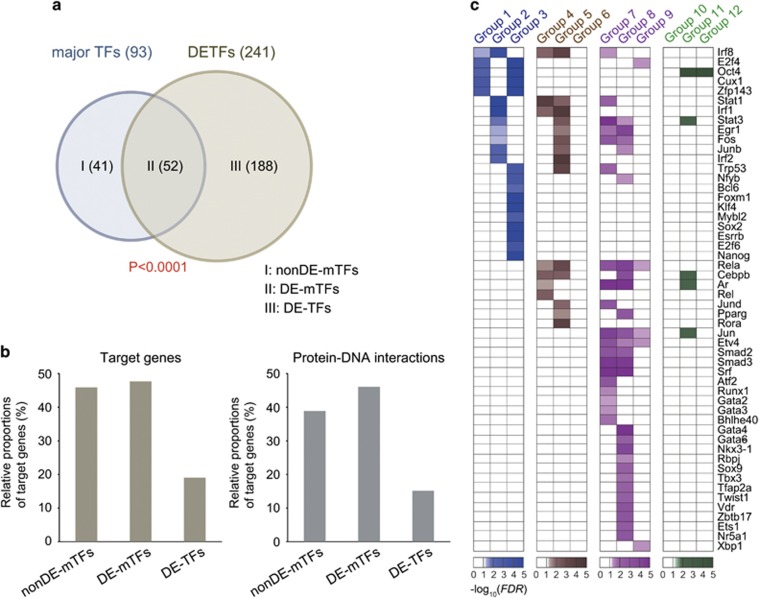
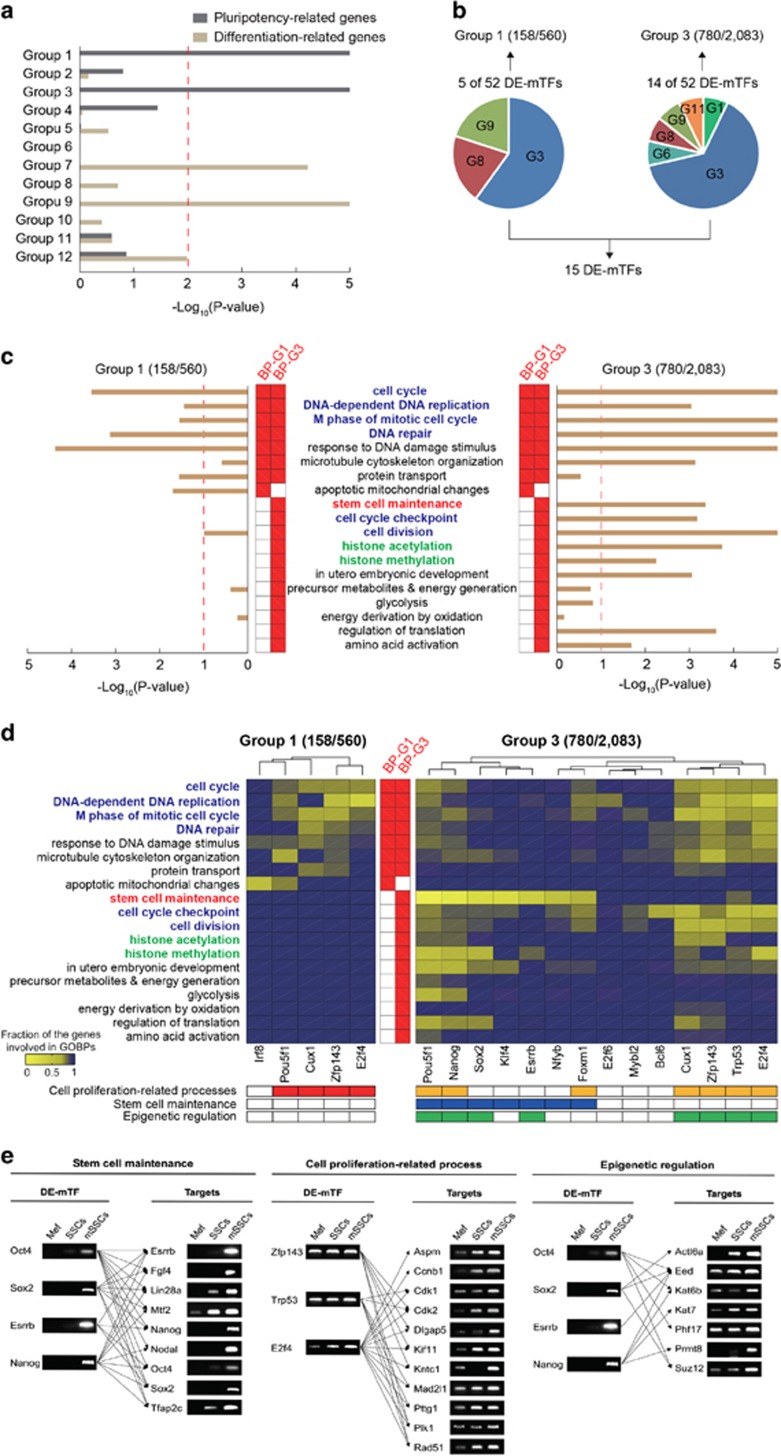
Spermatogonial stem cells (SSCs) are germline stem cells located along the basement membrane of seminiferous tubules in testes. Recently, SSCs were shown to be reprogrammed into multipotent SSCs (mSSCs). However, both the key factors and biological networks underlying this reprogramming remain elusive. Here, we present transcriptional regulatory networks (TRNs) that control cellular processes related to the SSC-to-mSSC reprogramming. Previously, we established intermediate SSCs (iSSCs) undergoing the transition to mSSCs and generated gene expression profiles of SSCs, iSSCs and mSSCs. By comparing these profiles, we identified 2643 genes that were up-regulated during the reprogramming process and 15 key transcription factors (TFs) that regulate these genes. Using the TF-target relationships, we developed TRNs describing how these TFs regulate three pluripotency-related processes (cell proliferation, stem cell maintenance and epigenetic regulation) during the reprogramming. The TRNs showed that 4 of the 15 TFs (Oct4/Pou5f1, Cux1, Zfp143 and E2f4) regulated cell proliferation during the early stages of reprogramming, whereas 11 TFs (Oct4/Pou5f1, Foxm1, Cux1, Zfp143, Trp53, E2f4, Esrrb, Nfyb, Nanog, Sox2 and Klf4) regulated the three pluripotency-related processes during the late stages of reprogramming. Our TRNs provide a model for the temporally coordinated transcriptional regulation of pluripotency-related processes during the SSC-to-mSSC reprogramming, which can be further tested in detailed functional studies.
精原干细胞(SSCs)是位于睾丸生精小管基底膜上的生殖系干细胞。最近,研究表明SSCs可被重编程为多能精原干细胞(mSSCs)。然而,这种重编程背后的关键因素和生物学网络仍不清楚。在此,我们展示了控制与SSC向mSSC重编程相关细胞过程的转录调控网络(TRNs)。此前,我们建立了正在向mSSCs转变的中间精原干细胞(iSSCs),并生成了SSCs、iSSCs和mSSCs的基因表达谱。通过比较这些图谱,我们鉴定出了2643个在重编程过程中上调的基因以及15个调控这些基因的关键转录因子(TFs)。利用TF-靶标关系,我们构建了TRNs,描述了这些TFs在重编程过程中如何调控三个多能性相关过程(细胞增殖、干细胞维持和表观遗传调控)。TRNs显示,15个TFs中的4个(Oct4/Pou5f1、Cux1、Zfp143和E2f4)在重编程早期调控细胞增殖,而11个TFs(Oct4/Pou5f1、Foxm1、Cux1、Zfp143、Trp53、E2f4、Esrrb、Nfyb, Nanog、Sox2和Klf4)在重编程后期调控这三个多能性相关过程。我们的TRNs为SSC向mSSC重编程过程中多能性相关过程的时间协调转录调控提供了一个模型,该模型可在详细的功能研究中进一步验证。