Netherlands Institute of Ecology (NIOO-KNAW), Department of Microbial Ecology, 6700 AB, Wageningen, The Netherlands.
Institute of Microbiology, University of Greifswald, 17487, Greifswald, Germany.
Sci Rep. 2017 Apr 13;7(1):862. doi: 10.1038/s41598-017-00893-3.
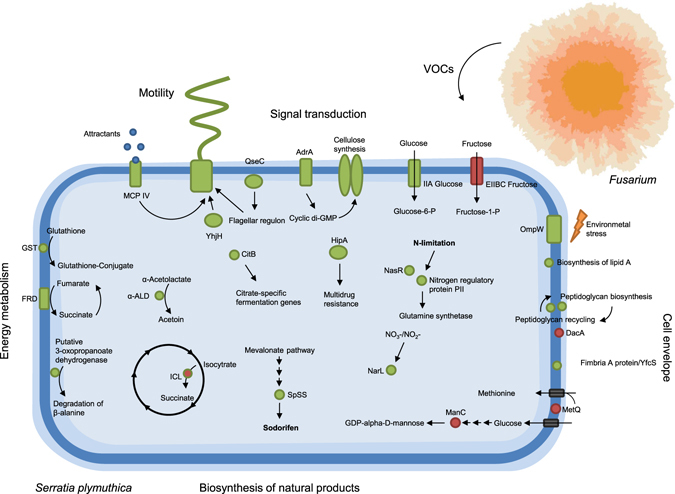
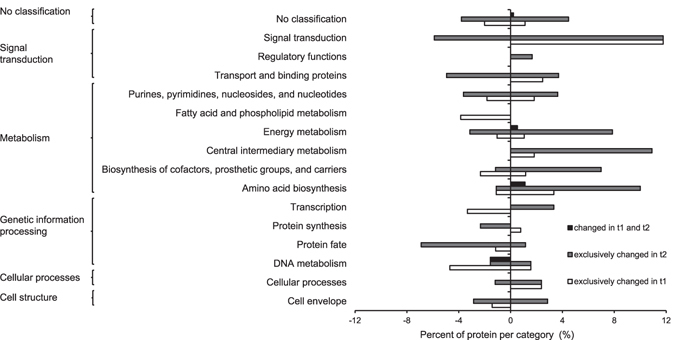
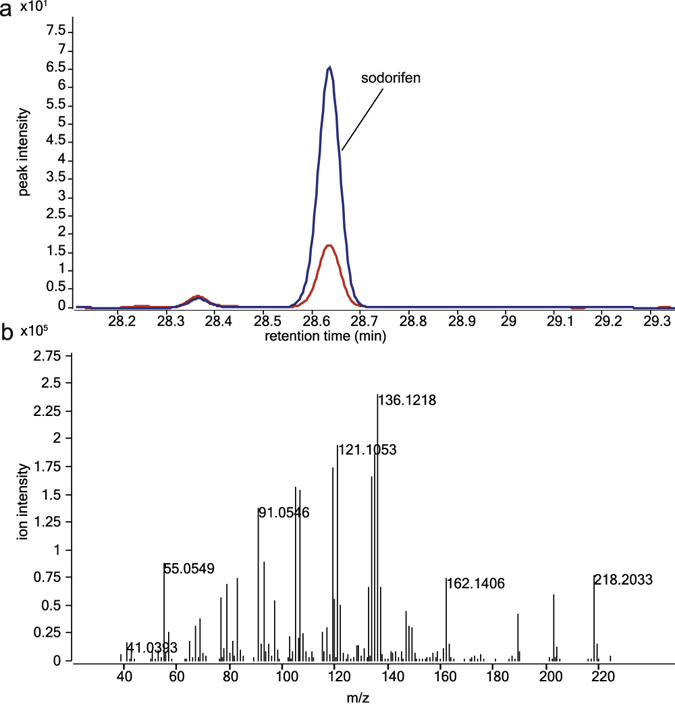
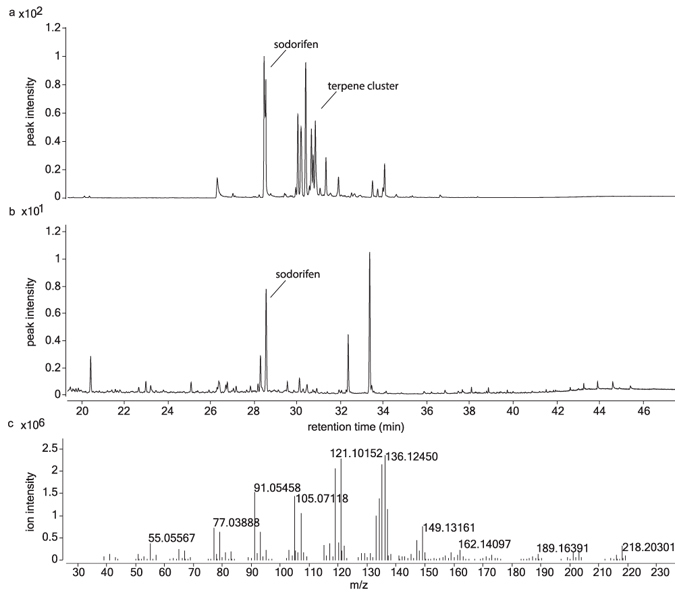
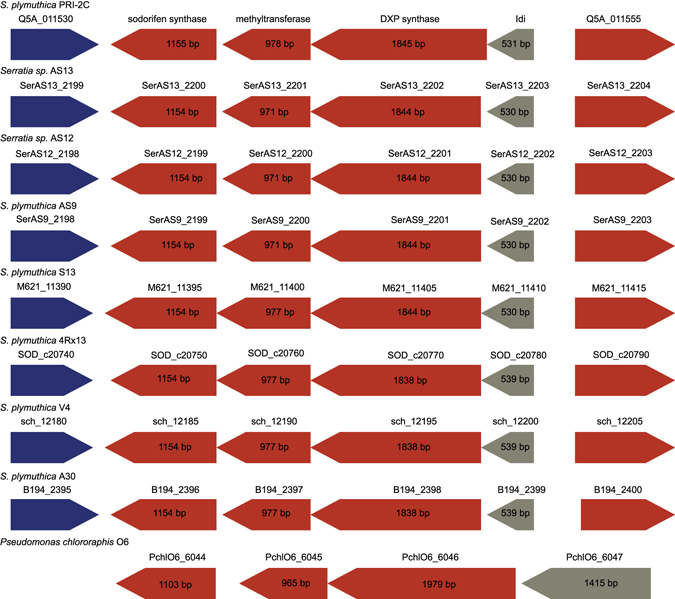
The ability of bacteria and fungi to communicate with each other is a remarkable aspect of the microbial world. It is recognized that volatile organic compounds (VOCs) act as communication signals, however the molecular responses by bacteria to fungal VOCs remain unknown. Here we perform transcriptomics and proteomics analyses of Serratia plymuthica PRI-2C exposed to VOCs emitted by the fungal pathogen Fusarium culmorum. We find that the bacterium responds to fungal VOCs with changes in gene and protein expression related to motility, signal transduction, energy metabolism, cell envelope biogenesis, and secondary metabolite production. Metabolomic analysis of the bacterium exposed to the fungal VOCs, gene cluster comparison, and heterologous co-expression of a terpene synthase and a methyltransferase revealed the production of the unusual terpene sodorifen in response to fungal VOCs. These results strongly suggest that VOCs are not only a metabolic waste but important compounds in the long-distance communication between fungi and bacteria.
细菌和真菌相互交流的能力是微生物世界的一个显著特征。人们已经认识到挥发性有机化合物(VOCs)是作为交流信号,但是细菌对真菌 VOCs 的分子响应仍然未知。在这里,我们对暴露于真菌病原体镰刀菌 VOCs 的粘质沙雷氏菌 PRI-2C 进行了转录组学和蛋白质组学分析。我们发现,细菌对真菌 VOCs 的反应表现为与运动性、信号转导、能量代谢、细胞包膜生物发生和次生代谢产物产生相关的基因和蛋白质表达的变化。对暴露于真菌 VOCs 的细菌进行代谢组学分析、基因簇比较以及萜烯合酶和甲基转移酶的异源共表达表明,细菌会产生一种不寻常的萜烯 sodorifen 来响应真菌 VOCs。这些结果强烈表明,VOCs 不仅是一种代谢废物,而且是真菌和细菌之间长距离交流的重要化合物。