Department Functional Biology, University of Oviedo, 33006, Oviedo, Spain.
University Institute of Oncology of Asturias (I.U.O.P.A), University of Oviedo, 33006, Oviedo, Spain.
Microb Cell Fact. 2024 Jun 18;23(1):181. doi: 10.1186/s12934-024-02456-4.
Volatile compounds are key elements in the interaction and communication between organisms at both interspecific and intraspecific levels. In complex bacterial communities, the emission of these fast-acting chemical messengers allows an exchange of information even at a certain distance that can cause different types of responses in the receiving organisms. The changes in secondary metabolism as a consequence of this interaction arouse great interest in the field of searching for bioactive compounds since they can be used as a tool to activate silenced metabolic pathways. Regarding the great metabolic potential that the Actinobacteria group presents in the production of compounds with attractive properties, we evaluated the reply the emitted volatile compounds can generate in other individuals of the same group.
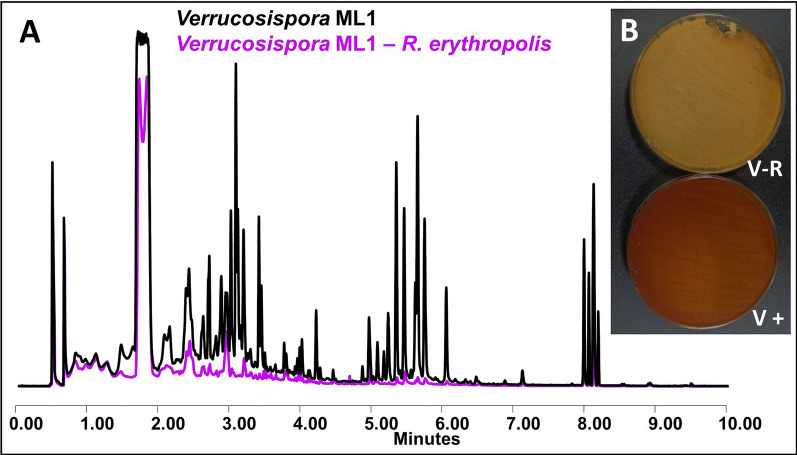
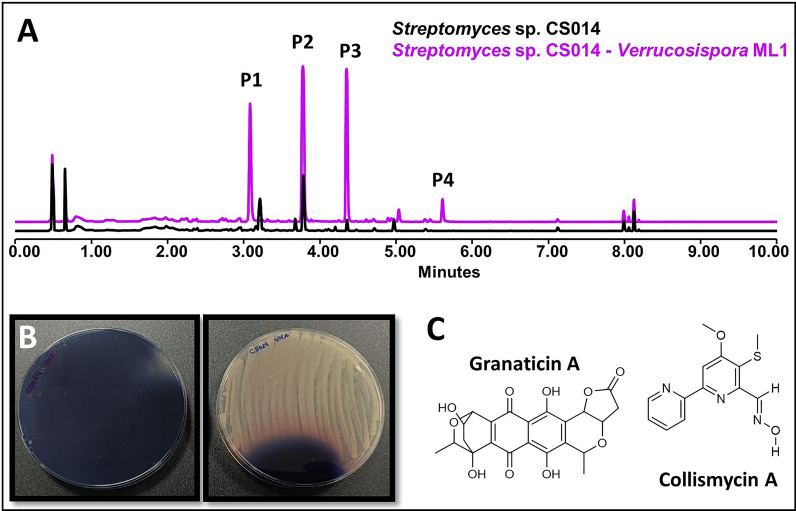
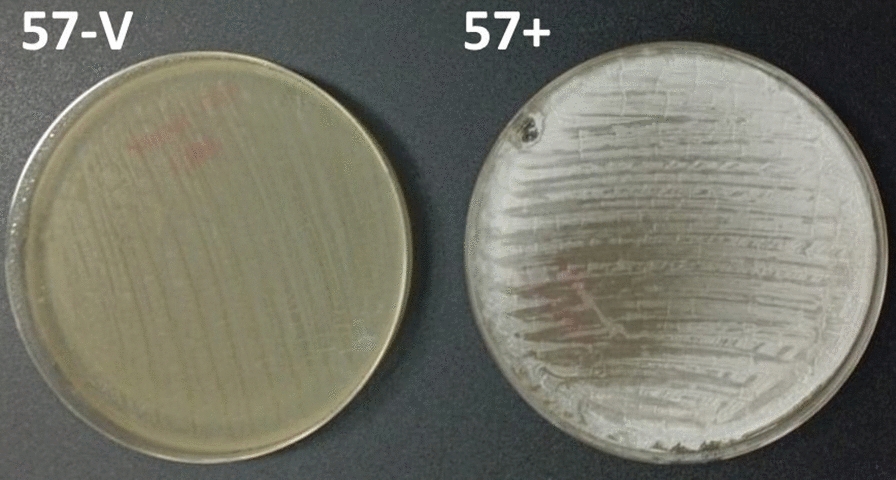
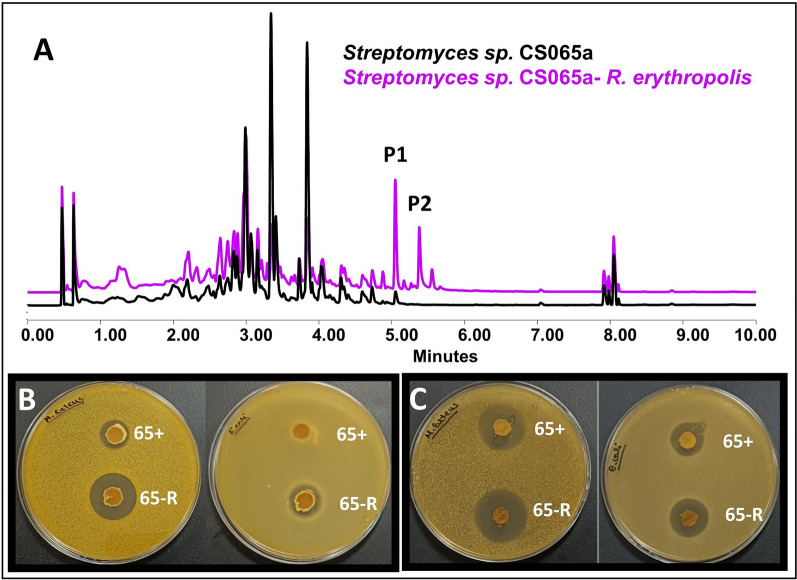
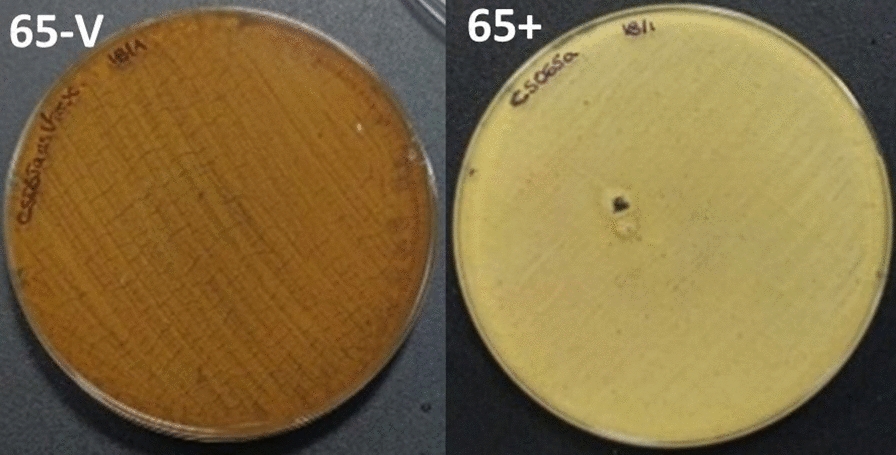
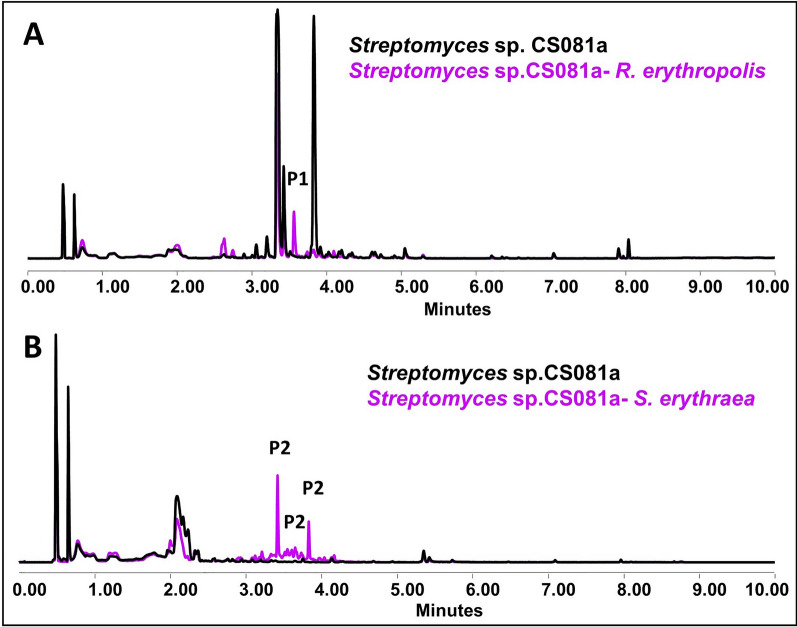
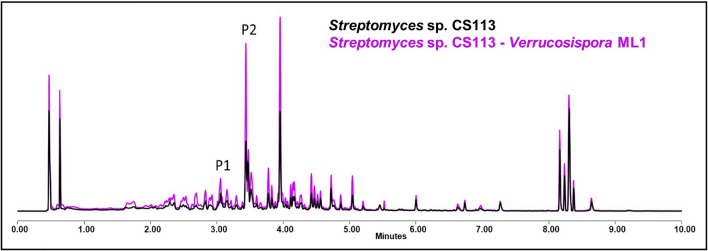
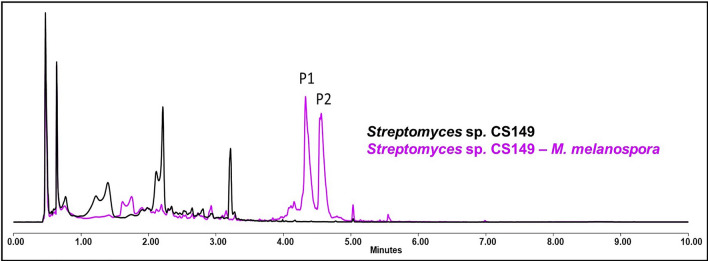
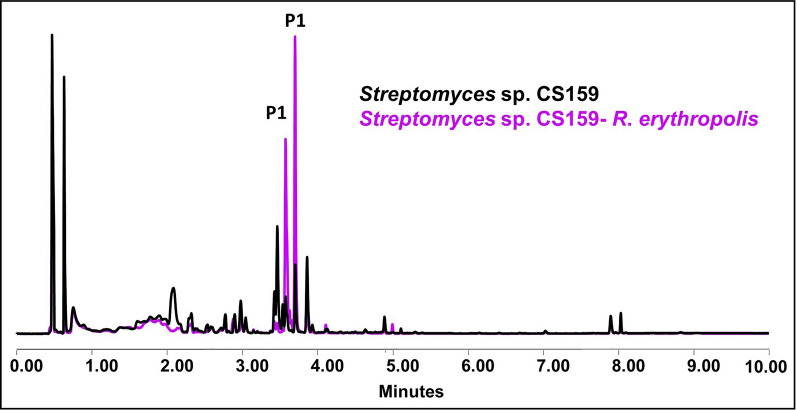
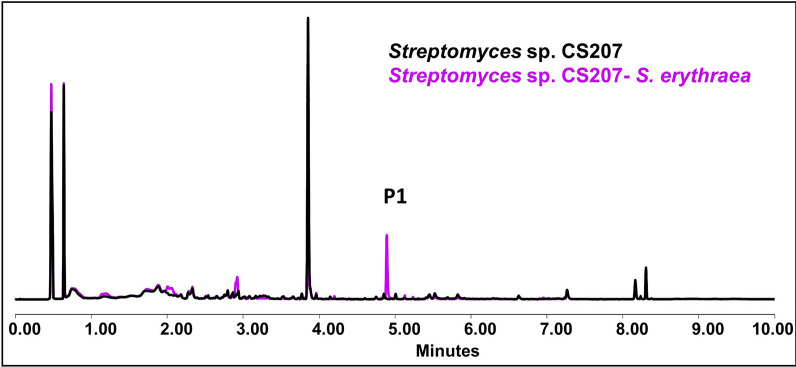
We recently reported that volatile compounds released by different streptomycete species trigger the modulation of biosynthetic gene clusters in Streptomyces spp. which finally leads to the activation/repression of the production of secondary metabolites in the recipient strains. Here we present the application of this rationale in a broader bacterial community to evaluate volatiles as signaling effectors that drive the activation of biosynthesis of bioactive compounds in other members of the Actinobacteria group. Using cocultures of different actinobacteria (where only the volatile compounds reach the recipient strain) we were able to modify the bacterial secondary metabolism that drives overproduction (e.g., granaticins, actiphenol, chromomycins) and/or de novo production (e.g., collismycins, skyllamycins, cosmomycins) of compounds belonging to different chemical species that present important biological activities.
This work shows how the secondary metabolism of different Actinobacteria species can vary significantly when exposed in co-culture to the volatile compounds of other phylum-shared bacteria, these effects being variable depending on strains and culture media. This approach can be applied to the field of new drug discovery to increase the battery of bioactive compounds produced by bacteria that can potentially be used in treatments for humans and animals.
挥发性化合物是生物在种间和种内水平上相互作用和交流的关键因素。在复杂的细菌群落中,这些快速作用的化学信使的排放允许在一定距离内进行信息交换,从而导致接收生物产生不同类型的反应。这种相互作用导致的次级代谢变化引起了人们对寻找生物活性化合物的极大兴趣,因为它们可以作为激活沉默代谢途径的工具。鉴于放线菌组在产生具有吸引力特性的化合物方面具有巨大的代谢潜力,我们评估了这些挥发性化合物在同一组其他个体中产生的反应。
我们最近报道,不同链霉菌物种释放的挥发性化合物触发了链霉菌属中生物合成基因簇的调制,最终导致了受体制剂中次级代谢产物的产生的激活/抑制。在这里,我们将这一原理应用于更广泛的细菌群落,以评估挥发性化合物作为信号效应物,驱动放线菌组中其他成员生物活性化合物生物合成的激活。使用不同放线菌的共培养物(只有挥发性化合物到达受体菌株),我们能够修饰细菌的次级代谢,从而导致过度产生(例如,格兰昔林、actiphenol、chromomycins)和/或从头产生(例如,collismycins、skyllamycins、cosmomycins)属于不同化学物质的化合物,这些化合物具有重要的生物学活性。
这项工作表明,当不同放线菌物种的次级代谢物暴露在与其他门共享细菌的挥发性化合物的共培养物中时,它们的次级代谢物会发生显著变化,这些影响因菌株和培养基而异。这种方法可以应用于新药发现领域,以增加细菌产生的生物活性化合物的种类,这些化合物可能用于人类和动物的治疗。