Yusa Noriaki, Kim Jungho, Koizumi Masatoshi, Sugiura Motoaki, Kawashima Ryuta
Department of English, Miyagi Gakuin Women's UniversitySendai, Japan.
Department of Foreign Languages, Kyoto Women's UniversityKyoto, Japan.
Front Hum Neurosci. 2017 Mar 31;11:115. doi: 10.3389/fnhum.2017.00115. eCollection 2017.
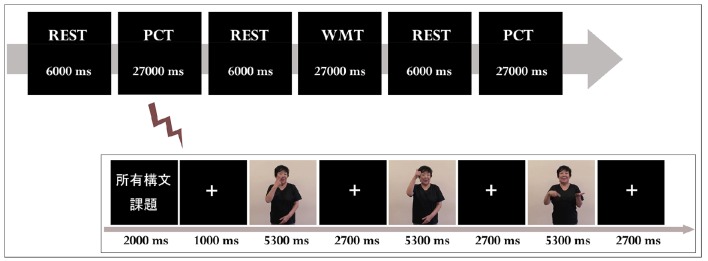
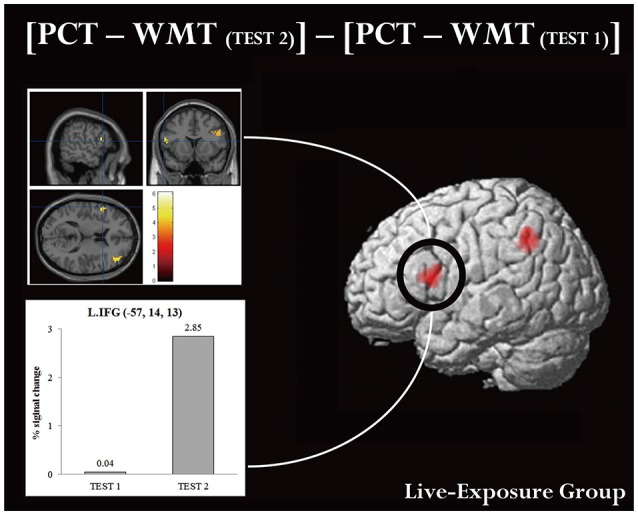
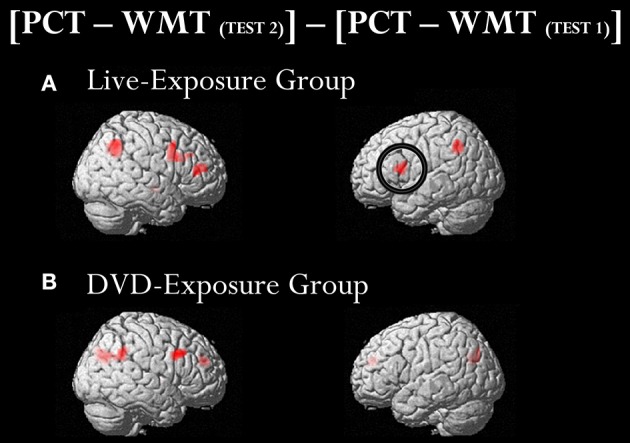
Children naturally acquire a language in social contexts where they interact with their caregivers. Indeed, research shows that social interaction facilitates lexical and phonological development at the early stages of child language acquisition. It is not clear, however, whether the relationship between social interaction and learning applies to adult second language acquisition of syntactic rules. Does learning second language syntactic rules through social interactions with a native speaker or without such interactions impact behavior and the brain? The current study aims to answer this question. Adult Japanese participants learned a new foreign language, Japanese sign language (JSL), either through a native deaf signer or via DVDs. Neural correlates of acquiring new linguistic knowledge were investigated using functional magnetic resonance imaging (fMRI). The participants in each group were indistinguishable in terms of their behavioral data after the instruction. The fMRI data, however, revealed significant differences in the neural activities between two groups. Significant activations in the left inferior frontal gyrus (IFG) were found for the participants who learned JSL through interactions with the native signer. In contrast, no cortical activation change in the left IFG was found for the group who experienced the same visual input for the same duration via the DVD presentation. Given that the left IFG is involved in the syntactic processing of language, spoken or signed, learning through social interactions resulted in an fMRI signature typical of native speakers: activation of the left IFG. Thus, broadly speaking, availability of communicative interaction is necessary for second language acquisition and this results in observed changes in the brain.
儿童在与照顾者互动的社会环境中自然地习得语言。事实上,研究表明,社会互动在儿童语言习得的早期阶段促进词汇和语音发展。然而,社会互动与学习之间的关系是否适用于成人第二语言句法规则的习得尚不清楚。通过与母语使用者进行社会互动或不进行这种互动来学习第二语言句法规则,是否会影响行为和大脑?当前的研究旨在回答这个问题。成年日本参与者通过一位本土聋人手语使用者或通过DVD学习一门新的外语——日本手语(JSL)。使用功能磁共振成像(fMRI)研究获取新语言知识的神经关联。每组参与者在接受指导后的行为数据方面没有差异。然而,fMRI数据显示两组之间的神经活动存在显著差异。通过与本土手语使用者互动学习JSL的参与者,其左侧额下回(IFG)有显著激活。相比之下,通过DVD呈现相同时长的相同视觉输入的组,在左侧IFG未发现皮质激活变化。鉴于左侧IFG参与口语或手语语言的句法处理,通过社会互动学习会产生以母语使用者为典型特征的fMRI特征:左侧IFG的激活。因此,广义地说,交际互动的可用性对于第二语言习得是必要的,这会导致大脑出现观察到的变化。