Brouwer Paul, Bräutigam Andrea, Buijs Valerie A, Tazelaar Anne O E, van der Werf Adrie, Schlüter Urte, Reichart Gert-Jan, Bolger Anthony, Usadel Björn, Weber Andreas P M, Schluepmann Henriette
Molecular Plant Physiology, Institute of Environmental Biology, Utrecht UniversityUtrecht, Netherlands.
Institute for Plant Biochemistry, Cluster of Excellence on Plant Sciences, Heinrich Heine UniversityDüsseldorf, Germany.
Front Plant Sci. 2017 Mar 31;8:442. doi: 10.3389/fpls.2017.00442. eCollection 2017.
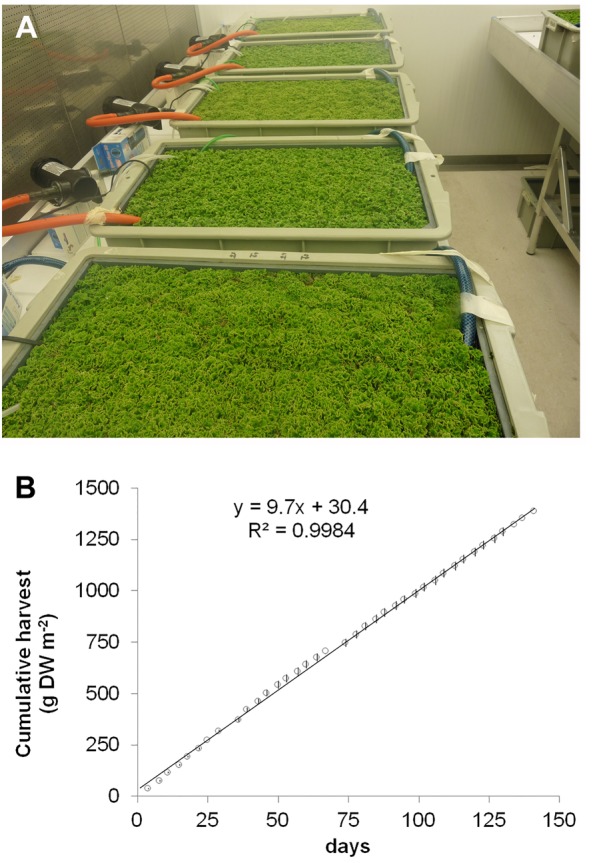
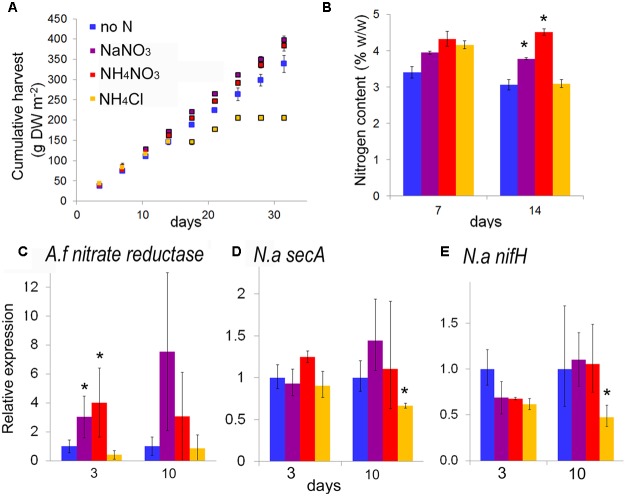
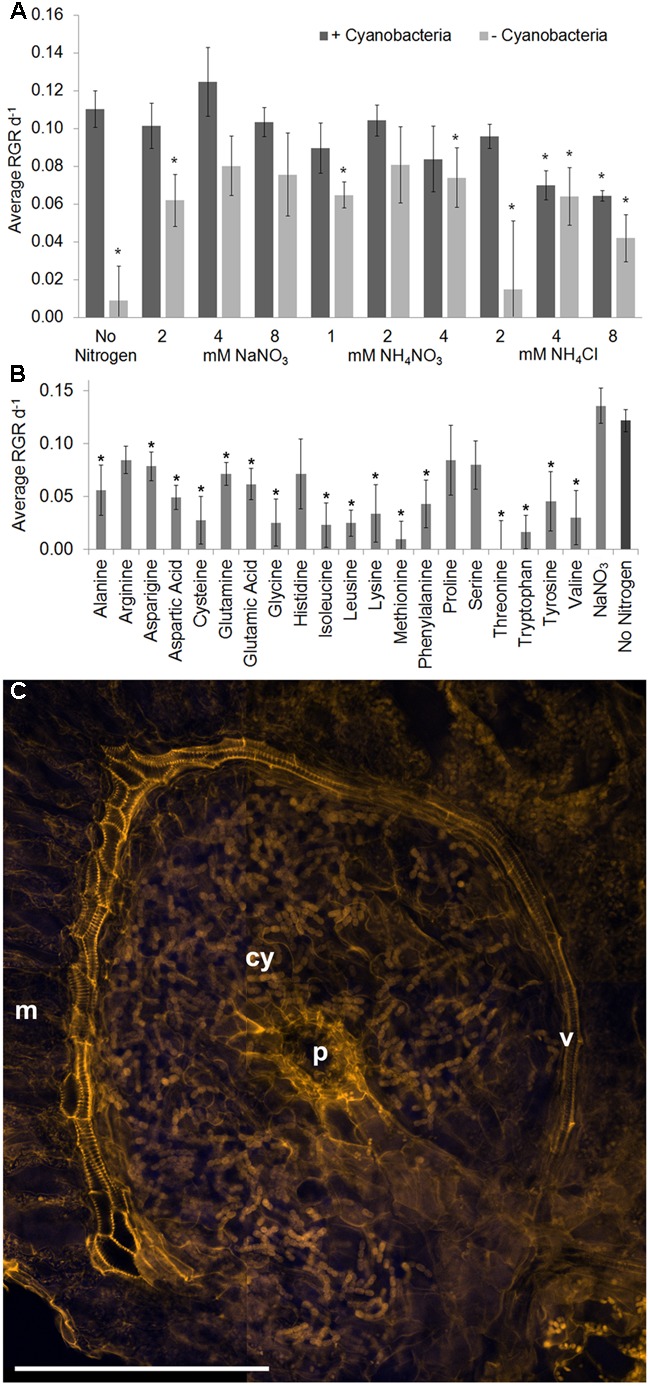
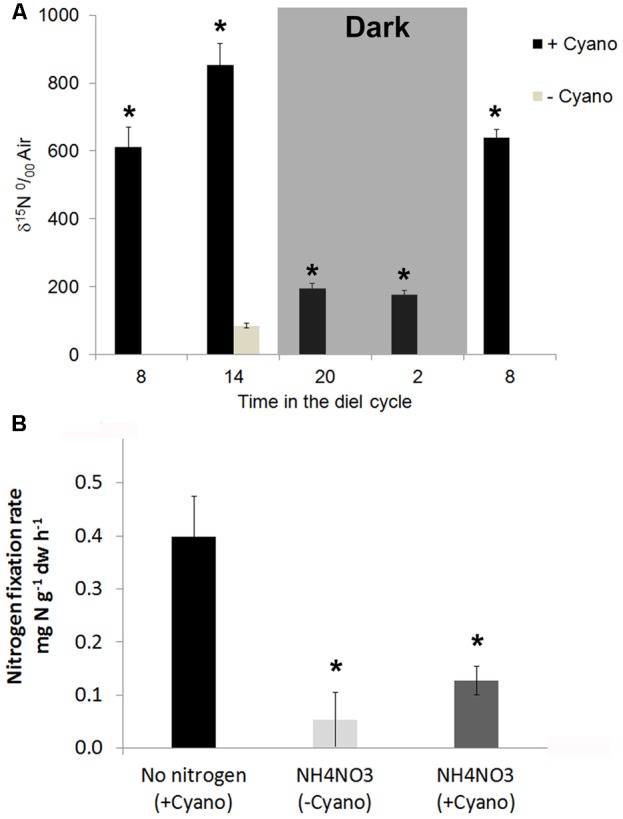
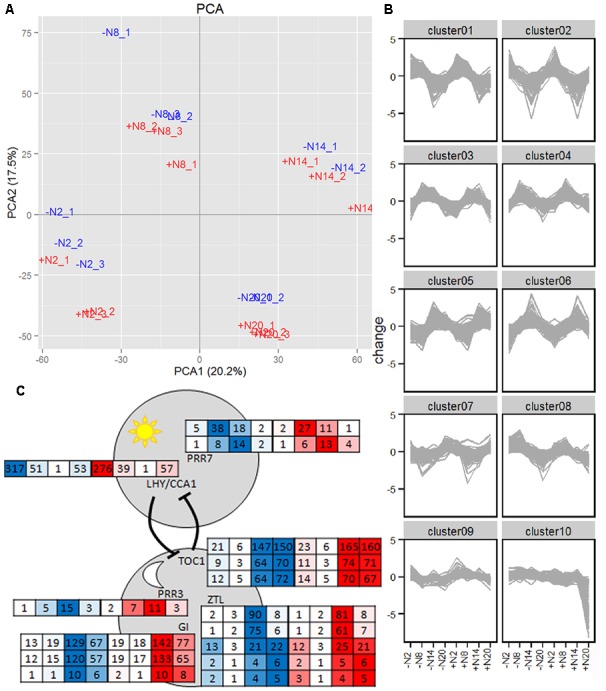
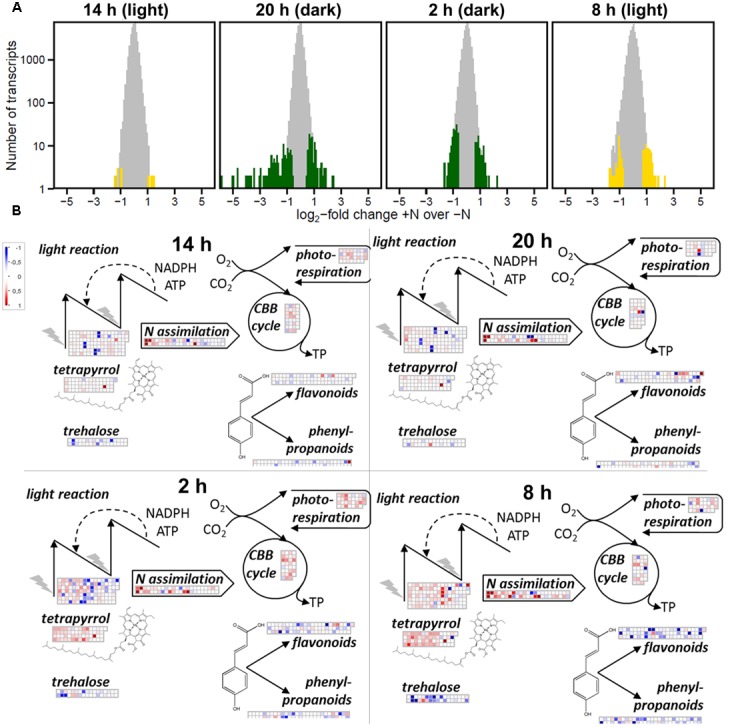
Sustainable agriculture demands reduced input of man-made nitrogen (N) fertilizer, yet N fixation limits the productivity of crops with heterotrophic diazotrophic bacterial symbionts. We investigated floating ferns from the genus that host phototrophic diazotrophic in leaf pockets and belong to the fastest growing plants. Experimental production reported here demonstrated N-fertilizer independent production of nitrogen-rich biomass with an annual yield potential per ha of 1200 kg N fixed and 35 t dry biomass. N fixation peaked at noon, reaching 0.4 mg N g dry weight h. ferns therefore merit consideration as protein crops in spite of the fact that little is known about the fern's physiology to enable domestication. To gain an understanding of their nitrogen physiology, analyses of fern diel transcript profiles under differing nitrogen fertilizer regimes were combined with microscopic observations. Results established that the ferns adapted to the phototrophic N-fixing symbionts by (1) adjusting metabolically to nightly absence of N supply using responses ancestral to ferns and seed plants; (2) developing a specialized xylem-rich vasculature surrounding the leaf-pocket organ; (3) responding to N-supply by controlling transcripts of genes mediating nutrient transport, allocation and vasculature development. Unlike other non-seed plants, the fern clock is shown to contain both the morning and evening loops; the evening loop is known to control rhythmic gene expression in the vasculature of seed plants and therefore may have evolved along with the vasculature in the ancestor of ferns and seed plants.
可持续农业要求减少人造氮肥的投入,然而固氮作用限制了与异养固氮细菌共生的作物的生产力。我们研究了一种浮水蕨类植物,其叶腔中含有光合固氮蓝细菌,且属于生长最快的植物。本文报道的实验生产表明,这种蕨类植物能够在不施氮肥的情况下生产富含氮的生物量,每公顷的年固氮潜力为1200千克,干生物量为35吨。固氮作用在中午达到峰值,每克干重每小时固氮量达0.4毫克。因此,尽管对蕨类植物的生理学了解甚少,难以实现驯化,但这种蕨类植物仍值得作为蛋白质作物加以考虑。为了解其氮素生理学,我们将不同氮肥施用模式下蕨类植物的日转录本谱分析与显微镜观察相结合。结果表明,这种蕨类植物通过以下方式适应光合固氮共生体:(1)利用蕨类植物和种子植物祖先的反应,在夜间氮供应缺失时进行代谢调整;(2)在叶腔器官周围发育一种富含木质部的特殊维管系统;(3)通过控制介导养分运输、分配和维管系统发育的基因的转录本来响应氮供应。与其他非种子植物不同,这种蕨类植物的生物钟包含晨环和晚环;已知晚环控制种子植物维管系统中的节律性基因表达,因此可能是在蕨类植物和种子植物的祖先中与维管系统一起进化而来的。