Belardinelli Paolo, Laer Leonard, Ortiz Erick, Braun Christoph, Gharabaghi Alireza
Division of Functional and Restorative Neurosurgery, Centre for Integrative Neuroscience, Eberhard Karls University Tuebingen, Germany.
Department of Neurology and Stroke, Hertie Institute for Clinical Brain Research, Eberhard Karls University Tuebingen, Germany.
Neuroimage Clin. 2017 Mar 16;14:726-733. doi: 10.1016/j.nicl.2017.03.005. eCollection 2017.
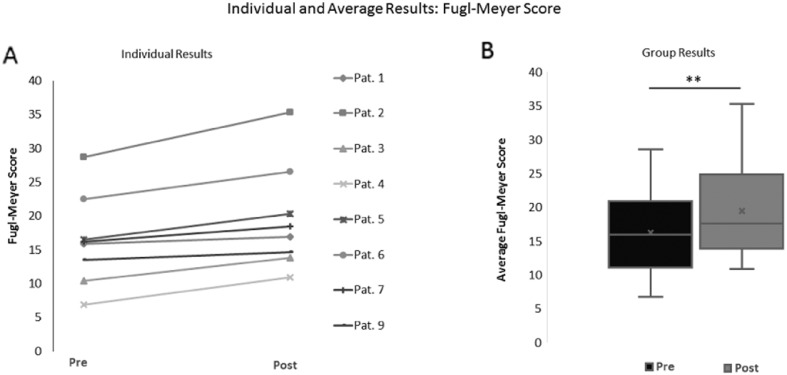
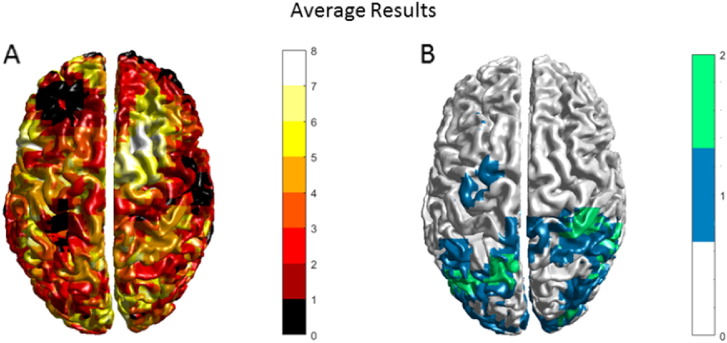
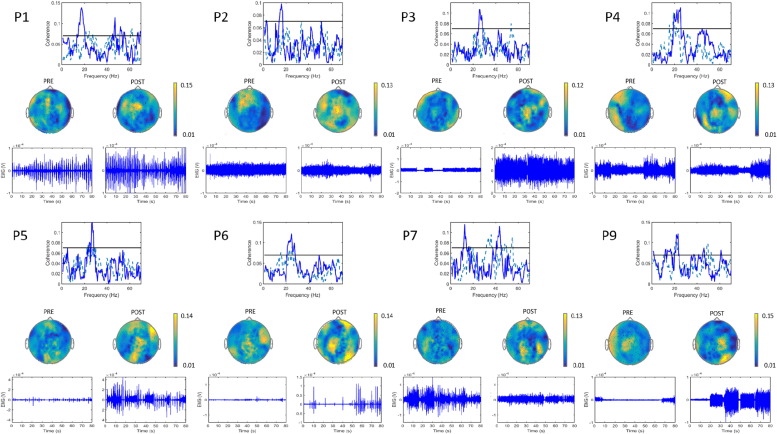
Motor recovery in severely impaired stroke patients is often very limited. To refine therapeutic interventions for regaining motor control in this patient group, the functionally relevant mechanisms of neuronal plasticity need to be detected. Cortico-muscular coherence (CMC) may provide physiological and topographic insights to achieve this goal. Synchronizing limb movements to motor-related brain activation is hypothesized to reestablish cortico-motor control indexed by CMC. In the present study, right-handed, chronic stroke patients with right-hemispheric lesions and left hand paralysis participated in a four-week training for their left upper extremity. A brain-robot interface turned event-related beta-band desynchronization of the lesioned sensorimotor cortex during kinesthetic motor-imagery into the opening of the paralyzed hand by a robotic orthosis. Simultaneous MEG/EMG recordings and individual models from MRIs were used for CMC detection and source reconstruction of cortico-muscular connectivity to the affected finger extensors before and after the training program. The upper extremity-FMA of the patients improved significantly from 16.23 ± 6.79 to 19.52 ± 7.91 (p = 0.0015). All patients showed significantly increased CMC in the beta frequency-band, with a distributed, bi-hemispheric pattern and considerable inter-individual variability. The location of CMC changes was not correlated to the severity of the motor impairment, the motor improvement or the lesion volume. Group analysis of the cortical overlap revealed a common feature in all patients following the intervention: a significantly increased level of ipsilesional premotor CMC that extended from the superior to the middle and inferior frontal gyrus, along with a confined area of increased CMC in the contralesional premotor cortex. In conclusion, functionally relevant modulations of CMC can be detected in patients with long-term, severe motor deficits after a brain-robot assisted rehabilitation training. Premotor beta-band CMC may serve as a biomarker and therapeutic target for novel treatment approaches in this patient group.
严重中风患者的运动恢复通常非常有限。为了优化针对该患者群体恢复运动控制的治疗干预措施,需要检测神经元可塑性的功能相关机制。皮质 - 肌肉相干性(CMC)可能为实现这一目标提供生理和地形学方面的见解。将肢体运动与运动相关的大脑激活同步,被认为可以重新建立以CMC为指标的皮质 - 运动控制。在本研究中,患有右半球病变和左手麻痹的右利手慢性中风患者参与了为期四周的左上肢训练。一个脑 - 机器人接口将运动感觉运动想象期间受损感觉运动皮层的事件相关β波段去同步化转化为通过机器人矫形器打开瘫痪的手。在训练计划前后,使用同步的脑磁图/肌电图记录以及来自磁共振成像的个体模型进行CMC检测和皮质 - 肌肉与受影响手指伸肌连接的源重建。患者的上肢FMA从16.23±6.79显著提高到19.52±7.91(p = 0.0015)。所有患者在β频段的CMC均显著增加,呈现出分布式、双侧半球模式以及相当大的个体间差异。CMC变化的位置与运动障碍的严重程度、运动改善情况或病变体积无关。对皮质重叠的组分析揭示了干预后所有患者的一个共同特征:同侧运动前区CMC水平显著增加,从额上回延伸至额中回和额下回,同时对侧运动前皮层中CMC增加的区域较为局限。总之,在脑 - 机器人辅助康复训练后,长期严重运动缺陷患者中可以检测到与功能相关的CMC调制。运动前β波段CMC可能作为该患者群体新治疗方法的生物标志物和治疗靶点。