Lam Arielle Koonyee, Phillips Bryan T
Interdisciplinary Graduate Program in Molecular and Cellular Biology, University of Iowa, Iowa City, IA, USA.
Department of Biology, University of Iowa, Iowa City, IA, USA.
Results Probl Cell Differ. 2017;61:83-114. doi: 10.1007/978-3-319-53150-2_4.
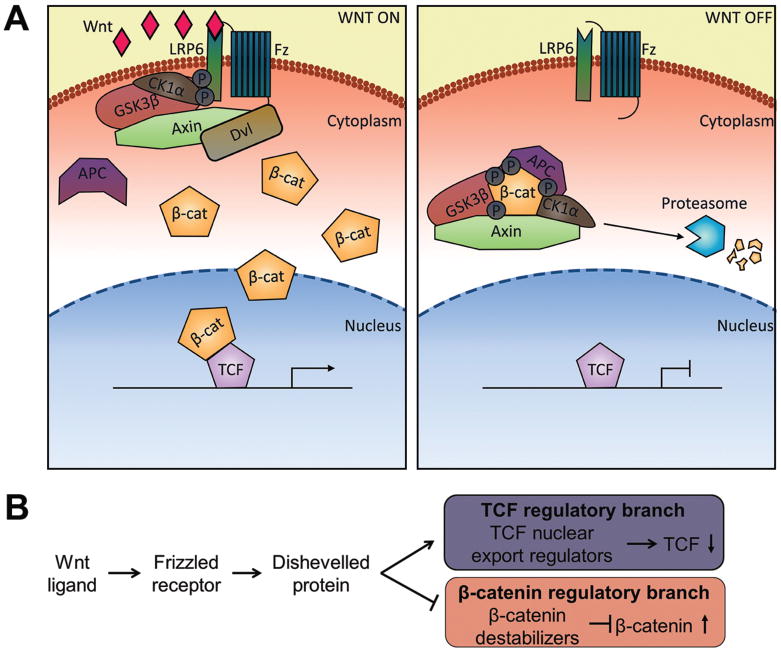
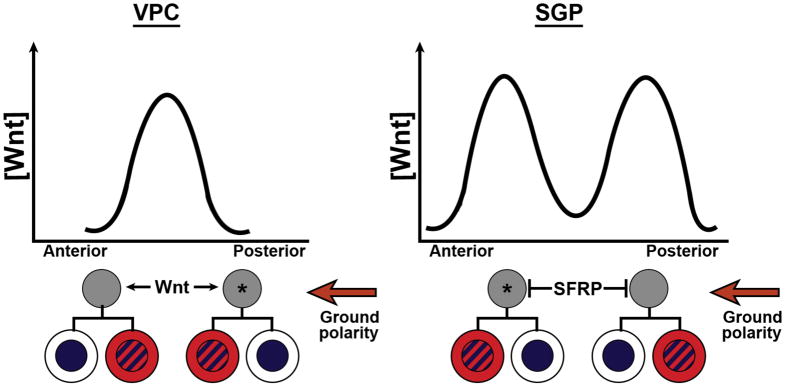
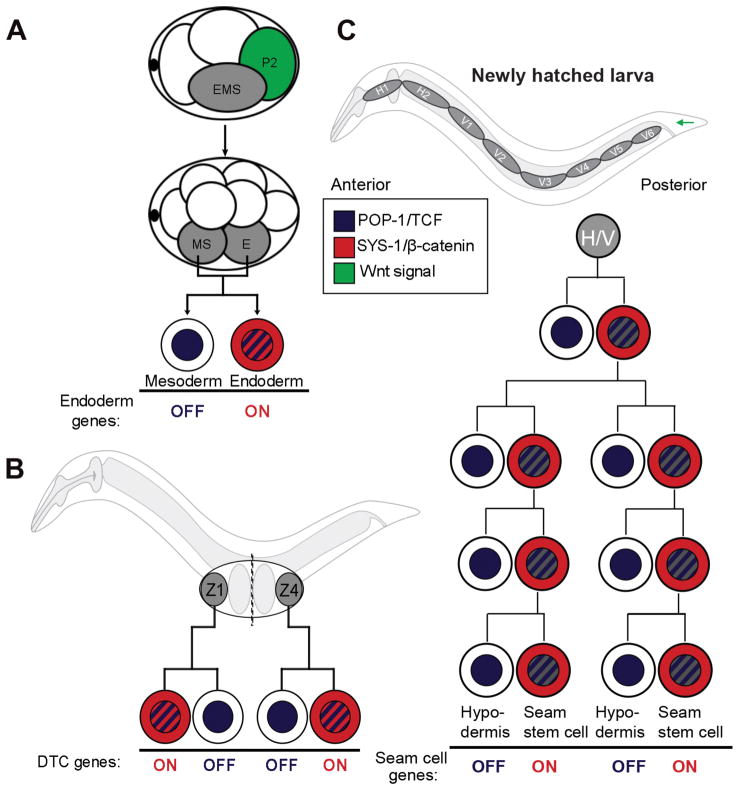
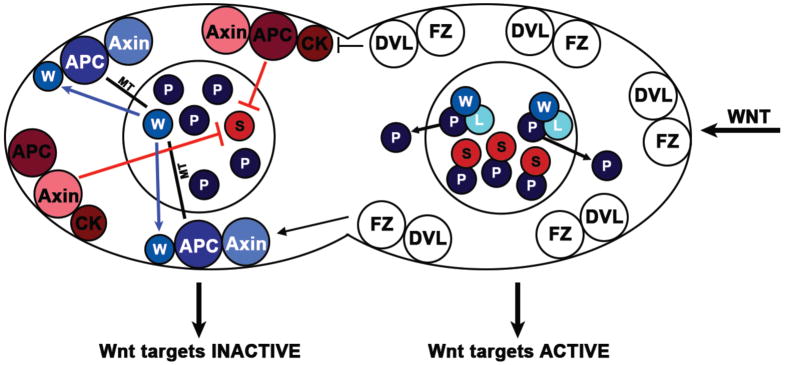
Asymmetric cell division is a common mode of cell differentiation during the invariant lineage of the nematode, C. elegans. Beginning at the four-cell stage, and continuing throughout embryogenesis and larval development, mother cells are polarized by Wnt ligands, causing an asymmetric inheritance of key members of a Wnt/β-catenin signal transduction pathway termed the Wnt/β-catenin asymmetry pathway. The resulting daughter cells are distinct at birth with one daughter cell activating Wnt target gene expression via β-catenin activation of TCF, while the other daughter displays transcriptional repression of these target genes. Here, we seek to review the body of evidence underlying a unified model for Wnt-driven asymmetric cell division in C. elegans, identify global themes that occur during asymmetric cell division, as well as highlight tissue-specific variations. We also discuss outstanding questions that remain unanswered regarding this intriguing mode of asymmetric cell division.
不对称细胞分裂是线虫秀丽隐杆线虫不变谱系中细胞分化的常见模式。从四细胞阶段开始,并在整个胚胎发育和幼虫发育过程中持续,母细胞被Wnt配体极化,导致一种称为Wnt/β-连环蛋白不对称途径的Wnt/β-连环蛋白信号转导途径的关键成员发生不对称遗传。产生的子细胞在出生时就有所不同,一个子细胞通过β-连环蛋白激活TCF来激活Wnt靶基因表达,而另一个子细胞则对这些靶基因进行转录抑制。在这里,我们试图回顾秀丽隐杆线虫中Wnt驱动的不对称细胞分裂统一模型的证据主体,识别不对称细胞分裂过程中出现的总体主题,并突出组织特异性差异。我们还讨论了关于这种有趣的不对称细胞分裂模式仍未得到解答的突出问题。