School of Chemical, Materials and Biomedical Engineering, University of Georgia , Athens 30602, United States.
Department of Surgery, University of Michigan , Ann Arbor 48109, United States.
ACS Appl Mater Interfaces. 2017 May 10;9(18):15254-15264. doi: 10.1021/acsami.7b01408. Epub 2017 Apr 26.
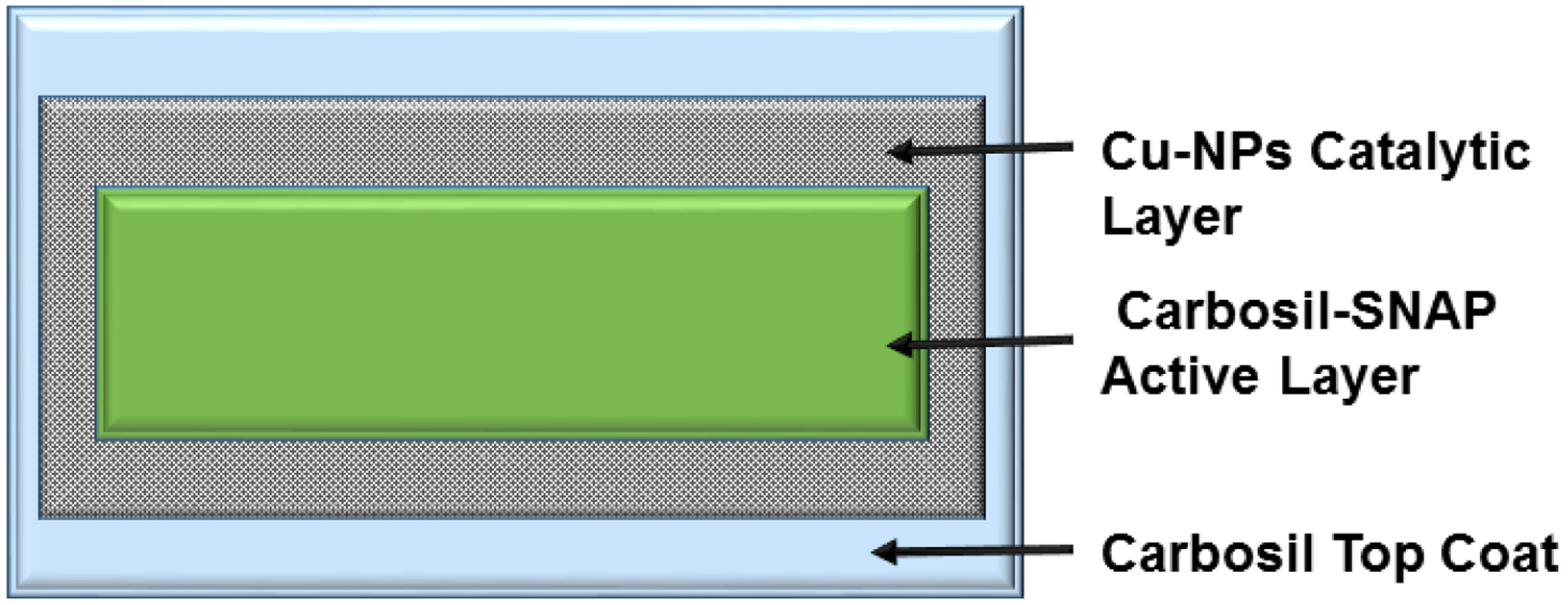
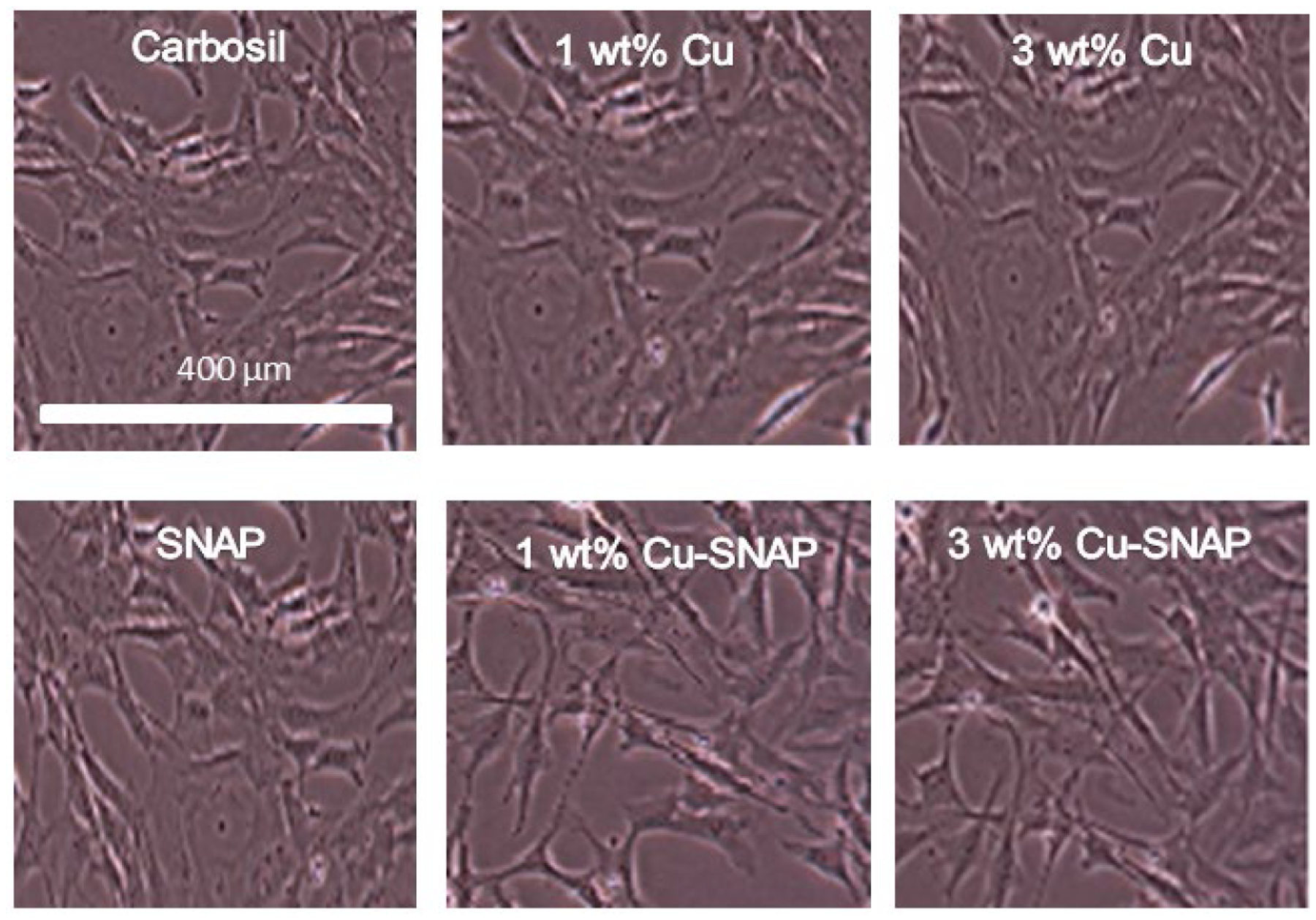
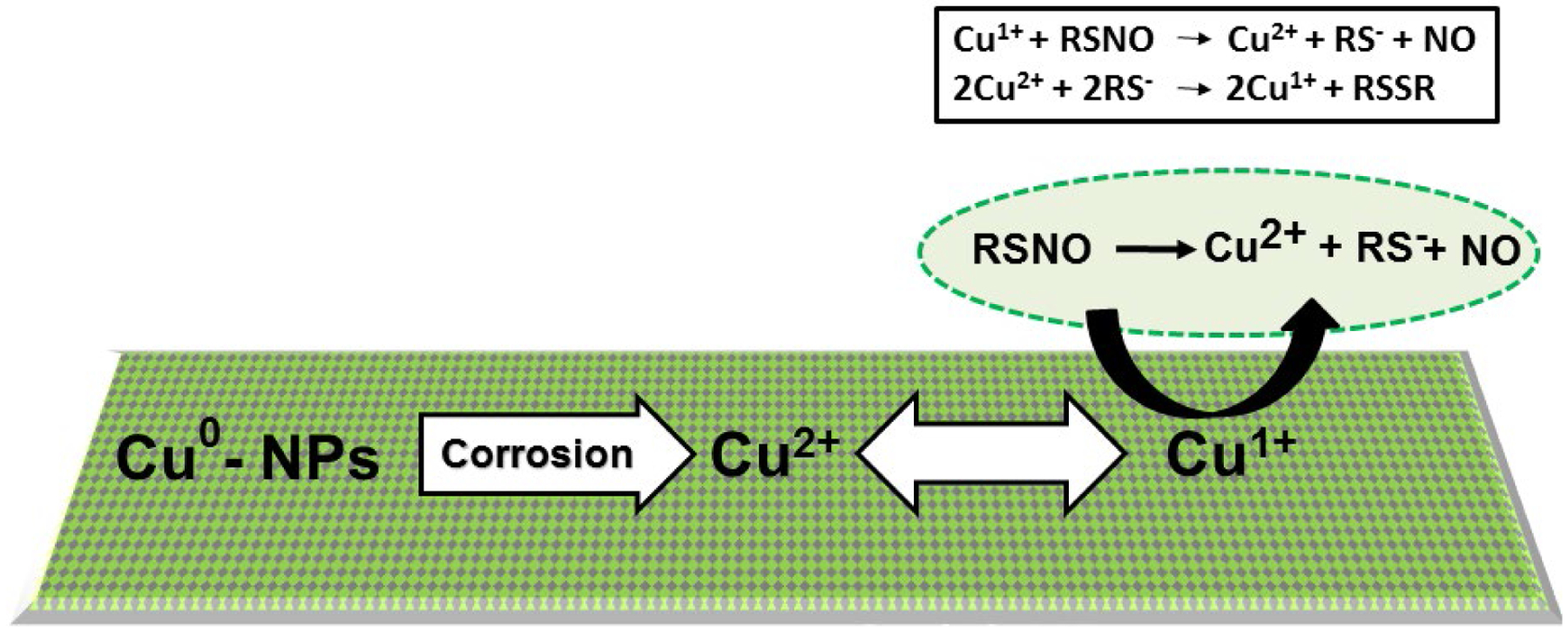
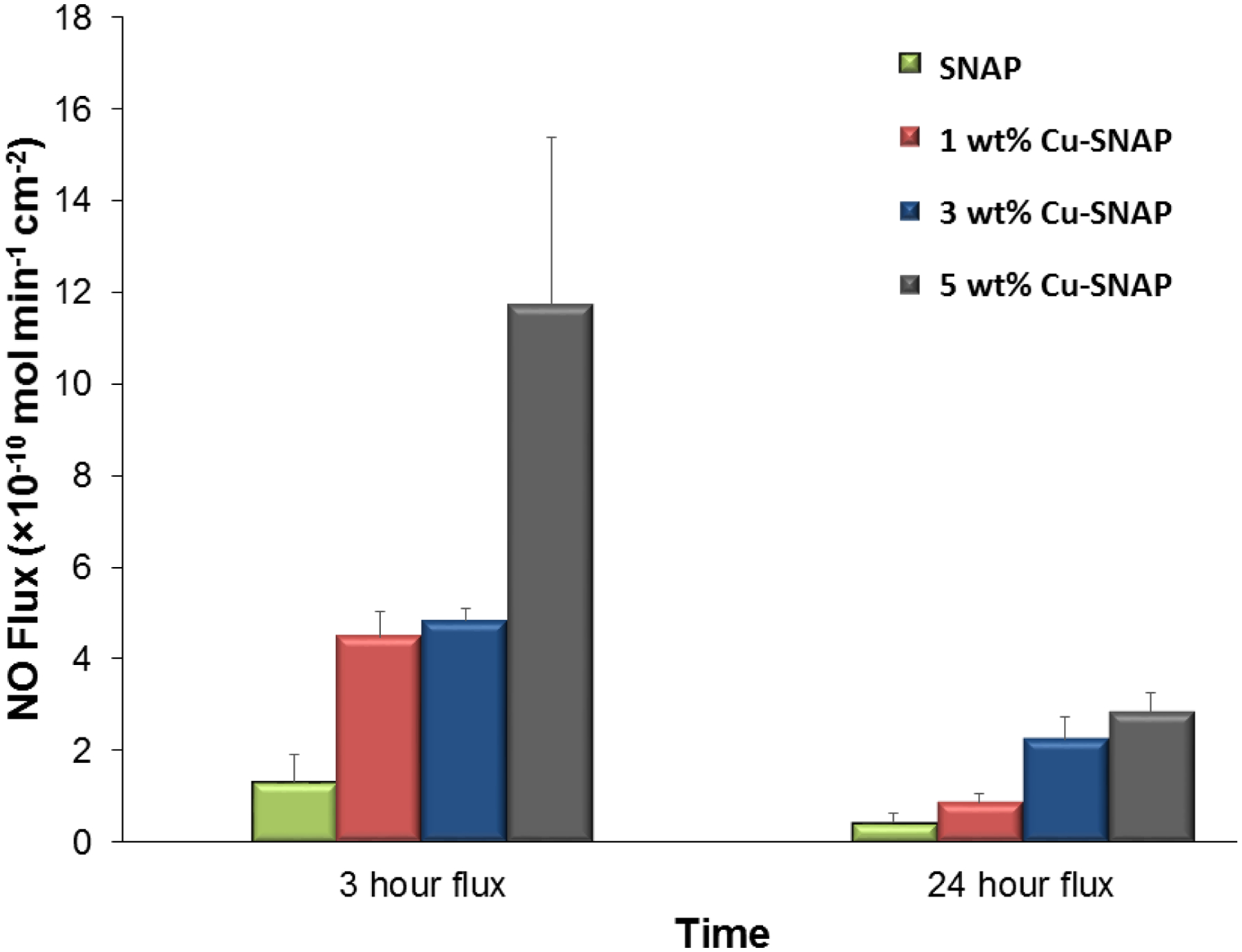
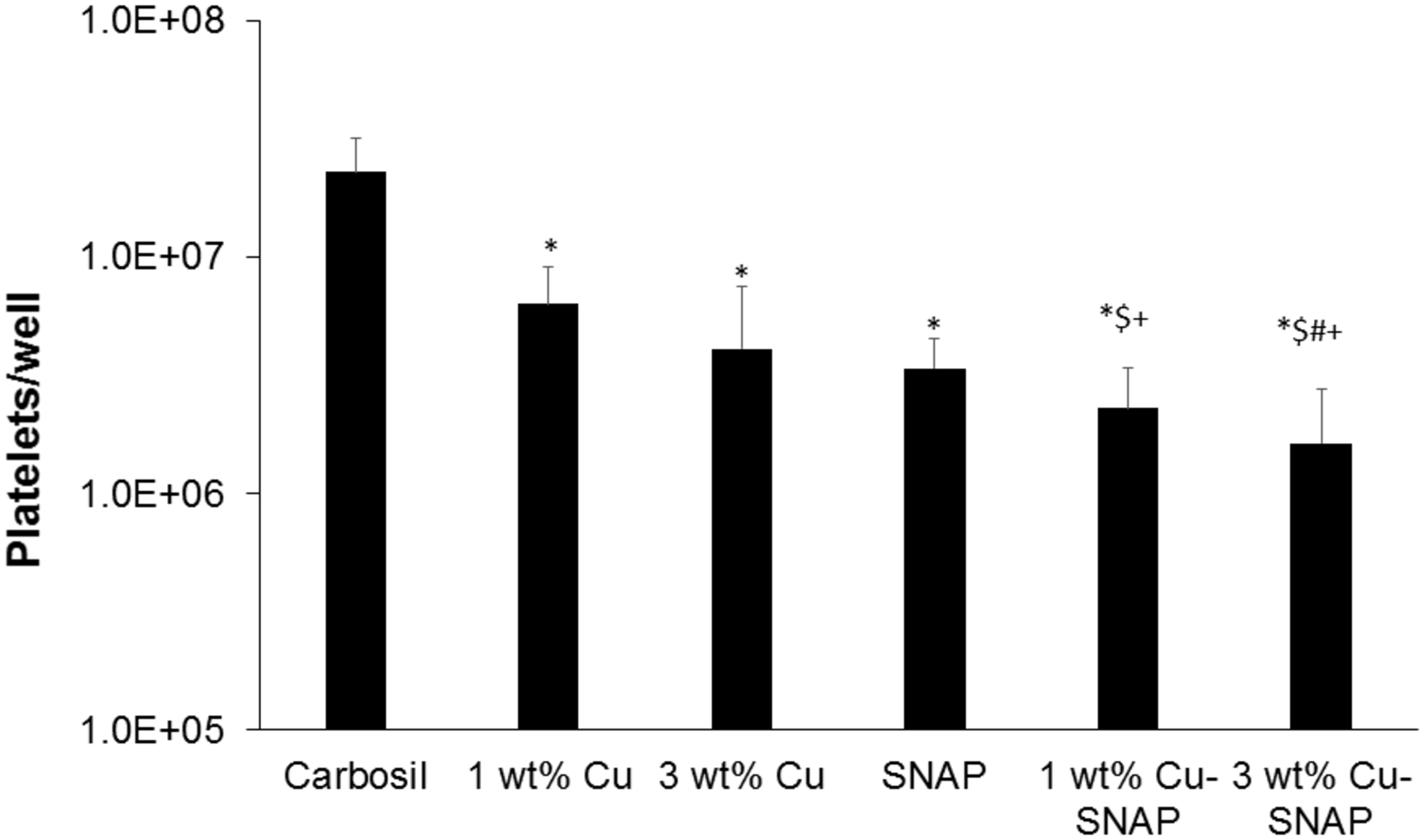
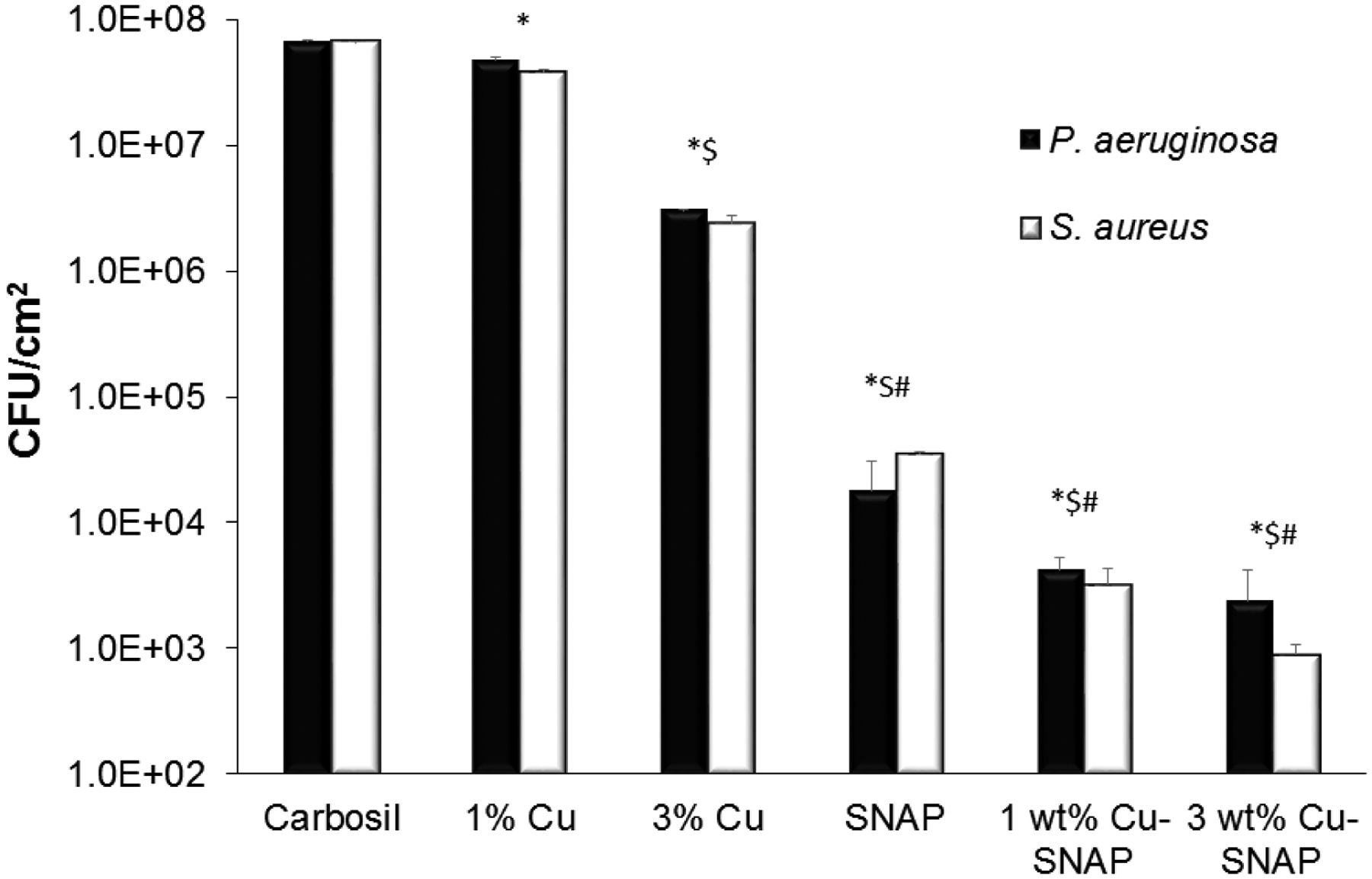
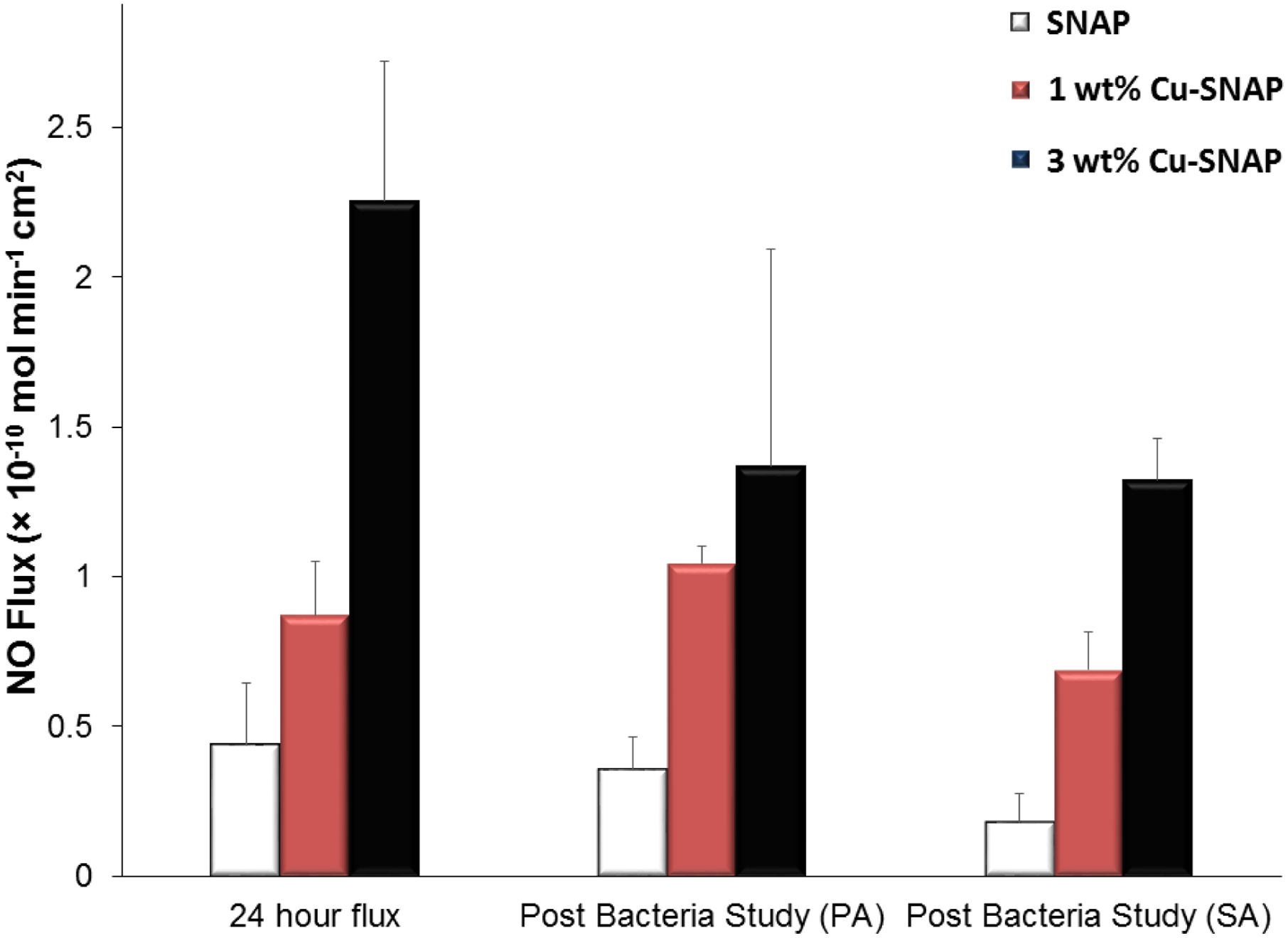
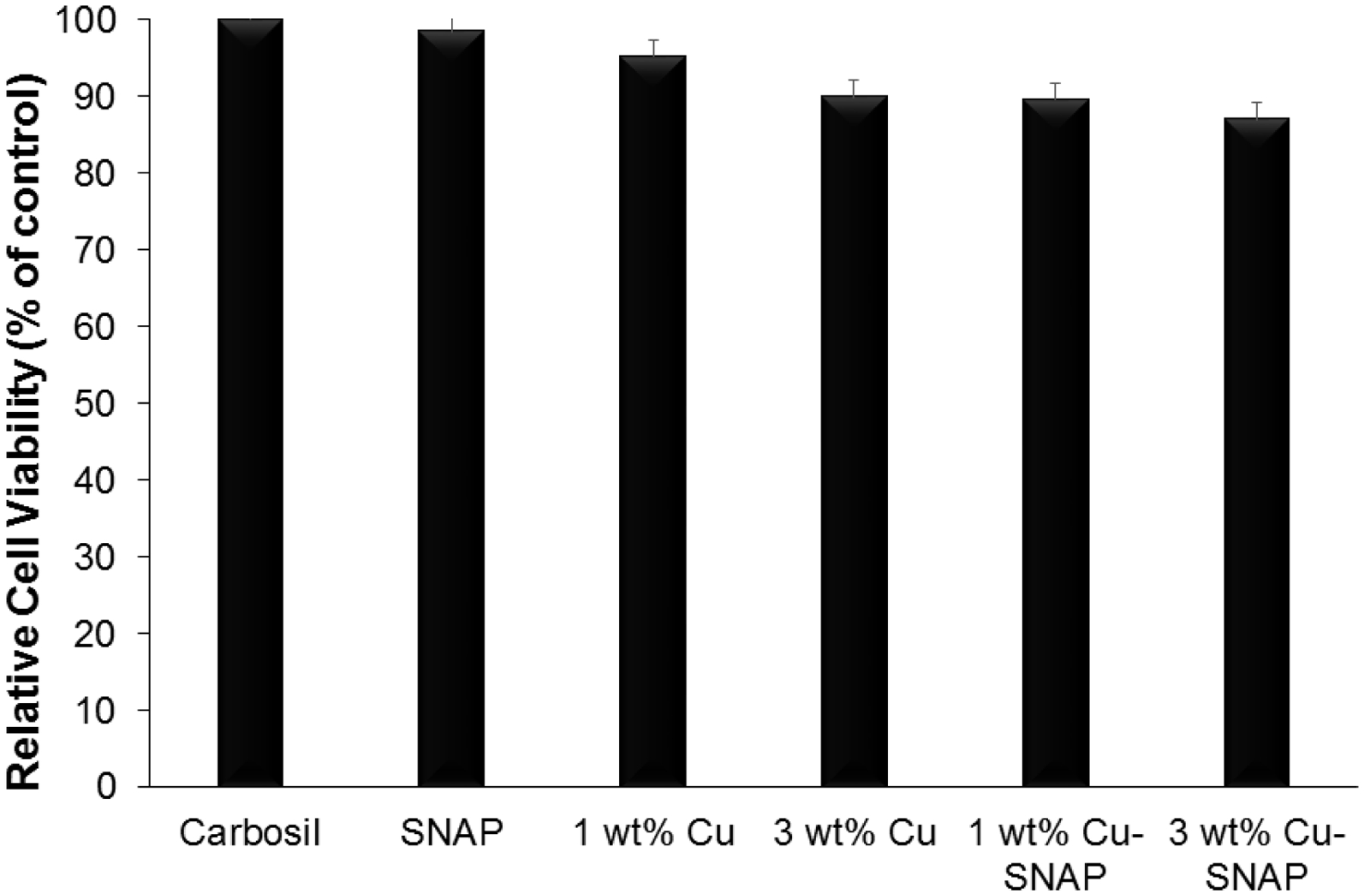
The quest for novel therapies to prevent bacterial infections and blood clots (thrombosis) is of utmost importance in biomedical research due to the exponential growth in the cases of thrombosis and blood infections and the emergence of multi-drug-resistant strains of bacteria. Endogenous nitric oxide (NO) is a cellular signaling molecule that plays a pivotal role in host immunity against pathogens, prevention of clotting, and regulation of systemic blood pressure, among several other biological functions. The physiological effect of NO is dose dependent, which necessitates the study of its tunable release kinetics, which is the objective of this study. In the present study, polymer composites were fabricated by incorporating S-nitroso-N-acetylpenicillamine (SNAP) in a medical-grade polymer, Carbosil, and top-coated with varying concentrations of catalytic copper nanoparticles (Cu-NPs). The addition of the Cu-NPs increased the NO release, as well as the overall antimicrobial activity via the oligodynamic effect of Cu. SNAP (10 wt %) composites without Cu-NP coatings showed a NO flux of 1.32 ± 0.6 × 10 mol min cm, whereas Cu-NP-incorporated SNAP films exhibited fluxes of 4.48 ± 0.5 × 10, 4.84 ± 0.3 × 10, and 11.7 ± 3.6 × 10 mol min cm with 1, 3, and 5 wt % Cu-NPs, respectively. This resulted in a significant reduction (up to 99.8%) in both gram-positive and gram-negative bacteria, with very low platelet adhesion (up to 92% lower) as compared to that of the corresponding controls. Copper leachates from the SNAP films were detected using the inductively coupled plasma-mass spectrometry technique and were found to be significantly lower in concentration than the recommended safety limit by the FDA. The cell viability test performed on mouse fibroblast 3T3 cells provided supportive evidence for the biocompatibility of the material in vitro.
由于血栓形成和血液感染病例呈指数级增长,以及多药耐药细菌株的出现,寻找预防细菌感染和血栓形成(血栓形成)的新型治疗方法是生物医学研究中最重要的。内源性一氧化氮(NO)是一种细胞信号分子,在宿主对病原体的免疫、防止凝血和调节全身血压等多种生物学功能中发挥着关键作用。NO 的生理效应是剂量依赖性的,这就需要研究其可调释放动力学,这是本研究的目标。在本研究中,通过将 S-亚硝基-N-乙酰青霉胺(SNAP)掺入医用级聚合物 Carbosil 中,并在其上涂覆不同浓度的催化铜纳米颗粒(Cu-NPs),制备了聚合物复合材料。Cu-NPs 的加入增加了 NO 的释放,以及通过 Cu 的寡动力学效应提高了整体抗菌活性。不含 Cu-NP 涂层的 SNAP(10wt%)复合材料的 NO 通量为 1.32±0.6×10 mol min cm,而掺入 Cu-NP 的 SNAP 膜的通量分别为 4.48±0.5×10、4.84±0.3×10 和 11.7±3.6×10 mol min cm,分别含有 1、3 和 5wt%的 Cu-NP。这导致革兰氏阳性菌和革兰氏阴性菌的数量显著减少(高达 99.8%),与相应的对照相比,血小板黏附率也显著降低(高达 92%)。使用电感耦合等离子体质谱技术检测 SNAP 膜中的铜浸出物,发现其浓度明显低于 FDA 推荐的安全限量。在体外对小鼠成纤维细胞 3T3 细胞进行的细胞活力测试为该材料的生物相容性提供了支持性证据。