Simhal Anish K, Aguerrebere Cecilia, Collman Forrest, Vogelstein Joshua T, Micheva Kristina D, Weinberg Richard J, Smith Stephen J, Sapiro Guillermo
Electrical and Computer Engineering, Duke University, Durham, North Carolina, United States of America.
Synapse Biology, Allen Institute for Brain Sciences, Seattle, Washington, United States of America.
PLoS Comput Biol. 2017 Apr 17;13(4):e1005493. doi: 10.1371/journal.pcbi.1005493. eCollection 2017 Apr.
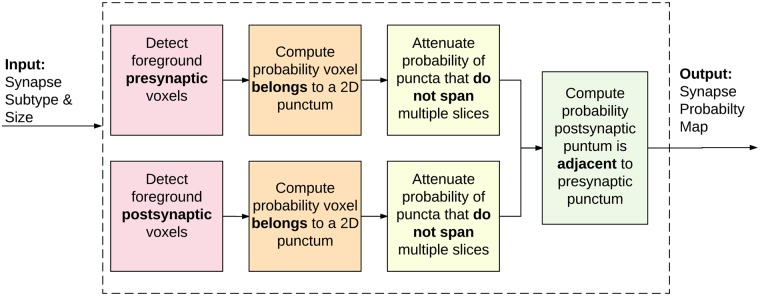
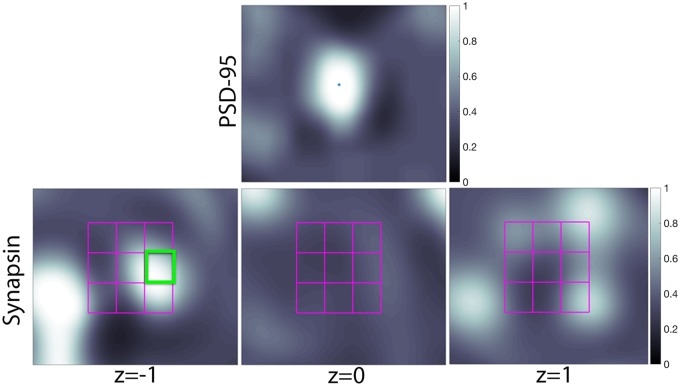
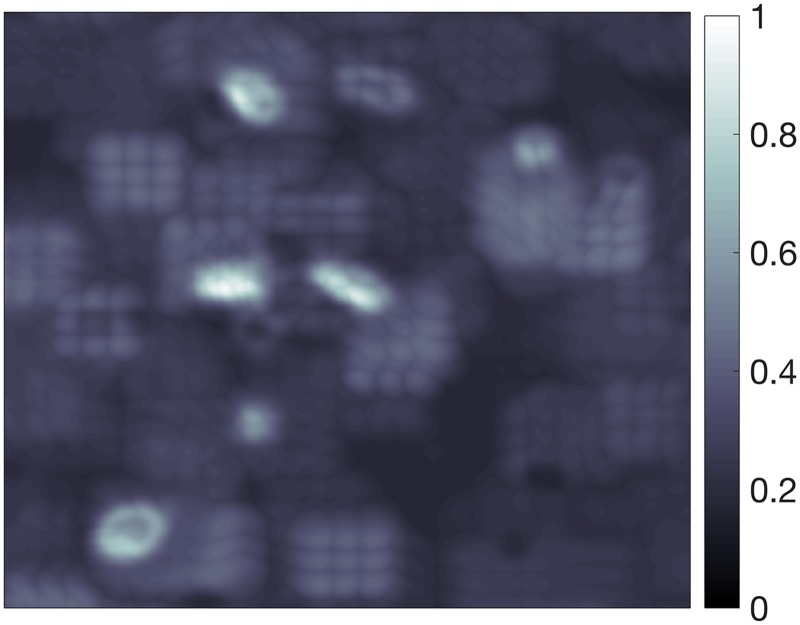
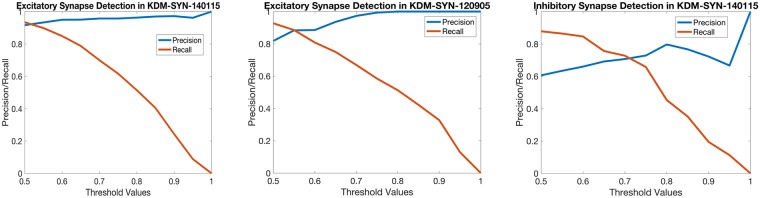
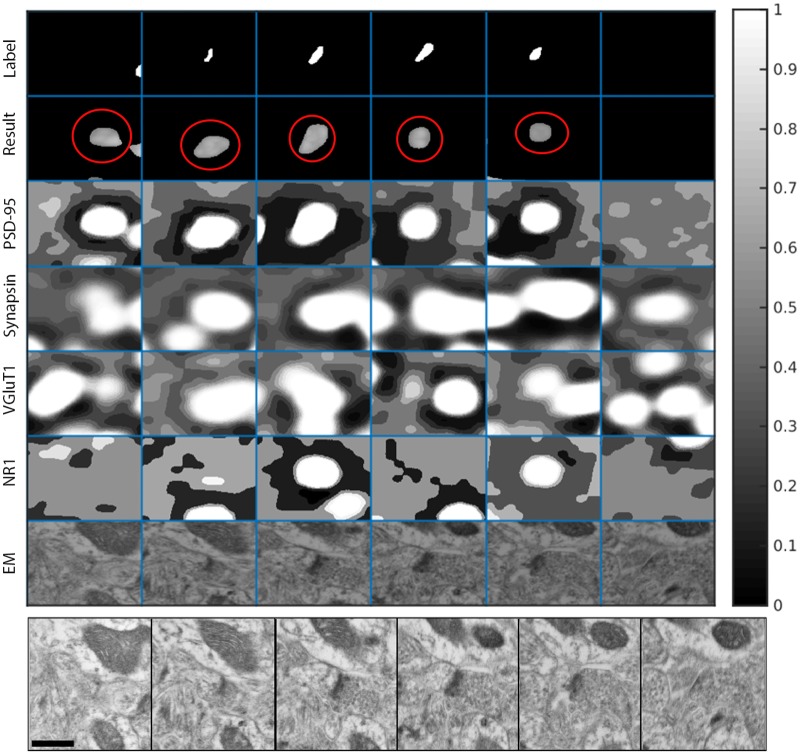
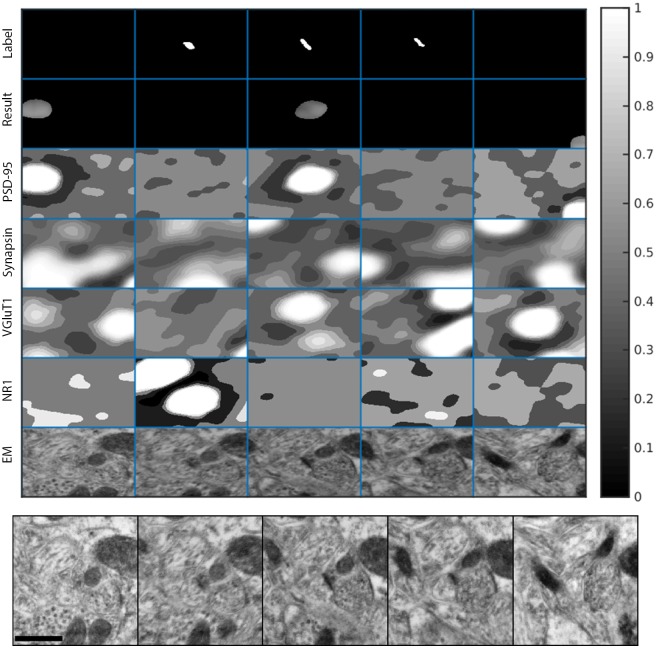
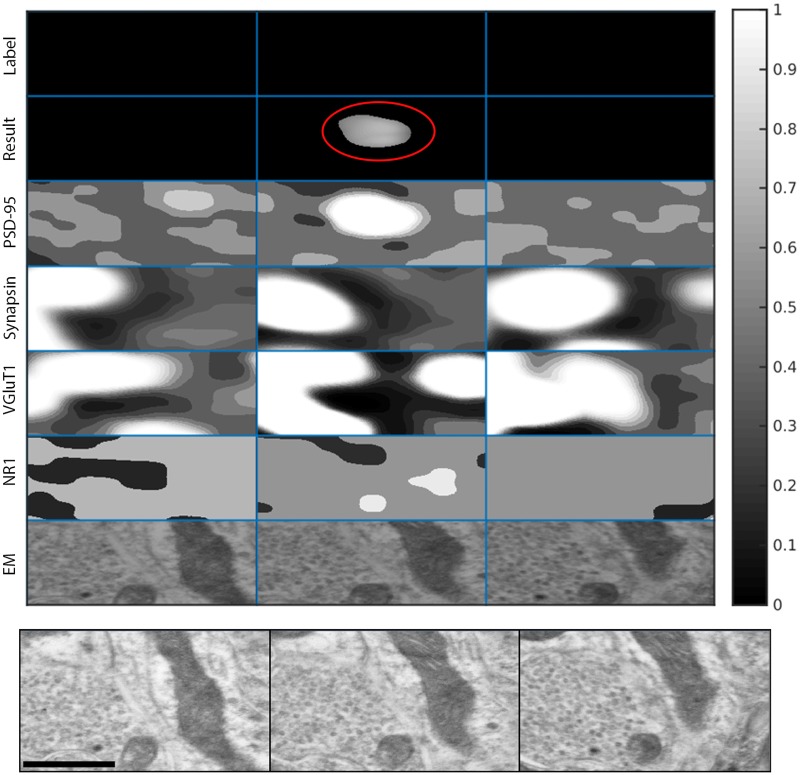
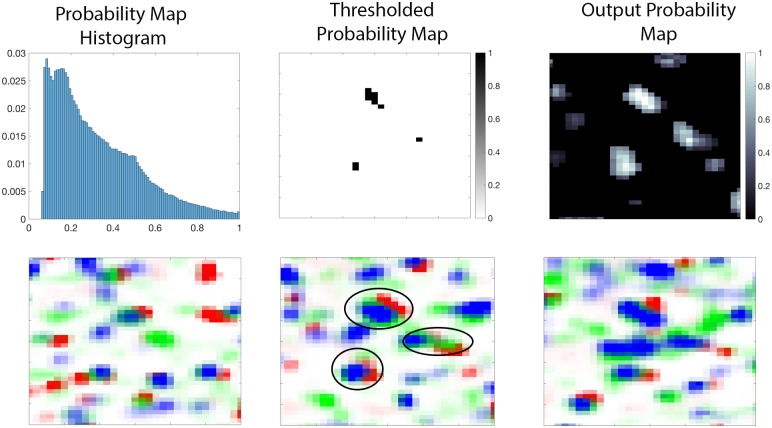
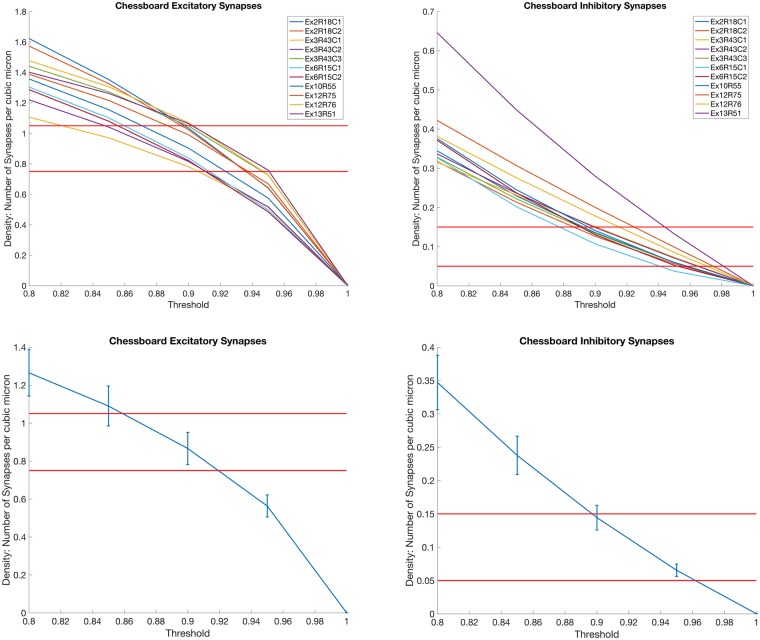
Deeper exploration of the brain's vast synaptic networks will require new tools for high-throughput structural and molecular profiling of the diverse populations of synapses that compose those networks. Fluorescence microscopy (FM) and electron microscopy (EM) offer complementary advantages and disadvantages for single-synapse analysis. FM combines exquisite molecular discrimination capacities with high speed and low cost, but rigorous discrimination between synaptic and non-synaptic fluorescence signals is challenging. In contrast, EM remains the gold standard for reliable identification of a synapse, but offers only limited molecular discrimination and is slow and costly. To develop and test single-synapse image analysis methods, we have used datasets from conjugate array tomography (cAT), which provides voxel-conjugate FM and EM (annotated) images of the same individual synapses. We report a novel unsupervised probabilistic method for detection of synapses from multiplex FM (muxFM) image data, and evaluate this method both by comparison to EM gold standard annotated data and by examining its capacity to reproduce known important features of cortical synapse distributions. The proposed probabilistic model-based synapse detector accepts molecular-morphological synapse models as user queries, and delivers a volumetric map of the probability that each voxel represents part of a synapse. Taking human annotation of cAT EM data as ground truth, we show that our algorithm detects synapses from muxFM data alone as successfully as human annotators seeing only the muxFM data, and accurately reproduces known architectural features of cortical synapse distributions. This approach opens the door to data-driven discovery of new synapse types and their density. We suggest that our probabilistic synapse detector will also be useful for analysis of standard confocal and super-resolution FM images, where EM cross-validation is not practical.
要更深入地探索大脑庞大的突触网络,将需要新的工具,以便对构成这些网络的各种突触群体进行高通量的结构和分子分析。荧光显微镜(FM)和电子显微镜(EM)在单突触分析方面各有优缺点。FM结合了出色的分子辨别能力、高速度和低成本,但在突触荧光信号和非突触荧光信号之间进行严格区分具有挑战性。相比之下,EM仍然是可靠识别突触的金标准,但分子辨别能力有限,且速度慢、成本高。为了开发和测试单突触图像分析方法,我们使用了共轭阵列断层扫描(cAT)的数据集,该数据集提供了同一单个突触的体素共轭FM和EM(注释)图像。我们报告了一种从多通道FM(muxFM)图像数据中检测突触的新型无监督概率方法,并通过与EM金标准注释数据进行比较以及检查其再现皮质突触分布已知重要特征的能力来评估该方法。所提出的基于概率模型的突触检测器接受分子形态突触模型作为用户查询,并给出每个体素代表突触一部分的概率的体积图。以cAT EM数据的人工注释作为基准事实,我们表明我们的算法仅从muxFM数据中检测突触的成功率与仅查看muxFM数据的人工注释者相同,并且准确地再现了皮质突触分布的已知结构特征。这种方法为数据驱动的新突触类型及其密度的发现打开了大门。我们认为,我们的概率突触检测器对于标准共聚焦和超分辨率FM图像的分析也将是有用的,在这些图像中EM交叉验证不实用。