Pepe Giacomo, Pagano Francesco, Adesso Simona, Sommella Eduardo, Ostacolo Carmine, Manfra Michele, Chieppa Marcello, Sala Marina, Russo Mariateresa, Marzocco Stefania, Campiglia Pietro
Department of Pharmacy, School of Pharmacy, University of Salerno, Via Giovanni Paolo II 132, I-84084 Fisciano, Italy.
Department of Agriculture, Laboratory of Food Chemistry, University of Reggio Calabria, Via Melissari stecca n°4, I-89122 Reggio Calabria, Italy.
Molecules. 2017 Apr 15;22(4):623. doi: 10.3390/molecules22040623.
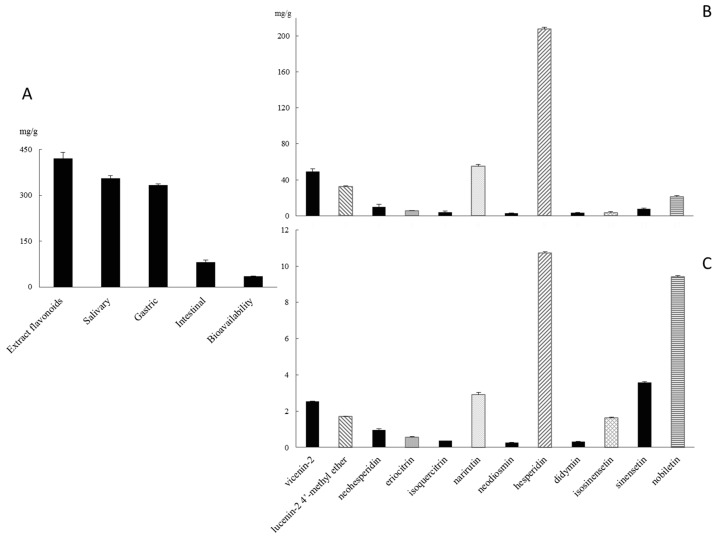
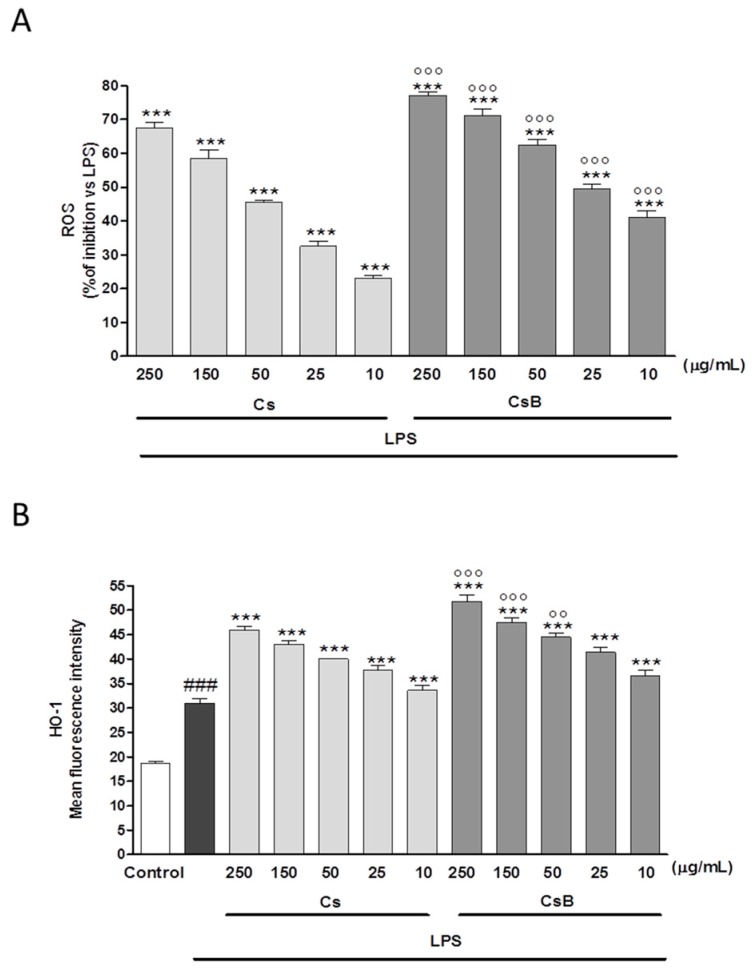
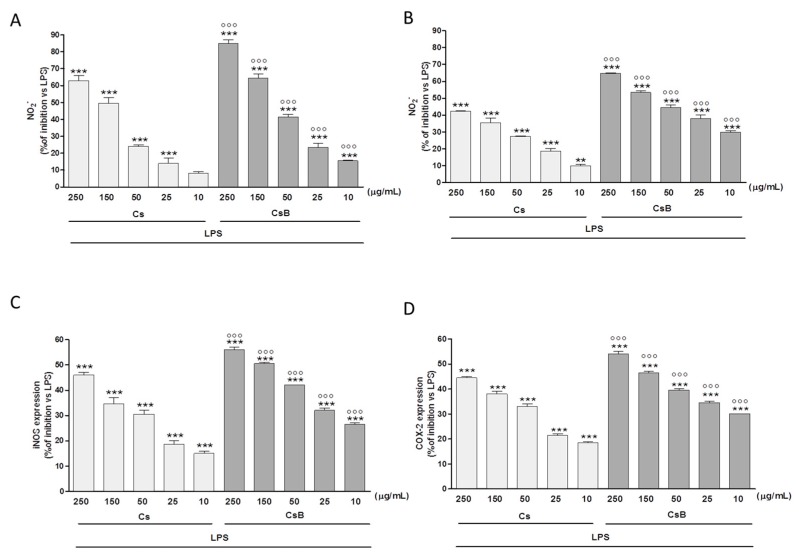
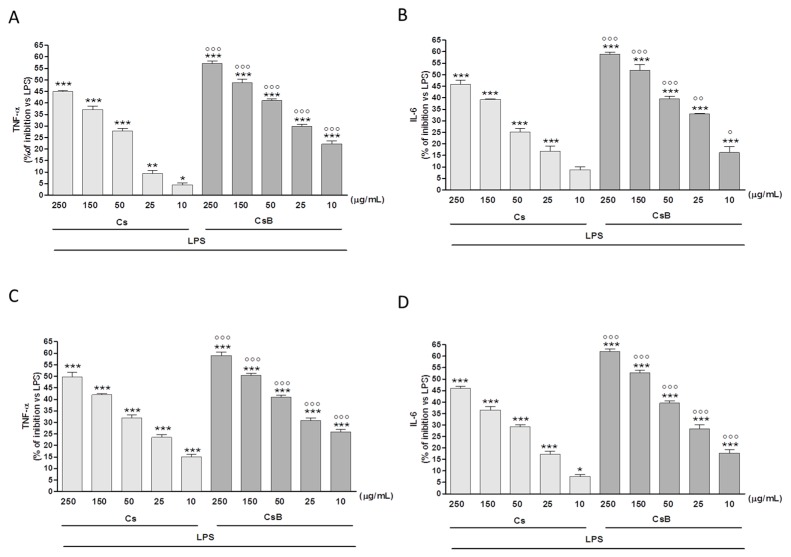
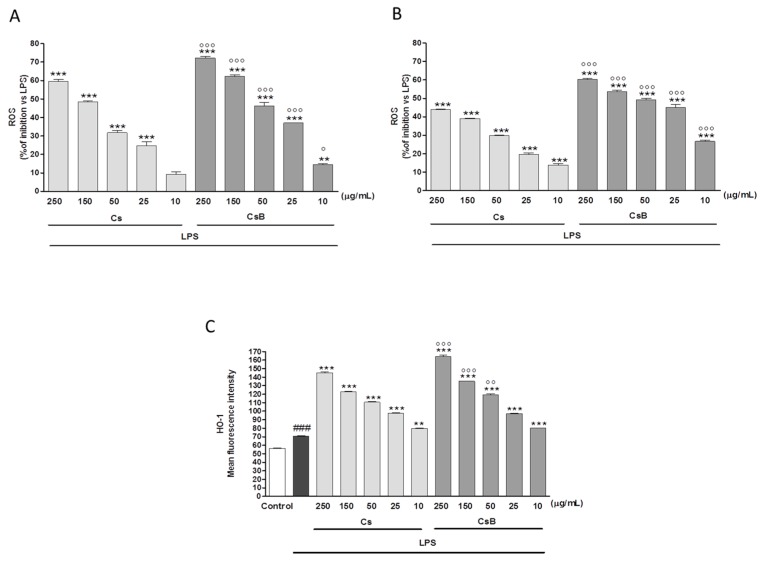
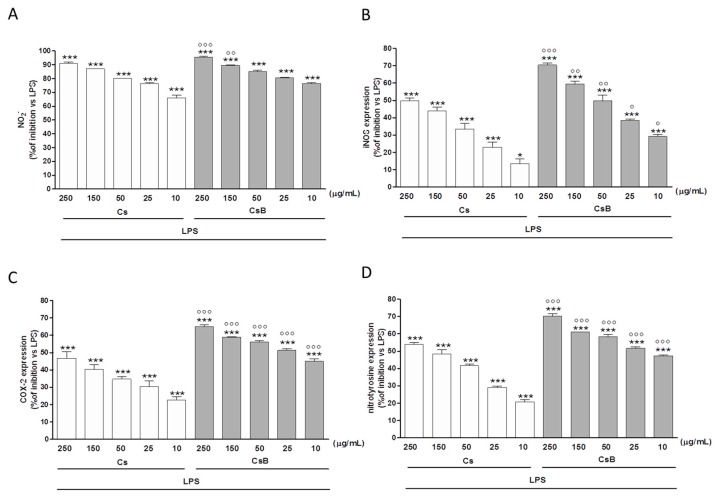
plants contain large amounts of flavonoids with beneficial effects on human health. In the present study, the antioxidant and anti-inflammatory potential of bioavailable polyphenols from was evaluated in vitro and ex vivo, using the murine macrophages cell line J774A.1 and primary peritoneal macrophages. Following simulated gastro-intestinal digestion, the in vitro bioavailability of polyphenolic extract was assessed using the human cell line Caco-2 grown as monolayers on a transwell membrane. Data demonstrated a relative permeation of its compounds (8.3%). Thus, the antioxidant and anti-inflammatory effect of polyphenolic fraction (Cs) was compared to the bioavailable one (CsB). Results revealed that extract were able to reduce macrophages pro-inflammatory mediators, including nitric oxide, iNOS, COX-2 and different cytokines. Moreover, the effect of polyphenols was associated with antioxidant effects, such as a reduction of reactive oxygen species (ROS) and heme-oxygenase-1 (HO-1) increased expression. Our results provide evidence that the bioavailable polyphenolic constituents of the extract accumulate prevalently at intestinal level and could reach systemic circulation exerting their effect. The bioavailable fraction showed a higher anti-inflammatory and antioxidant potential compared to the initial extract, thus highlighting its potential nutraceutical value.
植物含有大量对人体健康有益的黄酮类化合物。在本研究中,使用小鼠巨噬细胞系J774A.1和原代腹腔巨噬细胞,在体外和体内评估了[植物名称未给出]中生物可利用多酚的抗氧化和抗炎潜力。经过模拟胃肠道消化后,使用在Transwell膜上单层生长的人细胞系Caco-2评估[植物名称未给出]多酚提取物的体外生物利用度。数据显示其化合物的相对渗透率为8.3%。因此,将多酚部分(Cs)的抗氧化和抗炎作用与生物可利用部分(CsB)进行了比较。结果表明,[植物名称未给出]提取物能够减少巨噬细胞促炎介质,包括一氧化氮、诱导型一氧化氮合酶、环氧化酶-2和不同的细胞因子。此外,[植物名称未给出]多酚的作用与抗氧化作用相关,如活性氧(ROS)的减少和血红素加氧酶-1(HO-1)表达的增加。我们的结果提供了证据,表明[植物名称未给出]提取物中生物可利用的多酚成分主要在肠道水平积累,并可进入体循环发挥作用。与初始提取物相比,生物可利用部分显示出更高的抗炎和抗氧化潜力,从而突出了其潜在的营养保健价值。