Han Seung Hoon, Park Ki Deok, Cho Kyoung Rai, Park Yongbum
aDepartment of Rehabilitation Medicine, Hanyang University College of Medicine, Seoul, Republic of Korea bDepartment of Rehabilitation Medicine, Gachon University, Gil Medical Center, Incheon cDepartment of Otorhinolaryngology-Head and Neck Surgery dDepartment of Rehabilitation Medicine, Sanggye Paik Hospital, Inje University College of Medicine, Seoul, Republic of Korea.
Medicine (Baltimore). 2017 Apr;96(16):e6655. doi: 10.1097/MD.0000000000006655.
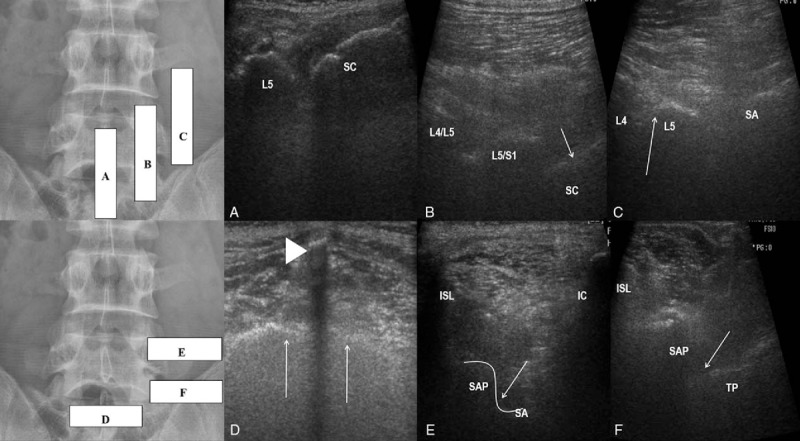
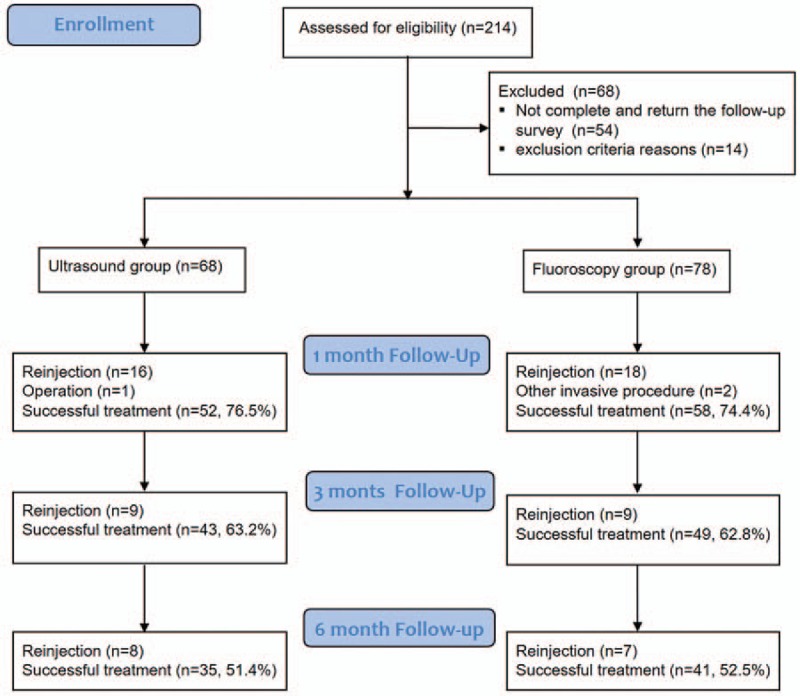
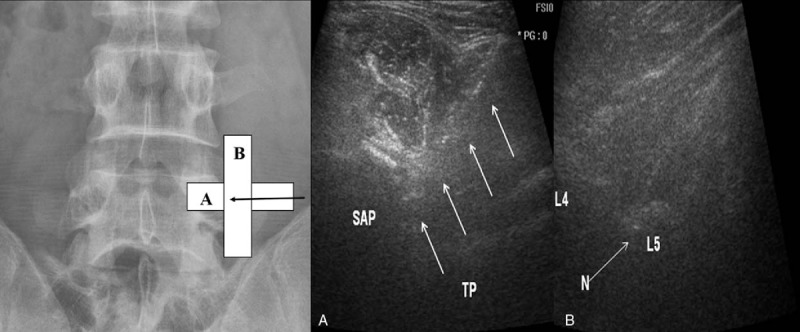
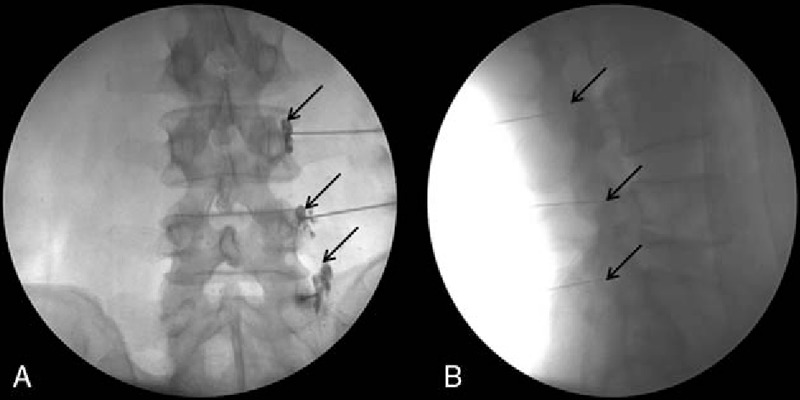
The aim of this study was to compare the mid-term effects and benefits of ultrasound (US)-guided and fluoroscopy (FL)-guided medial branch blocks (MBBs) for chronic lower lumbar facet joint pain through pain relief, functional improvement, and injection efficiency evaluation.Patients with chronic lumbar facet joint pain who received US (n = 68) or FL-guided MBBs (n = 78) were included in this retrospective study. All procedures were performed under FL or US guidance. Complication frequency, therapeutic effects, functional improvement, and the injection efficiency of MBBs were compared at 1, 3, and 6 months after the last injection.Both the Oswestry Disability Index (ODI) and the verbal numeric pain scale (VNS) improved at 1, 3, and 6 months after the last injections in both groups. Statistical differences were not observed in ODI and VNS between the groups (P > .05). The proportion of patients who reported successful treatment outcomes showed no significant differences between the groups at different time points. Logistic regression analysis showed that sex, pain duration, injection methods, number of injections, analgesic use, and age were not independent predictors of a successful outcome. US guidance was associated with a significantly shorter performance time.US-guided MBBs did not show significant differences in analgesic effect and functional improvement compared with the FL-guided approach. Therefore, by considering our data from this retrospective study, US-guided MBBs warrant consideration in the conservative management of lower lumbar facet joint pain.
本研究旨在通过疼痛缓解、功能改善及注射效率评估,比较超声(US)引导和荧光透视(FL)引导下内侧支阻滞(MBB)治疗慢性下腰椎小关节疼痛的中期效果和益处。本回顾性研究纳入了接受超声引导下MBB(n = 68)或荧光透视引导下MBB(n = 78)的慢性腰椎小关节疼痛患者。所有操作均在荧光透视或超声引导下进行。比较末次注射后1、3和6个月时MBB的并发症发生率、治疗效果、功能改善情况及注射效率。两组患者在末次注射后1、3和6个月时,奥斯威斯利功能障碍指数(ODI)和视觉数字疼痛量表(VNS)均有所改善。两组间ODI和VNS未观察到统计学差异(P > 0.05)。不同时间点报告治疗成功结果的患者比例在两组间无显著差异。逻辑回归分析显示,性别、疼痛持续时间、注射方法、注射次数、镇痛药物使用及年龄均不是成功治疗结果的独立预测因素。超声引导下操作时间显著更短。与荧光透视引导方法相比,超声引导下MBB在镇痛效果和功能改善方面未显示出显著差异。因此,根据本回顾性研究的数据,超声引导下MBB值得在慢性下腰椎小关节疼痛的保守治疗中考虑。