Diaz-Beltran Leticia, Esteban Francisco J, Varma Maya, Ortuzk Alp, David Maude, Wall Dennis P
Division of Systems Medicine, Department of Pediatrics, School of Medicine, Stanford University, 1265 Welch Road, Stanford, CA, 94305-5488, USA.
Division of Systems Medicine, Department of Psychiatry, Stanford University, Stanford, CA, USA.
BMC Genomics. 2017 Apr 20;18(1):315. doi: 10.1186/s12864-017-3667-9.
Numerous studies have highlighted the elevated degree of comorbidity associated with autism spectrum disorder (ASD). These comorbid conditions may add further impairments to individuals with autism and are substantially more prevalent compared to neurotypical populations. These high rates of comorbidity are not surprising taking into account the overlap of symptoms that ASD shares with other pathologies. From a research perspective, this suggests common molecular mechanisms involved in these conditions. Therefore, identifying crucial genes in the overlap between ASD and these comorbid disorders may help unravel the common biological processes involved and, ultimately, shed some light in the understanding of autism etiology.
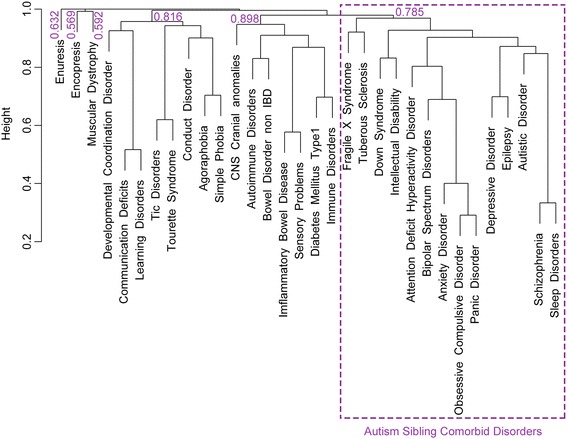
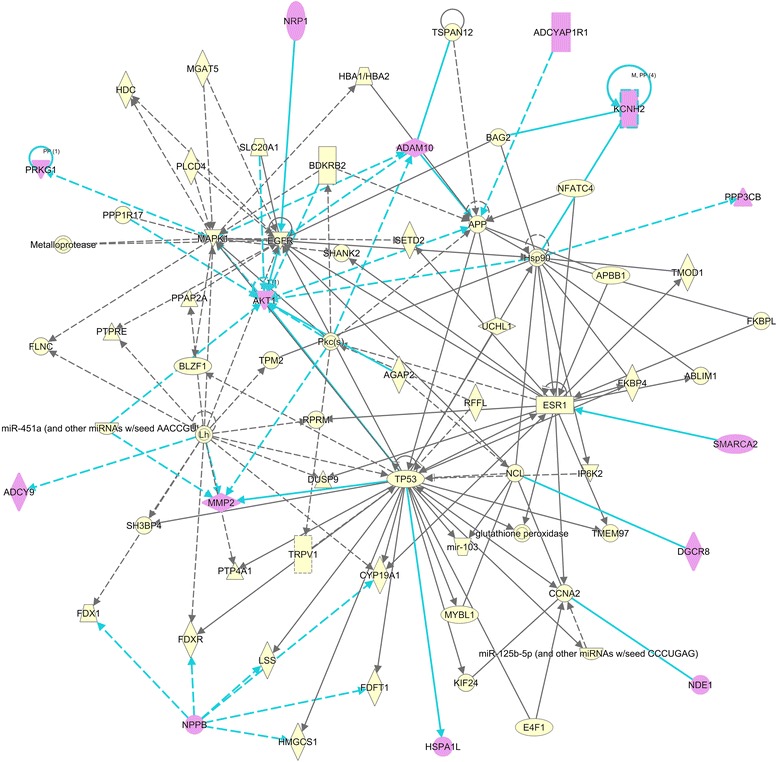
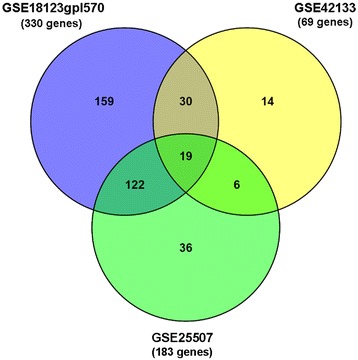
In this work, we used a two-fold systems biology approach specially focused on biological processes and gene networks to conduct a comparative analysis of autism with 31 frequently comorbid disorders in order to define a multi-disorder subcomponent of ASD and predict new genes of potential relevance to ASD etiology. We validated our predictions by determining the significance of our candidate genes in high throughput transcriptome expression profiling studies. Using prior knowledge of disease-related biological processes and the interaction networks of the disorders related to autism, we identified a set of 19 genes not previously linked to ASD that were significantly differentially regulated in individuals with autism. In addition, these genes were of potential etiologic relevance to autism, given their enriched roles in neurological processes crucial for optimal brain development and function, learning and memory, cognition and social behavior.
Taken together, our approach represents a novel perspective of autism from the point of view of related comorbid disorders and proposes a model by which prior knowledge of interaction networks may enlighten and focus the genome-wide search for autism candidate genes to better define the genetic heterogeneity of ASD.
大量研究强调了与自闭症谱系障碍(ASD)相关的共病程度升高。这些共病状况可能给自闭症患者带来更多损害,并且与神经典型人群相比更为普遍。考虑到ASD与其他病症共有的症状重叠,这些高共病率并不令人惊讶。从研究角度来看,这表明这些病症涉及共同的分子机制。因此,识别ASD与这些共病障碍重叠部分中的关键基因,可能有助于揭示其中涉及的共同生物学过程,并最终为理解自闭症病因提供一些线索。
在这项工作中,我们采用了一种双重系统生物学方法,特别关注生物学过程和基因网络,对自闭症与31种常见共病障碍进行了比较分析,以定义ASD的多病症子成分,并预测与ASD病因潜在相关的新基因。我们通过在高通量转录组表达谱研究中确定候选基因的显著性来验证我们的预测。利用疾病相关生物学过程的先验知识以及与自闭症相关的障碍的相互作用网络,我们鉴定出一组19个先前未与ASD相关联的基因,这些基因在自闭症个体中显著差异表达。此外,鉴于这些基因在对最佳大脑发育和功能、学习和记忆、认知及社会行为至关重要的神经过程中发挥丰富作用,它们与自闭症具有潜在的病因相关性。
综上所述,我们的方法从相关共病障碍的角度为自闭症提供了一个新视角,并提出了一个模型,通过该模型,相互作用网络的先验知识可以启发并聚焦全基因组范围内对自闭症候选基因的搜索,以更好地定义ASD的遗传异质性。