El-Etreby Nour M, Ghazy Amany A, Rashad Radwaa
Department of Obstetrics and gynecology, Faculty of Medicine, Alexandria University, Alexandria, Egypt.
Department of Microbiology and Immunology, Faculty of Medicine, Kafrelskeikh University, Kafrelskeikh, Egypt.
J Ovarian Res. 2017 Apr 20;10(1):28. doi: 10.1186/s13048-017-0325-4.
Ovarian epithelial tumor (OET) is a silent disease of late diagnosis and poor prognosis. Currently treatment options are limited and patient response to treatment is difficult to predict so there is a serious need to delineate the real pathogenesis to predict tumour prognosis. Prohibitin (PHB) is an evolutionarily protein that regulates the cell cycle. TGF-β has been shown to be a positive and negative regulator of cellular proliferation and differentiation. The present study provides an overview on the role played by PHB1, TGF-β and LH in ovarian cancer.
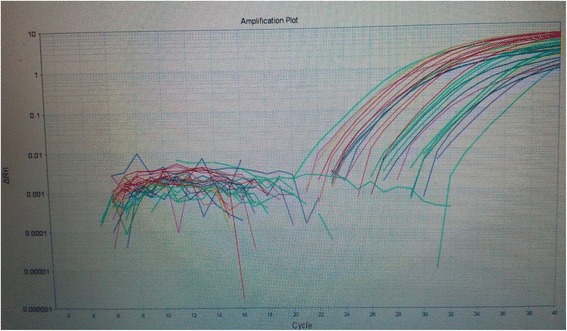
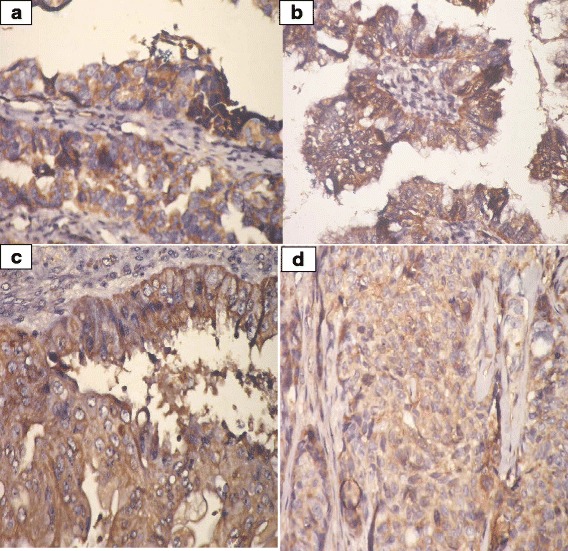
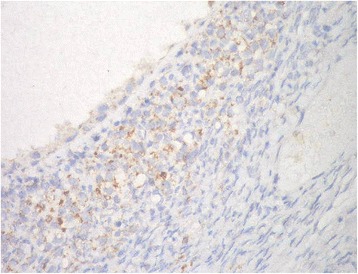
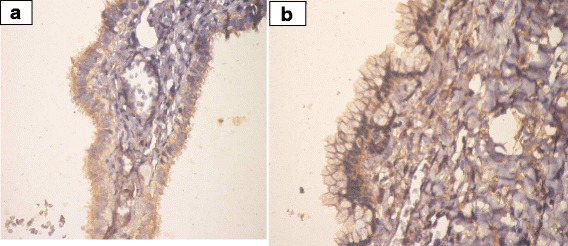
The study was conducted on 60 patients with ovarian tumors (benign, borderline and malignant) and 20 healthy volunteers. LH and TGF-β serum levels were measured by ELISA. Expression of prohibitin and LHR-mRNA were assessed by IHC and TaqMan® real time gene expression assay, respectively.
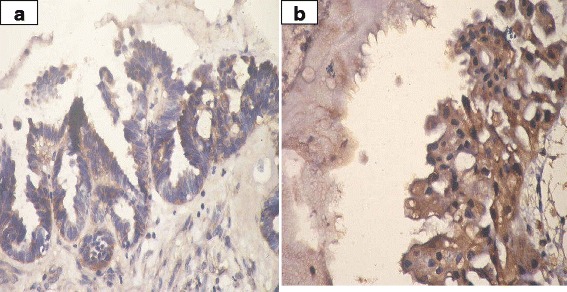
Serum levels of LH and TGF-β were significantly decreased among borderline and malignant groups. There was significant over-expression of LHRmRNA in malignant group. Prohibitin expression was significantly increased in malignant ovarian tissue. Strong negative correlations were found between LHR mRNA expression and serum LH levels, and between IHC score of prohibitin and serum levels of LH among patients with borderline ovarian tumors.
Steady decline of LH and TGF-B serum levels, from benign cystadenoma to borderline tumor to carcinoma, suggests their inhibitory role against OET cell growth. Increased PHB1 expression in OET suggests its proliferative activity that can be regulated by luteinisation and/or TGF-β. Furthermore increased LHR mRNA tissue expression can provide hope for using LH in treatment of some types of ovarian cancers.
卵巢上皮性肿瘤(OET)是一种诊断较晚且预后较差的隐匿性疾病。目前治疗选择有限,且患者对治疗的反应难以预测,因此迫切需要阐明其真正的发病机制以预测肿瘤预后。抑制素(PHB)是一种调节细胞周期的进化保守蛋白。转化生长因子-β(TGF-β)已被证明是细胞增殖和分化的正负调节因子。本研究概述了PHB1、TGF-β和促黄体生成素(LH)在卵巢癌中的作用。
本研究对60例卵巢肿瘤(良性、交界性和恶性)患者及20名健康志愿者进行。采用酶联免疫吸附测定(ELISA)法检测血清LH和TGF-β水平。分别通过免疫组织化学(IHC)和TaqMan®实时基因表达测定法评估抑制素和促黄体生成素受体(LHR)-mRNA的表达。
交界性和恶性组血清LH和TGF-β水平显著降低。恶性组LHRmRNA表达显著上调。恶性卵巢组织中抑制素表达显著增加。在交界性卵巢肿瘤患者中,LHR mRNA表达与血清LH水平之间以及抑制素的免疫组化评分与血清LH水平之间存在显著负相关。
从良性囊腺瘤到交界性肿瘤再到癌,LH和TGF-B血清水平持续下降,提示它们对OET细胞生长具有抑制作用。OET中PHB1表达增加提示其增殖活性,可受黄体化和/或TGF-β调节。此外,LHR mRNA组织表达增加为使用LH治疗某些类型的卵巢癌带来了希望。