Chen Yan, Liu Xujie, Liu Rui, Gong Yong, Wang Mingbo, Huang Qianli, Feng Qingling, Yu Bo
Department of Ultrasonic Diagnosis, Zhujiang Hospital of Southern Medical University, Guangzhou 510282, China.
Graduate School at Shenzhen, Tsinghua University, Shenzhen 518055, China.
Theranostics. 2017 Feb 27;7(5):1072-1087. doi: 10.7150/thno.18193. eCollection 2017.
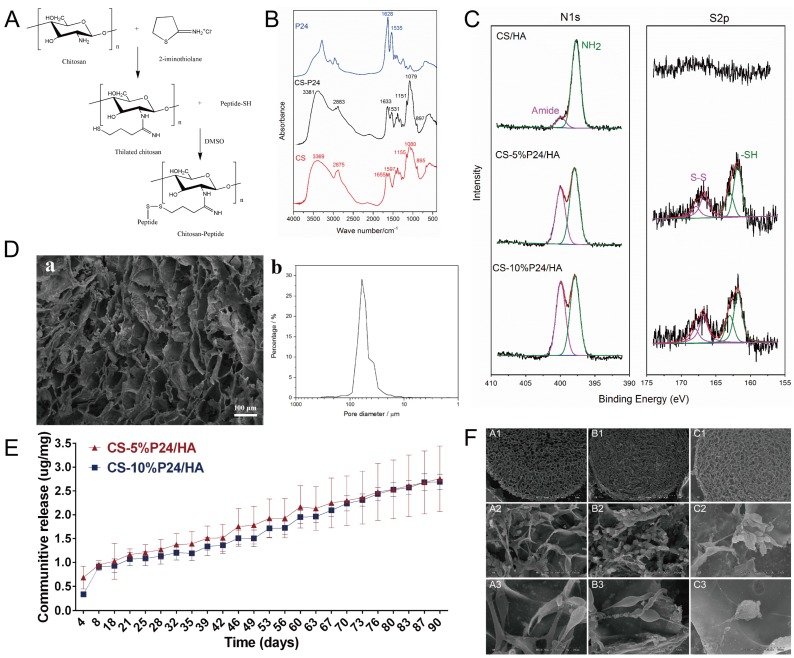
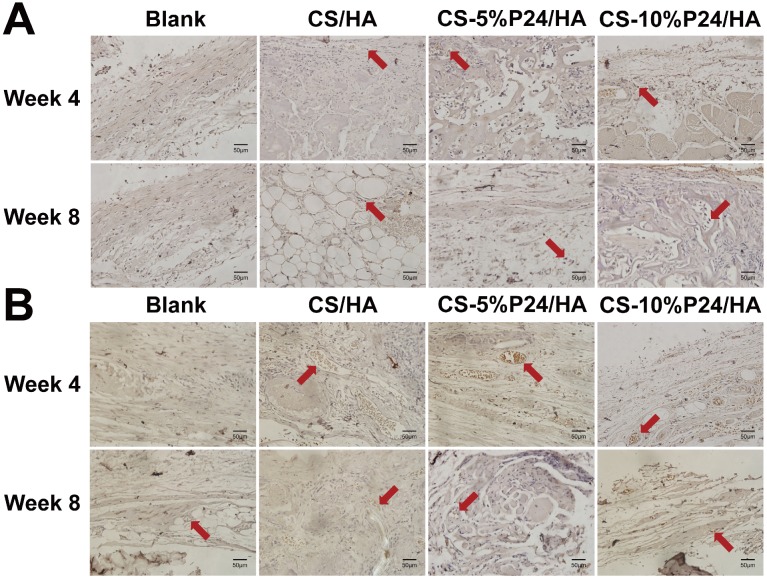
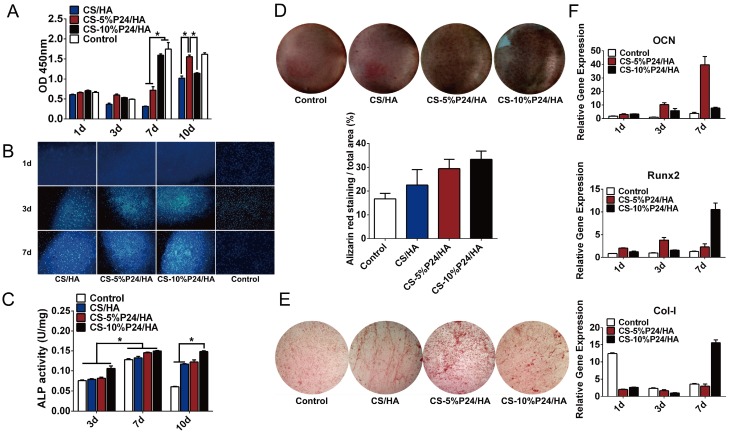
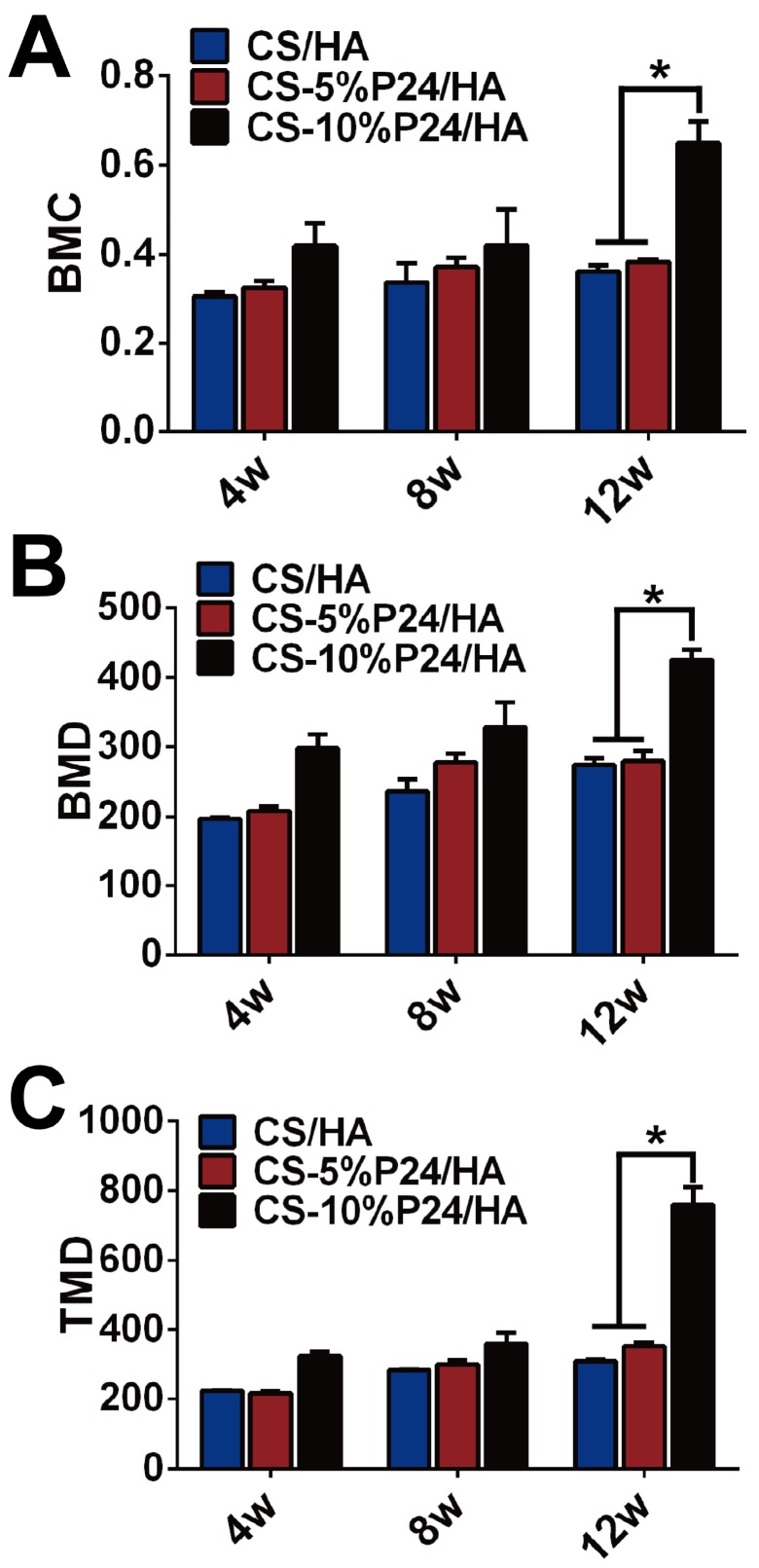
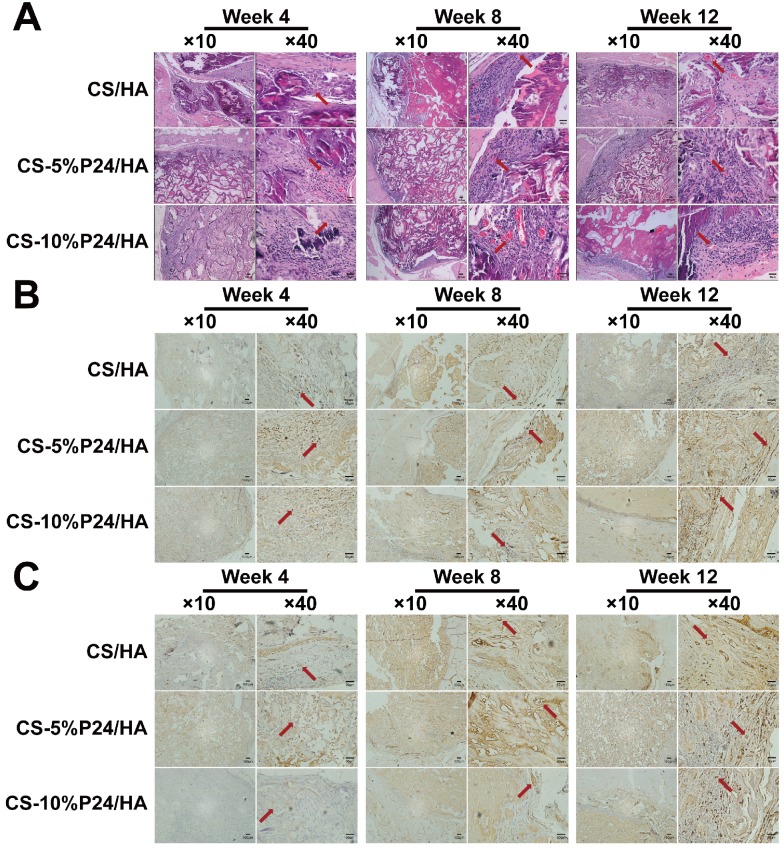
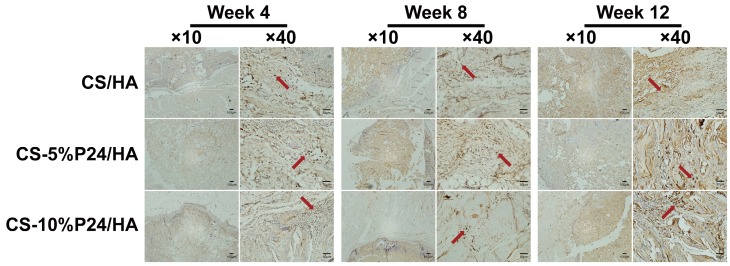
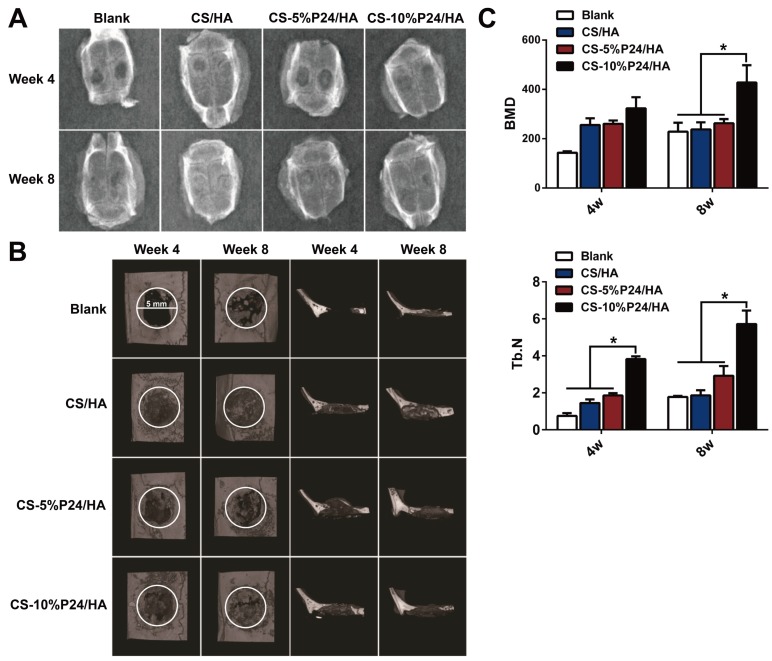
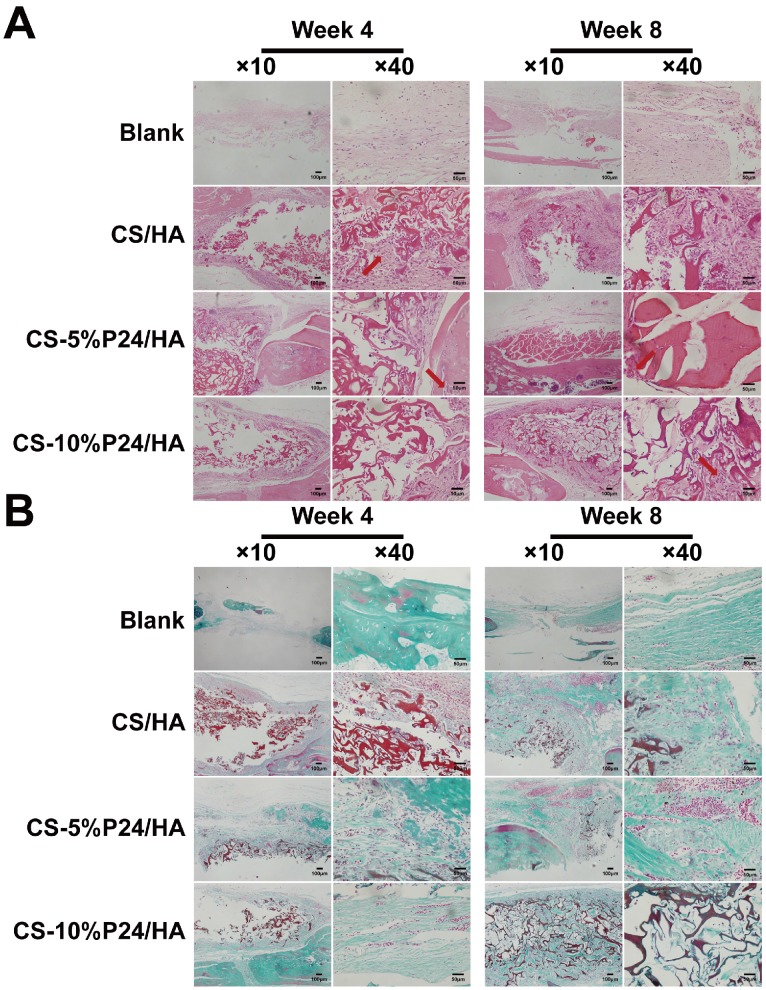
Combination of tissue-engineered bone scaffolds with cell-adhesive, osteoconductive, or osteoinductive biomolecules is a critical strategy to improve their properties that significantly influence cellular behaviors, such as adhesion, proliferation, and differentiation, which is beneficial for critical-sized bone defects repairing. However, the traditional surface modification techniques, such as physical adsorption, coating, and plasma treatment, et al, have great limitations for immobilization of bioactive molecules due to undesirable controlled delivery performance or overly complex multistep procedures. In this study, we functionalized the chitosan/hydroxyapatite (CS/HA) biomimetic composite scaffold for controlled delivery of BMP2-derived peptide (P24) by the chemical grafting modification technique: firstly, P24 was conjugated with a thiolated chitosan, chitosan-4-thiobutylamidine (CS-TBA); secondly, the resultant CS-P24 was then combined with HA to prepare CS-P24/HA scaffolds. The effect of CS-P24/HA scaffolds on bone regeneration was evaluated, along with the underlying biological mechanisms responsible and . , the controlled and sustained release of bioactive P24 could last up to 90 days, furthermore, the release profiles of CS-5%P24/HA and CS-10%P24/HA were linear and could be fitted according to zero-order kinetic model (R=0.9929; R=0.9757); P24 on the scaffold significantly promoted cell adhesion, proliferation, osteodifferentiation, and mineralization with synergistic effects. Bone marrow stromal cells (BMSCs) revealed spindle-shaped surface morphology, indicating the CS-P24/HA scaffolds supported cell adhesion and possessed a high proliferation rate that varied according to the P24 concentration levels. Furthermore, mRNA levels for OCN, Runx2, and collagen I were significantly up-regulated on CS-P24/HA scaffolds compared with cells grown on CS/HA scaffolds ( < 0.05). Similarly, the BMSCs exhibited a higher ALP expression and calcium deposition level on CS-P24/HA scaffolds compared with CS/HA scaffolds ( < 0.05). , osteoinductive studies revealed a significantly higher ectopic osteogenesis level of CS-10%P24/HA scaffolds in rat dorsal muscle pockets compared with that of CS/HA scaffolds. Finally, CS-P24/HA scaffolds showed superior performance in the reconstruction of rat calvarial bone defects. This novel CS-P24/HA scaffold is deemed a strong potential candidate for the repair of bone defects in human bone tissue engineering.
将组织工程骨支架与具有细胞黏附性、骨传导性或骨诱导性的生物分子相结合,是改善其性能的关键策略,这些性能会显著影响细胞行为,如黏附、增殖和分化,这有利于修复临界尺寸的骨缺损。然而,传统的表面改性技术,如物理吸附、涂层和等离子体处理等,由于可控递送性能不理想或多步骤程序过于复杂,在固定生物活性分子方面有很大局限性。在本研究中,我们通过化学接枝改性技术对壳聚糖/羟基磷灰石(CS/HA)仿生复合支架进行功能化,以实现BMP2衍生肽(P24)的可控递送:首先,将P24与硫醇化壳聚糖壳聚糖-4-硫代丁脒(CS-TBA)偶联;其次,将所得的CS-P24与HA结合制备CS-P24/HA支架。评估了CS-P24/HA支架对骨再生的影响以及潜在的生物学机制。生物活性P24的可控和持续释放可持续长达90天,此外,CS-5%P24/HA和CS-10%P24/HA的释放曲线呈线性,可根据零级动力学模型拟合(R = 0.9929;R = 0.9757);支架上的P24显著促进细胞黏附、增殖、骨分化和矿化,并具有协同作用。骨髓基质细胞(BMSCs)呈现纺锤形表面形态,表明CS-P24/HA支架支持细胞黏附且具有高增殖率,其增殖率根据P24浓度水平而变化。此外,与在CS/HA支架上生长的细胞相比,CS-P24/HA支架上OCN、Runx2和I型胶原的mRNA水平显著上调(P < 0.05)。同样,与CS/HA支架相比,BMSCs在CS-P24/HA支架上表现出更高的碱性磷酸酶(ALP)表达和钙沉积水平(P < 0.05)。骨诱导研究表明,与CS/HA支架相比,CS-10%P24/HA支架在大鼠背部肌肉袋中的异位骨生成水平显著更高。最后,CS-P24/HA支架在大鼠颅骨骨缺损修复中表现出优异性能。这种新型的CS-P24/HA支架被认为是人类骨组织工程中骨缺损修复的有力潜在候选材料。