Hu Xi, Wang Teng, Li Faqi, Mao Xiang
State Key Laboratory of Ultrasound in Medicine and Engineering College of Biomedical Engineering, Chongqing Medical University Chongqing 400016 P. R. China
Chongqing Key Laboratory of Biomedical Engineering, College of Biomedical Engineering, Chongqing Medical University Chongqing 400016 P. R. China.
RSC Adv. 2023 Jul 10;13(30):20495-20511. doi: 10.1039/d3ra02248j. eCollection 2023 Jul 7.
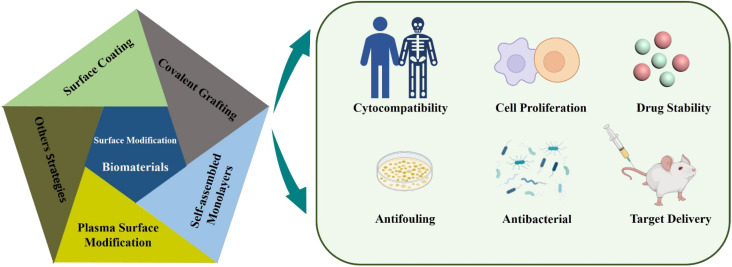
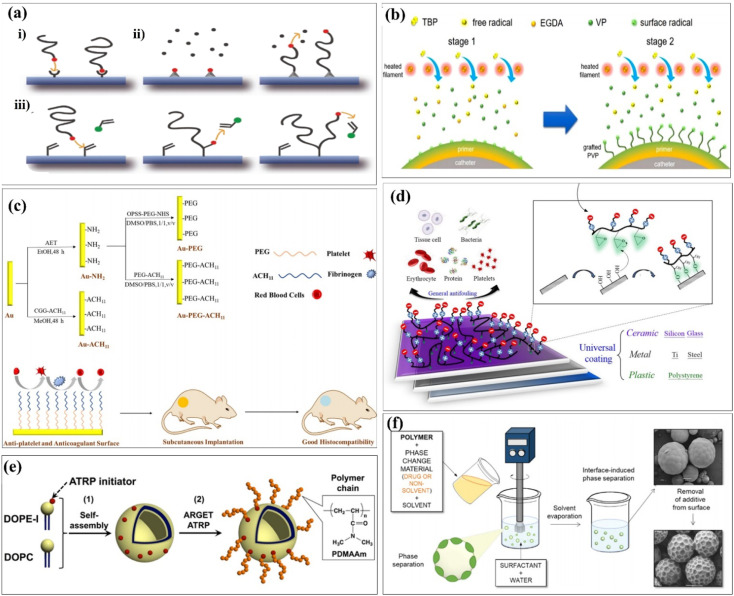
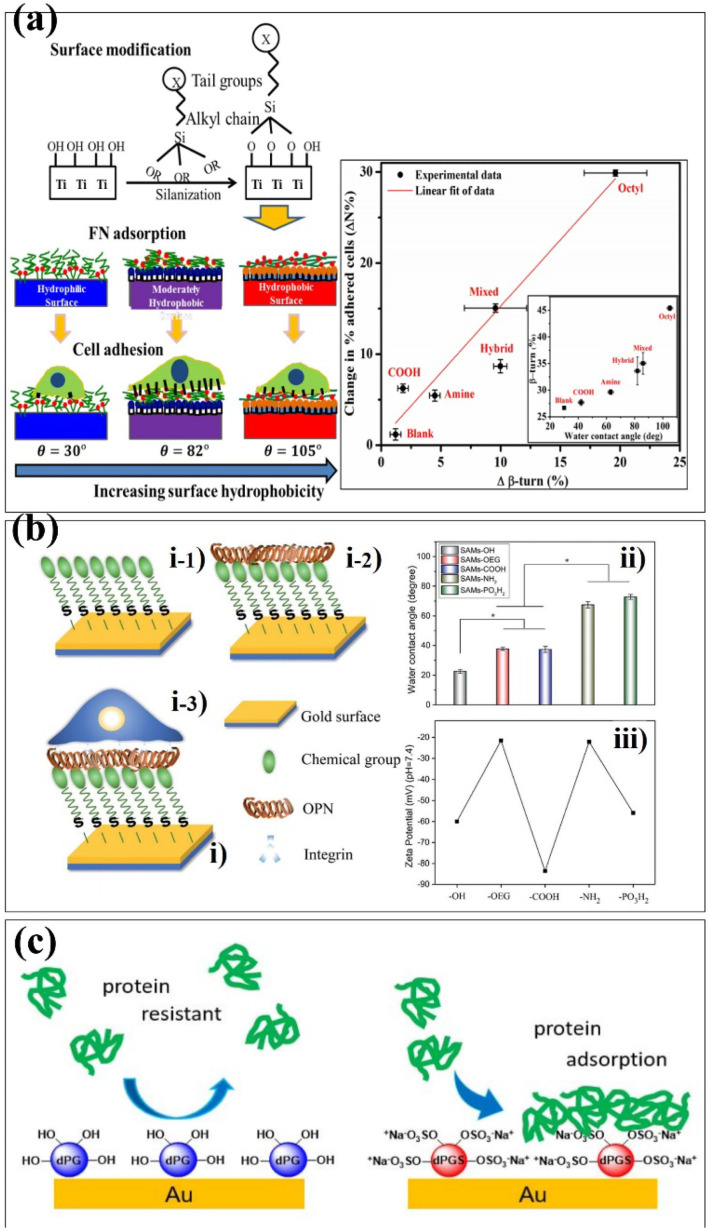
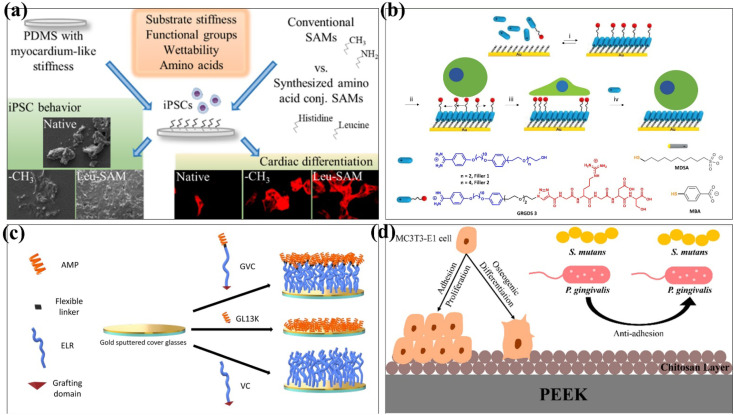
Biomaterial implantation into the human body plays a key role in the medical field and biological applications. Increasing the life expectancy of biomaterial implants, reducing the rejection reaction inside the human body and reducing the risk of infection are the problems in this field that need to be solved urgently. The surface modification of biomaterials can change the original physical, chemical and biological properties and improve the function of materials. This review focuses on the application of surface modification techniques in various fields of biomaterials reported in the past few years. The surface modification techniques include film and coating synthesis, covalent grafting, self-assembled monolayers (SAMs), plasma surface modification and other strategies. First, a brief introduction to these surface modification techniques for biomaterials is given. Subsequently, the review focuses on how these techniques change the properties of biomaterials, and evaluates the effects of modification on the cytocompatibility, antibacterial, antifouling and surface hydrophobic properties of biomaterials. In addition, the implications for the design of biomaterials with different functions are discussed. Finally, based on this review, it is expected that the biomaterials have development prospects in the medical field.
生物材料植入人体在医学领域和生物应用中起着关键作用。提高生物材料植入物的使用寿命、降低人体内的排斥反应以及降低感染风险是该领域亟待解决的问题。生物材料的表面改性可以改变其原有的物理、化学和生物学性质,并改善材料的功能。本综述聚焦于过去几年报道的表面改性技术在生物材料各个领域的应用。表面改性技术包括薄膜和涂层合成、共价接枝、自组装单分子层(SAMs)、等离子体表面改性等策略。首先,对这些生物材料表面改性技术进行简要介绍。随后,综述重点关注这些技术如何改变生物材料的性质,并评估改性对生物材料的细胞相容性、抗菌、抗污和表面疏水性的影响。此外,还讨论了对不同功能生物材料设计的启示。最后,基于本综述,期望生物材料在医学领域具有发展前景。