Fonceca Angela Mary, Chopra Abha, Levy Avram, Noakes Paul Stanton, Poh Matthew Wee-Peng, Bear Natasha Leanne, Prescott Susan, Everard Mark Lloyd
School of Paediatrics and Child Health, University of Western Australia, Subiaco, Western Australia Australia.
Institute of Immunity and Infectious Diseases (IIID), Murdoch University, Murdoch, Western Australia, Australia.
PLoS One. 2017 Apr 24;12(4):e0173738. doi: 10.1371/journal.pone.0173738. eCollection 2017.
Human respiratory syncytial virus (RSV) remains the most common cause of severe lower respiratory tract disease amongst infants, and continues to cause annual epidemics of respiratory disease every winter worldwide. Demonstrating placental transmission of viable RSV in human samples is a major paradigm shift in respiratory routes considered likely for RSV transmission.
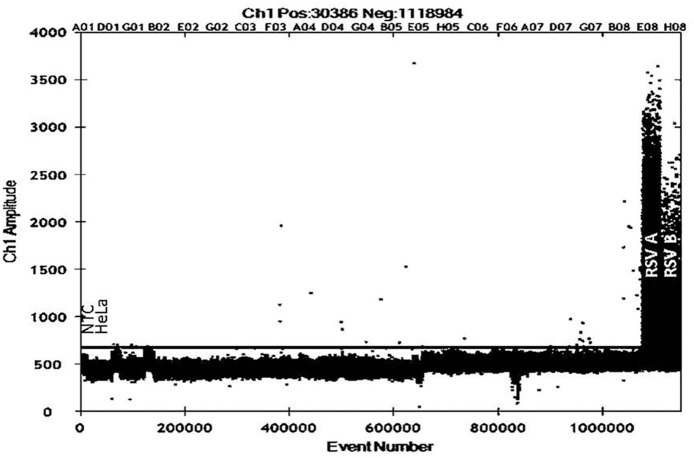
Droplet digital PCR (ddPCR) was used to identify RSV present in cord blood mononucleocytes (CBM). CBMs testing positive for RSV were treated with phytohemagglutinin (PHA), PHA and nitric oxide (NO) or PHA, NO and palivizumab, and co-cultured with HeLa cell monolayers. Subsequent immuno-staining for RSV was used to visualize infective viral plaques.
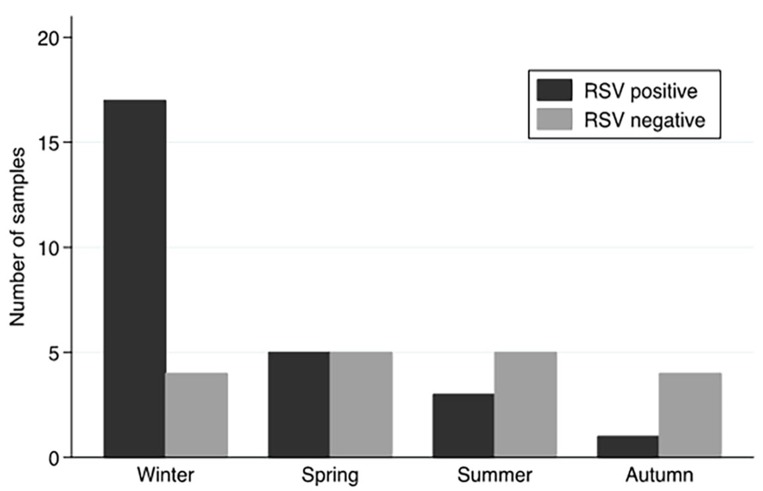
RSV was detected in 26 of 45 samples (57.7%) by ddPCR. CBM's collected in winter were more likely to test positive for RSV (17/21 samples, risk = 80%, OR = 7.08; 95% CI 1.80-27.80; p = 0.005) compared to non-winter months (9/24 samples, 37.5%). RSV plaques were observed in non-treated and treated co-cultured HeLa monolayers.
Demonstrating active RSV in CBMs suggests in utero transmission of infective virus to the fetus without causing overt disease. This is likely to have an important impact on immune development as well as future virus-host interactions, thereby warranting further investigation.
人类呼吸道合胞病毒(RSV)仍然是婴儿严重下呼吸道疾病最常见的病因,并且在全球范围内每年冬季都会引发呼吸道疾病的流行。在人类样本中证实有活力的RSV可通过胎盘传播,这是RSV传播可能的呼吸道途径方面的一个重大范式转变。
采用液滴数字PCR(ddPCR)来鉴定脐血单个核细胞(CBM)中存在的RSV。对RSV检测呈阳性的CBM用植物血凝素(PHA)、PHA和一氧化氮(NO)或PHA、NO和帕利珠单抗进行处理,并与HeLa细胞单层共培养。随后对RSV进行免疫染色以观察感染性病毒斑。
通过ddPCR在45个样本中的26个(57.7%)检测到RSV。与非冬季月份(9/24个样本,37.5%)相比,冬季采集的CBM检测出RSV阳性的可能性更高(17/21个样本,风险 = 80%,OR = 7.08;95% CI 1.80 - 27.80;p = 0.005)。在未处理和处理过的共培养HeLa单层中均观察到RSV斑。
在CBM中证实存在活性RSV表明感染性病毒在子宫内传播给胎儿但未引起明显疾病。这可能对免疫发育以及未来病毒与宿主的相互作用产生重要影响,因此值得进一步研究。