Ma Caiqi, Yin Haofan, Zhong Jun, Zhang Yang, Luo Chuanghua, Che Di, Fang Zhenzhen, Li Lei, Qin Shuxing, Liang Jieying, Qi Weiwei, Yang Zhonghan, Zhou Ti, Ma Jianxing, Yang Xia, Gao Guoquan
Program of Molecular Medicine, Affiliated Guangzhou Women and Children's Hospital, Zhongshan School of Medicine, Sun Yat-Sen University, Guangzhou, Guangdong 510080, P.R. China.
Department of Biochemistry, Zhongshan Medical School, Sun Yat-Sen University, Guangzhou, Guangdong 510080, P.R. China.
Int J Oncol. 2017 Jun;50(6):2000-2010. doi: 10.3892/ijo.2017.3972. Epub 2017 Apr 20.
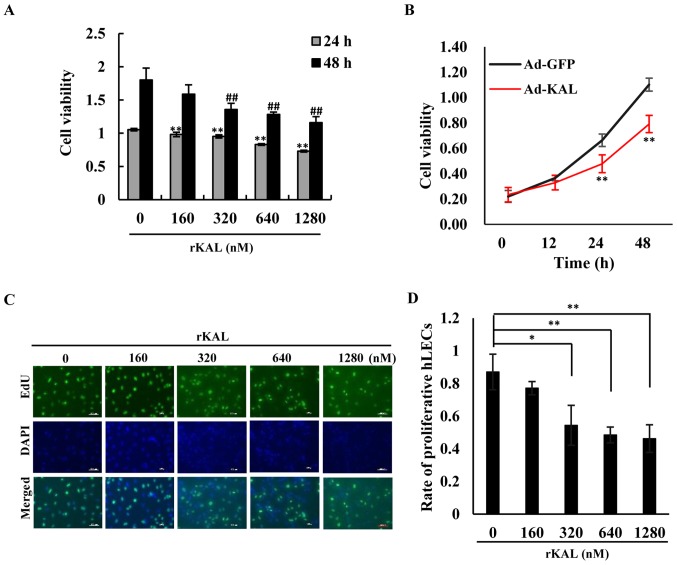
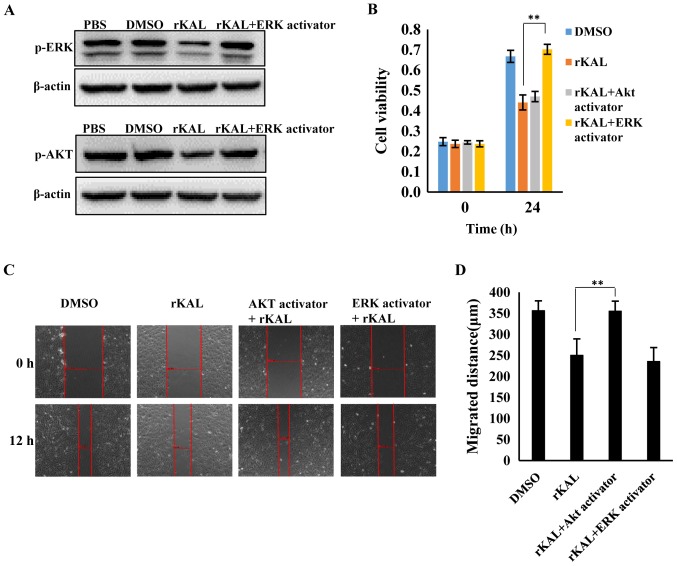
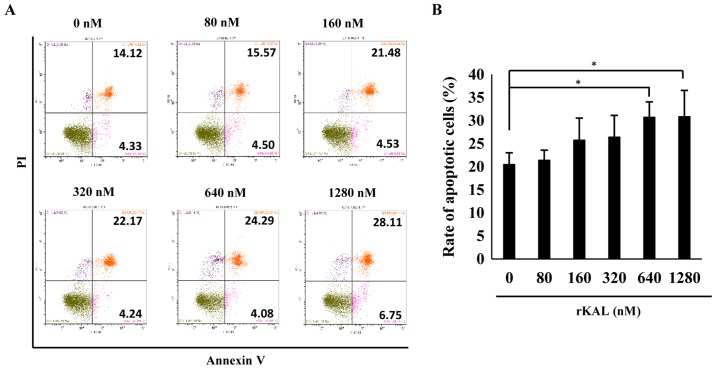
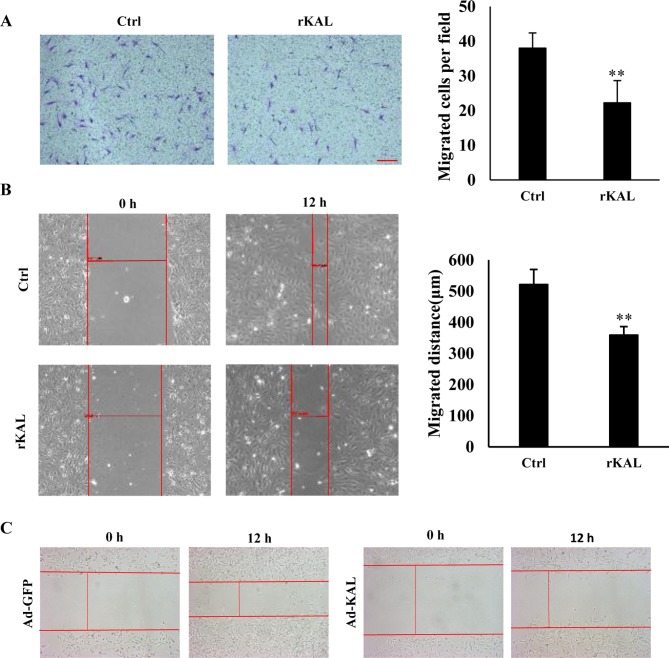
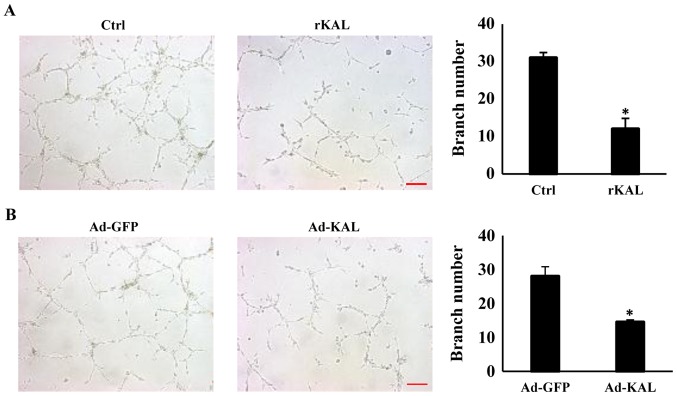
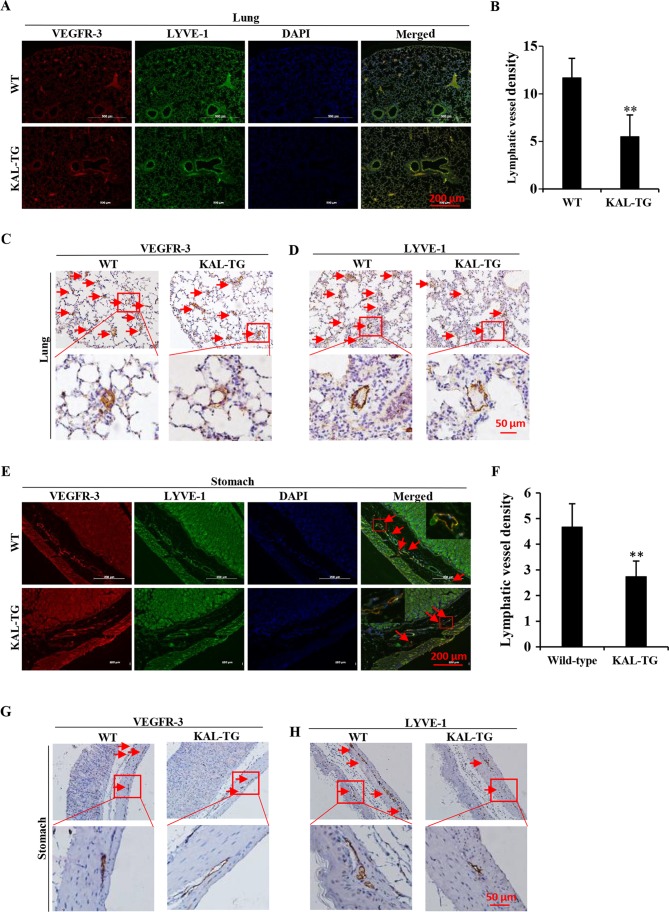
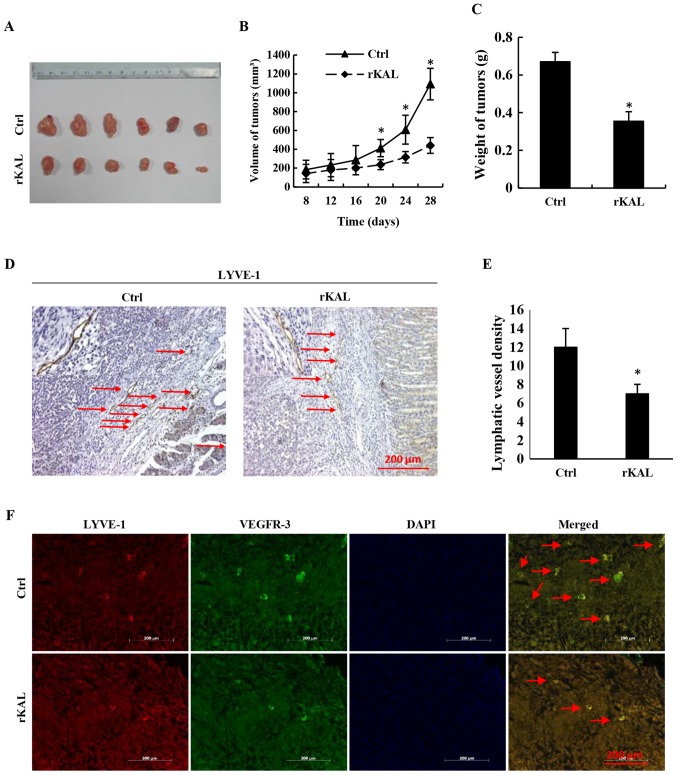
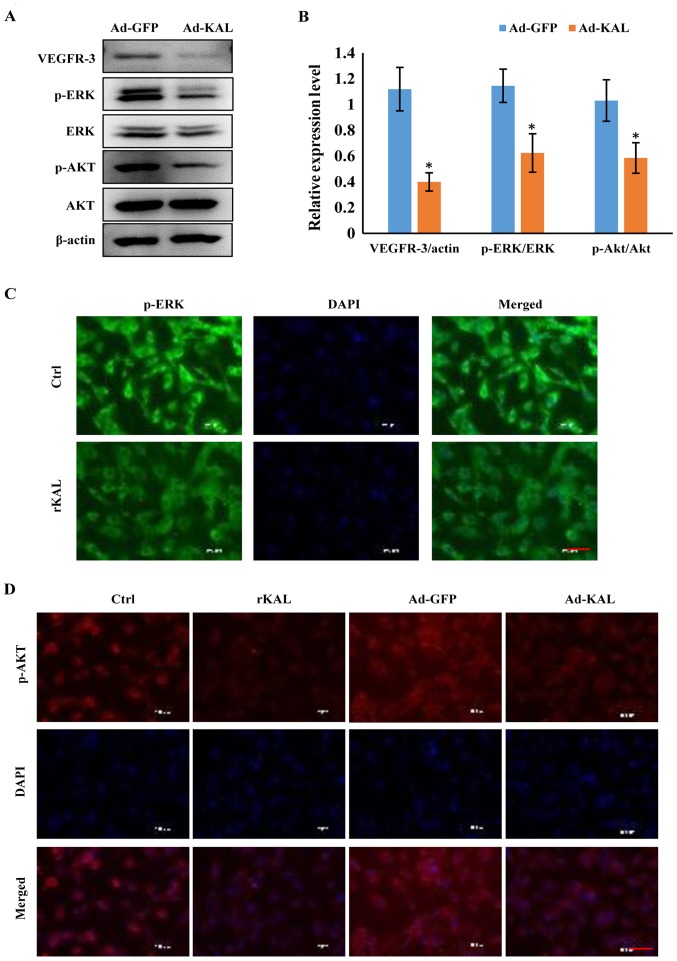
Kallistatin has been recognized as an endogenous angiogenic inhibitor. However, its effects on lymphatic endothelial cells and lymphangiogenesis remain poorly understood. Lymphangiogenesis is involved in tumor metastasis via the lymphatic vasculature in various types of tumors. The aim of this study was to investigate the effects of kallistatin on lymphangiogenesis and the mechanism of action involved. Treatment with kallistatin recombinant protein or overexpression of kallistatin inhibited the proliferation, migration and tube formation of human lymphatic endothelial cells (hLECs), and induced apoptosis of hLECs. Furthermore, our results showed that the lymphatic vessel density (LVD) was reduced in lung and stomach sections from kallistatin-overexpressing transgenic mice. Treatment with kallistatin recombinant protein decreased the LVD in the implanted gastric xenograft tumors of nude mice. To the best of our knowledge, the present study is the first to demonstrate that kallistatin possesses anti-lymphangiogenic activity in vitro and in vivo. Moreover, kallistatin inhibited proliferation and migration of hLECs by reducing the phosphorylation of ERK and Akt, respectively. These findings suggested that kallistatin may be a promising agent that could be used to suppress cancer metastasis by inhibiting both angiogenesis and lymphangiogenesis.
激肽释放酶抑制蛋白已被公认为一种内源性血管生成抑制剂。然而,其对淋巴管内皮细胞和淋巴管生成的影响仍知之甚少。淋巴管生成通过各种肿瘤中的淋巴管系统参与肿瘤转移。本研究的目的是探讨激肽释放酶抑制蛋白对淋巴管生成的影响及其作用机制。用激肽释放酶抑制蛋白重组蛋白处理或过表达激肽释放酶抑制蛋白可抑制人淋巴管内皮细胞(hLECs)的增殖、迁移和管腔形成,并诱导hLECs凋亡。此外,我们的结果表明,在过表达激肽释放酶抑制蛋白的转基因小鼠的肺和胃切片中,淋巴管密度(LVD)降低。用激肽释放酶抑制蛋白重组蛋白处理可降低裸鼠植入的胃异种移植瘤中的LVD。据我们所知,本研究首次证明激肽释放酶抑制蛋白在体外和体内均具有抗淋巴管生成活性。此外,激肽释放酶抑制蛋白分别通过降低ERK和Akt的磷酸化来抑制hLECs的增殖和迁移。这些发现表明,激肽释放酶抑制蛋白可能是一种有前途的药物,可用于通过抑制血管生成和淋巴管生成来抑制癌症转移。