Focht Dorota, Croll Tristan I, Pedersen Bjorn P, Nissen Poul
Department of Molecular Biology and Genetics, Aarhus UniversityAarhus, Denmark.
DANDRITE, Nordic-EMBL Partnership for Molecular Medicine, Aarhus UniversityAarhus, Denmark.
Front Physiol. 2017 Apr 11;8:202. doi: 10.3389/fphys.2017.00202. eCollection 2017.
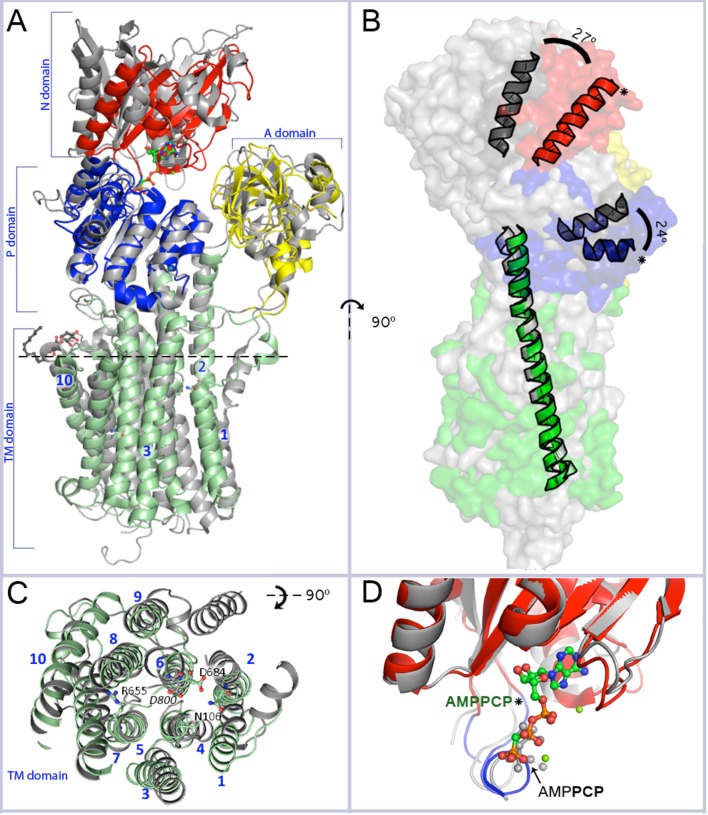
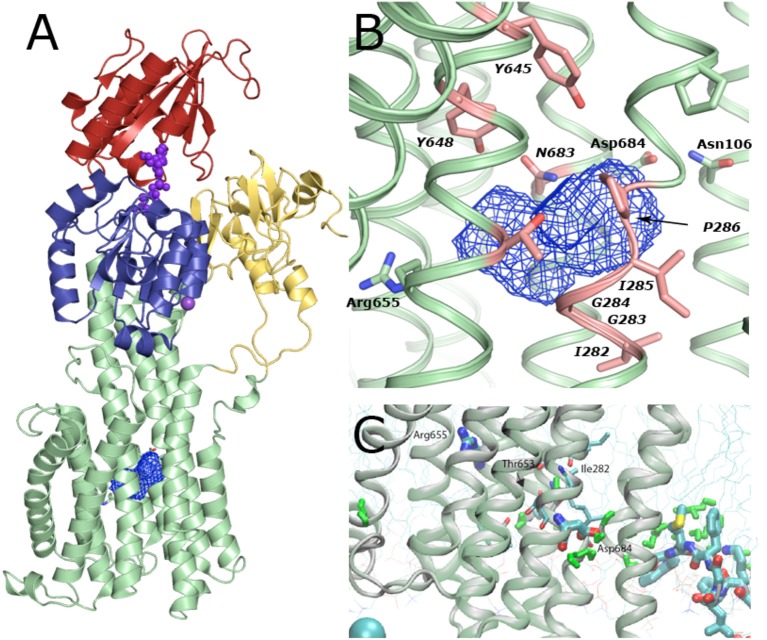
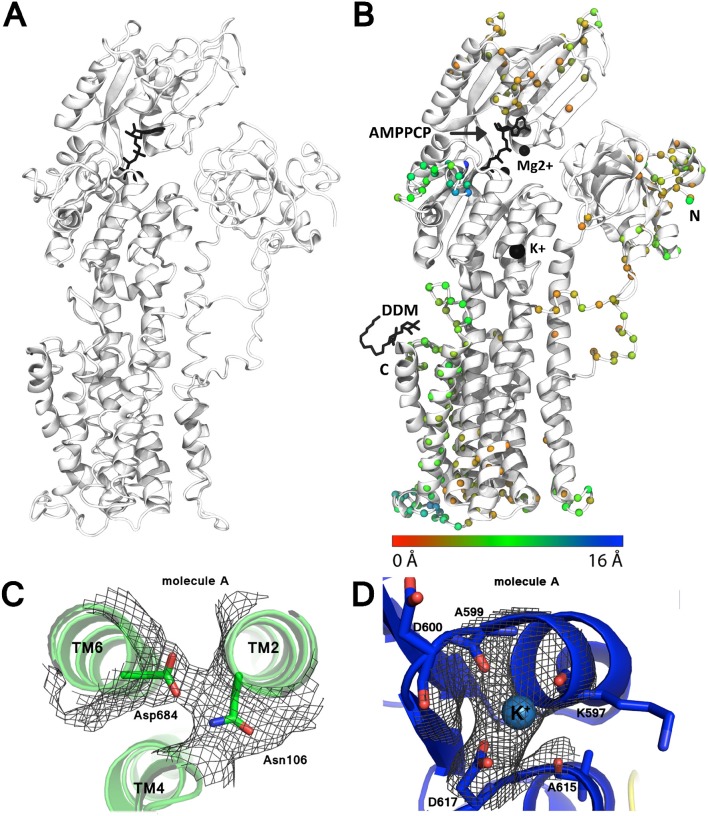
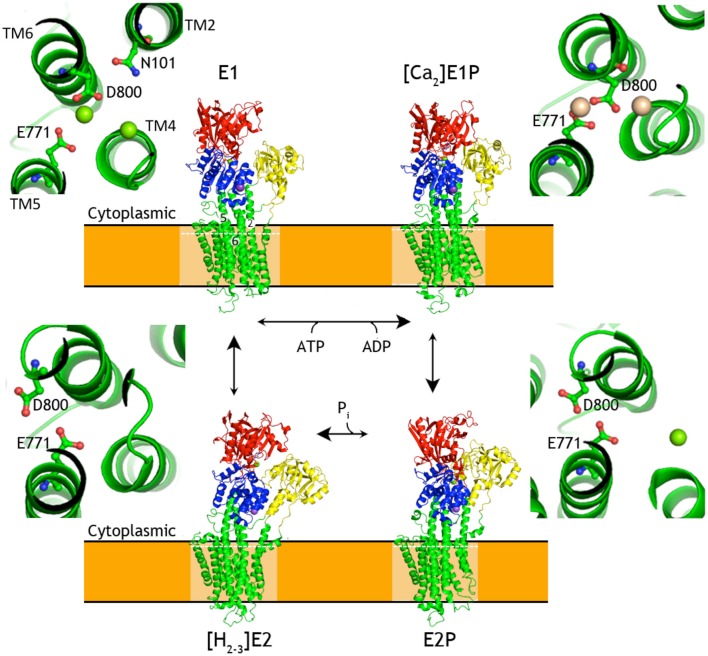
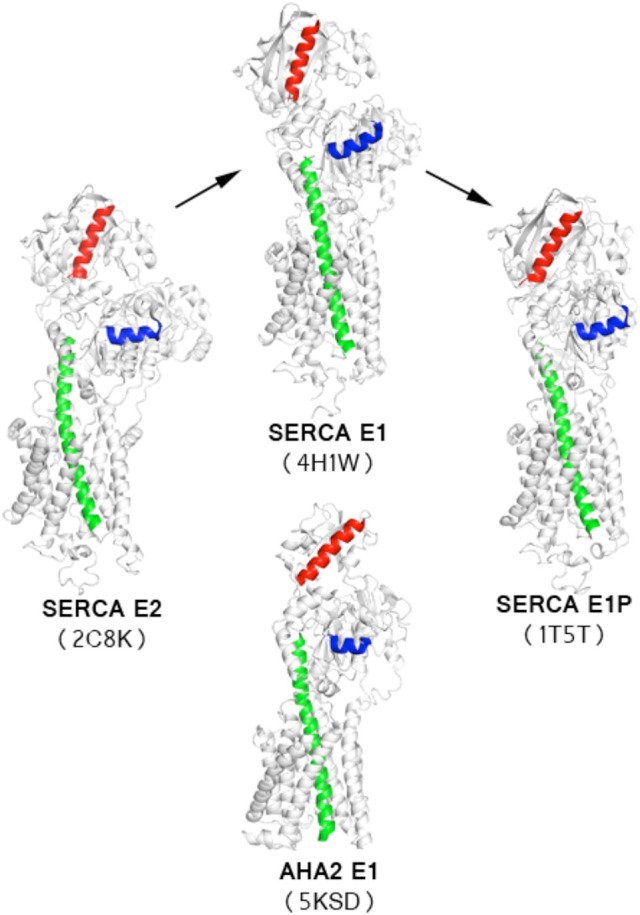
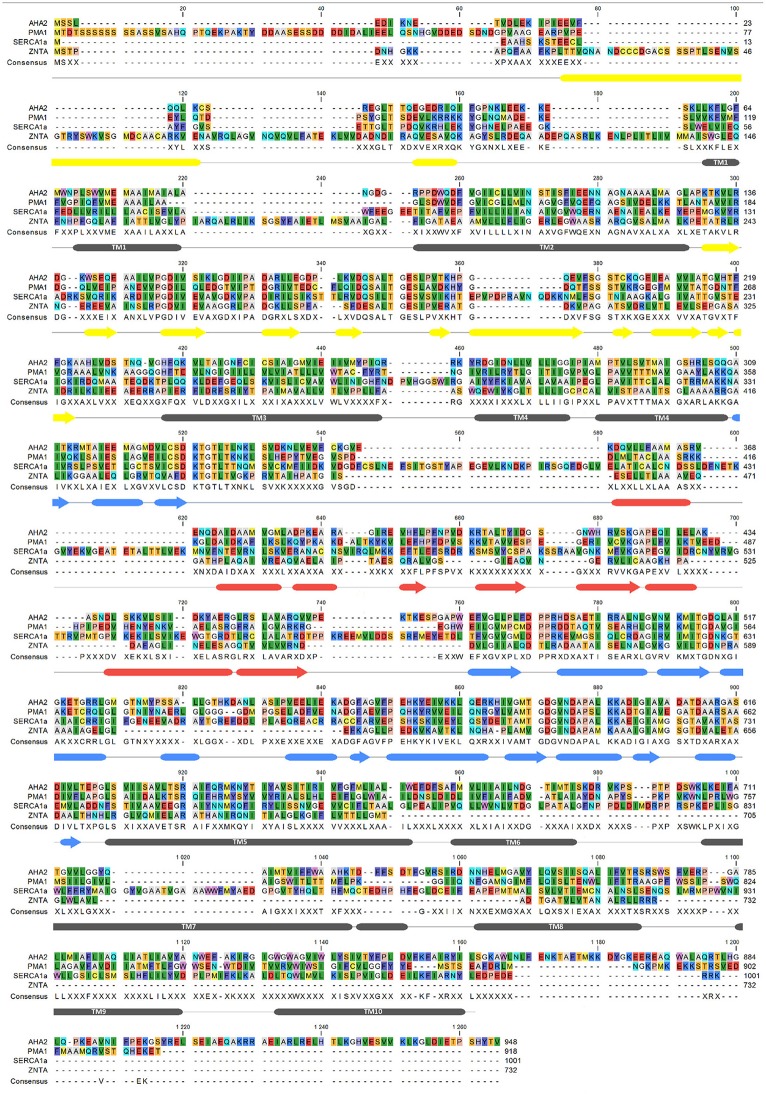
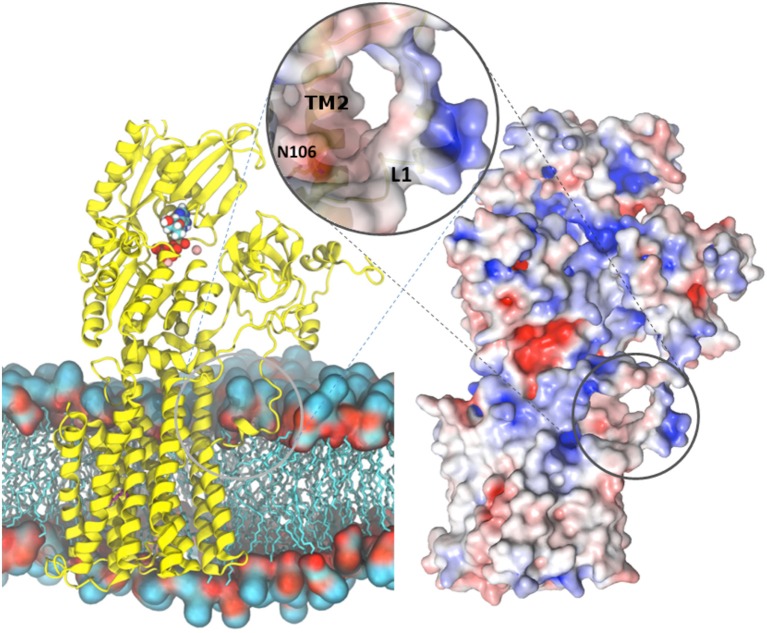
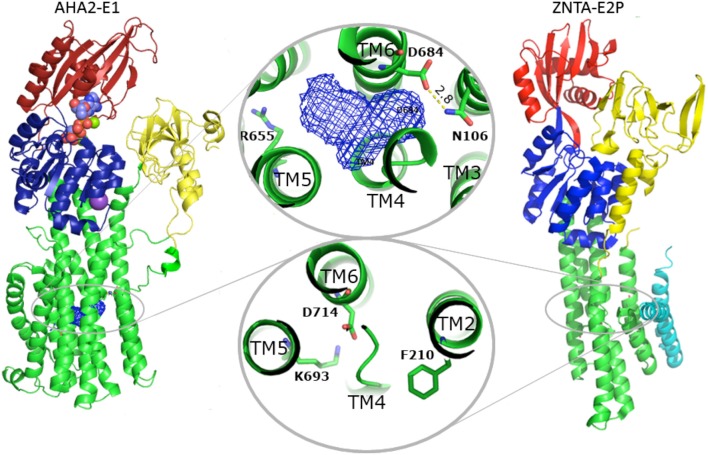
The plasma membrane H-ATPase is a proton pump of the P-type ATPase family and essential in plants and fungi. It extrudes protons to regulate pH and maintains a strong proton-motive force that energizes e.g., secondary uptake of nutrients. The only crystal structure of a H-ATPase (AHA2 from ) was reported in 2007. Here, we present an improved atomic model of AHA2, obtained by a combination of model rebuilding through interactive molecular dynamics flexible fitting (iMDFF) and structural refinement based on the original data, but using up-to-date refinement methods. More detailed map features prompted local corrections of the transmembrane domain, in particular rearrangement of transmembrane helices 7 and 8, and the cytoplasmic N- and P-domains, and the new model shows improved overall quality and reliability scores. The AHA2 structure shows similarity to the Ca-ATPase E1 state, and provides a valuable starting point model for structural and functional analysis of proton transport mechanism of P-type H-ATPases. Specifically, Asp684 protonation associated with phosphorylation and occlusion of the E1P state may result from hydrogen bond interaction with Asn106. A subsequent deprotonation associated with extracellular release in the E2P state may result from an internal salt bridge formation to an Arg655 residue, which in the present E1 state is stabilized in a solvated pocket. A release mechanism based on an in-built counter-cation was also later proposed for Zn-ATPase, for which structures have been determined in Zn released E2P-like states with the salt bridge interaction formed.
质膜H - ATP酶是P型ATP酶家族的一种质子泵,在植物和真菌中至关重要。它将质子泵出以调节pH值,并维持强大的质子动力,为营养物质的二次摄取等过程提供能量。2007年报道了H - ATP酶(来自拟南芥的AHA2)的唯一晶体结构。在此,我们展示了一种改进的AHA2原子模型,它是通过交互式分子动力学柔性拟合(iMDFF)进行模型重建与基于原始数据的结构优化相结合而获得的,但使用了最新的优化方法。更详细的图谱特征促使对跨膜结构域进行局部校正,特别是跨膜螺旋7和8以及细胞质N结构域和P结构域的重排,新模型显示出整体质量和可靠性评分有所提高。AHA2结构与Ca - ATP酶E1状态相似,为P型H - ATP酶质子转运机制的结构和功能分析提供了一个有价值的起始点模型。具体而言,与E1P状态的磷酸化和封闭相关的Asp684质子化可能源于与Asn106的氢键相互作用。与E2P状态下细胞外释放相关的后续去质子化可能源于与Arg655残基形成的内部盐桥,在当前的E1状态下,该残基稳定在一个溶剂化口袋中。后来还针对锌 - ATP酶提出了一种基于内置反阳离子的释放机制,其结构已在形成盐桥相互作用的锌释放E2P样状态下确定。