Friedman Adam A, Xia Yun, Trippa Lorenzo, Le Long Phi, Igras Vivien, Frederick Dennie T, Wargo Jennifer A, Tanabe Kenneth K, Lawrence Donald P, Neuberg Donna S, Flaherty Keith T, Fisher David E
Massachusetts General Hospital Cancer Center, Harvard Medical School, Boston, Massachusetts.
Dermatology and Cutaneous Biology Research Center, Massachusetts General Hospital, Charlestown, Massachusetts.
Clin Cancer Res. 2017 Aug 15;23(16):4680-4692. doi: 10.1158/1078-0432.CCR-16-3029. Epub 2017 Apr 26.
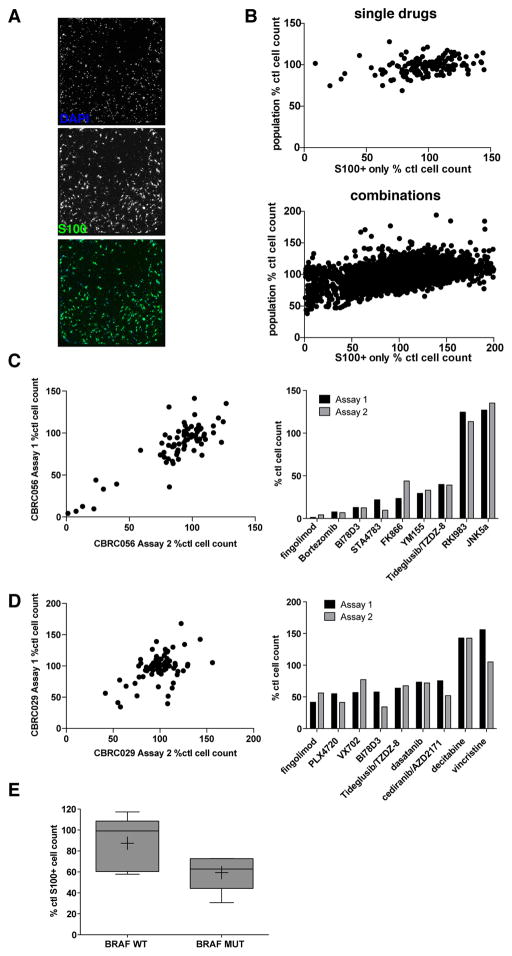
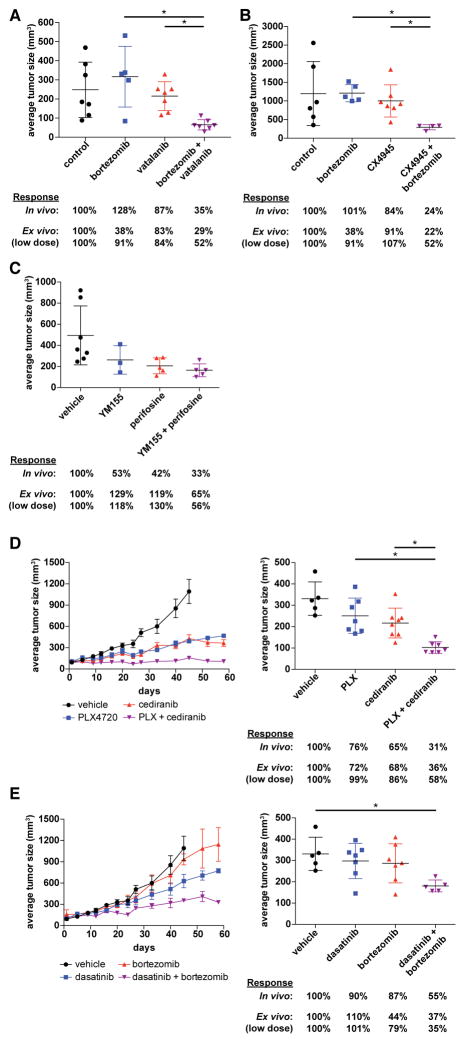
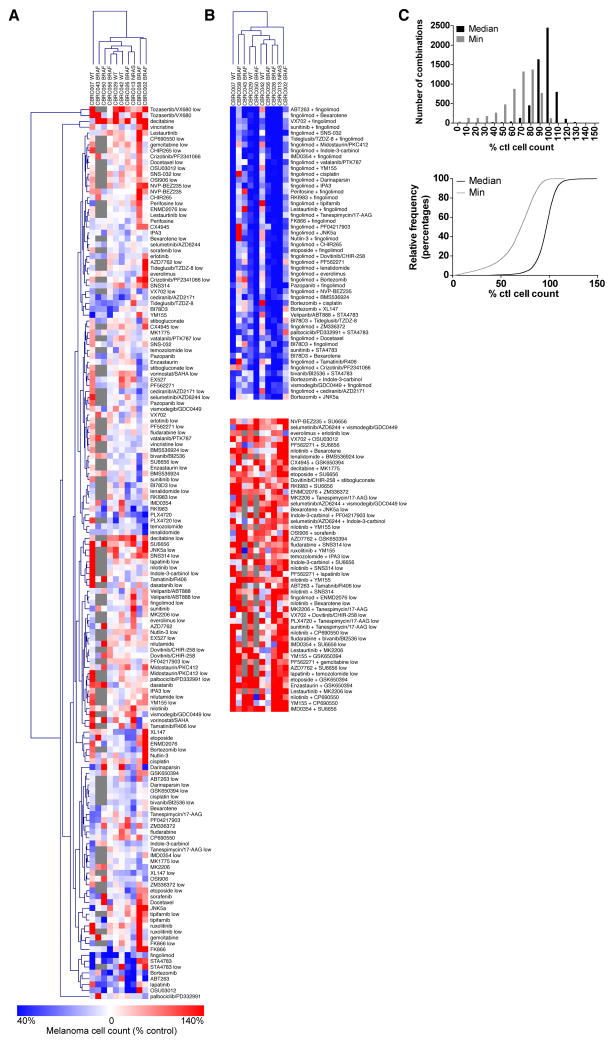
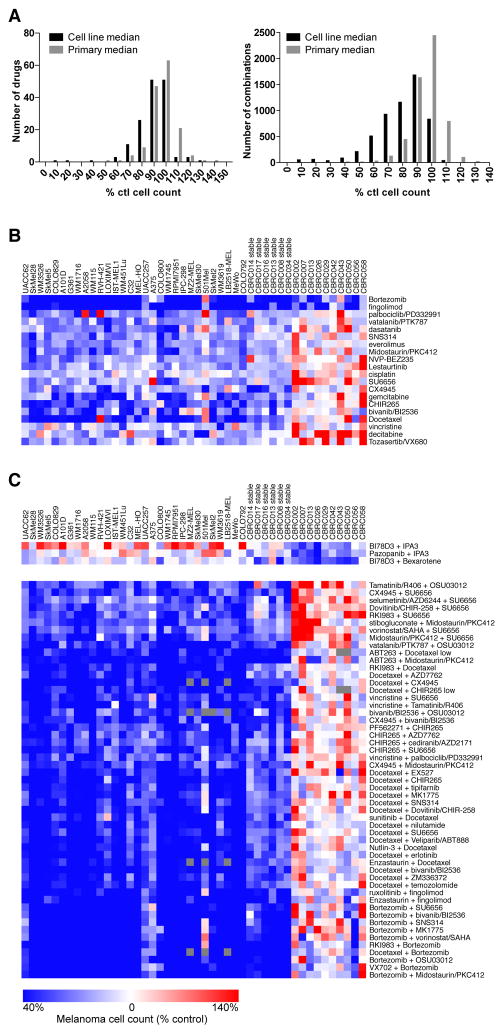
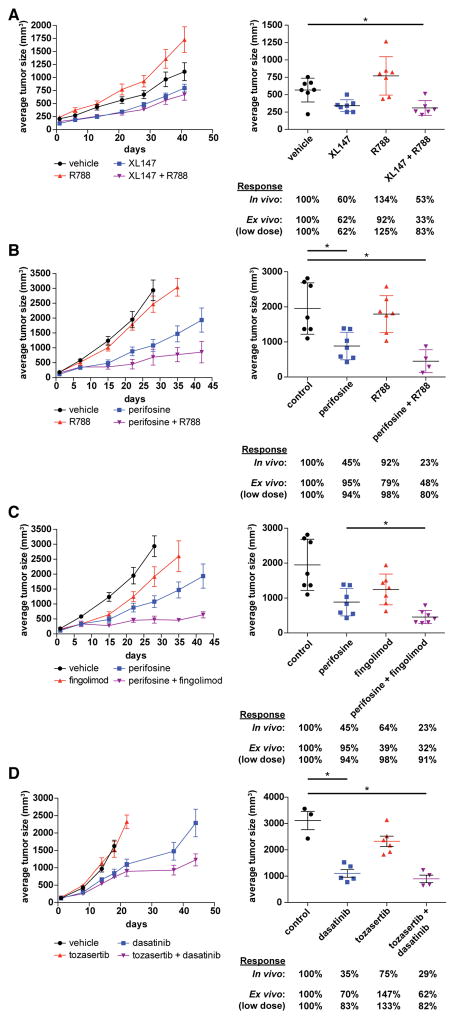
Successful development of targeted therapy combinations for cancer patients depends on first discovering such combinations in predictive preclinical models. Stable cell lines and mouse xenograft models can have genetic and phenotypic drift and may take too long to generate to be useful as a personalized medicine tool. To overcome these limitations, we have used a platform of ultra-high-throughput functional screening of primary biopsies preserving both cancer and stroma cell populations from melanoma patients to nominate such novel combinations from a library of thousands of drug combinations in a patient-specific manner within days of biopsy. In parallel, patient-derived xenograft (PDX) mouse models were created and novel combinations tested for their ability to shrink matched PDXs. The screening method identifies specific drug combinations in tumor cells with patterns that are distinct from those obtained from stable cell lines. Screening results were highly specific to individual patients. For patients with matched PDX models, we confirmed that individualized novel targeted therapy combinations could inhibit tumor growth. In particular, a combination of multi-kinase and PI3K/Akt inhibitors was effective in some BRAF-wild-type melanomas, and the addition of cediranib to the BRAF inhibitor PLX4720 was effective in a PDX model with mutation. This proof-of-concept study demonstrates the feasibility of using primary biopsies directly for combinatorial drug discovery, complementing stable cell lines and xenografts, but with much greater speed and efficiency. This process could potentially be used in a clinical setting to rapidly identify therapeutic strategies for individual patients. .
癌症患者靶向治疗组合的成功开发首先取决于在预测性临床前模型中发现此类组合。稳定细胞系和小鼠异种移植模型可能会出现基因和表型漂移,生成时间可能过长,无法作为个性化医疗工具使用。为克服这些局限性,我们使用了一个超高速功能筛选原发性活检样本的平台,该平台保留了黑色素瘤患者的癌细胞和基质细胞群体,以便在活检后数天内以患者特异性方式从数千种药物组合库中筛选出此类新型组合。同时,创建了患者来源的异种移植(PDX)小鼠模型,并测试了新型组合缩小匹配的PDX肿瘤的能力。该筛选方法可识别肿瘤细胞中特定的药物组合,其模式与从稳定细胞系中获得的模式不同。筛选结果对个体患者具有高度特异性。对于具有匹配PDX模型的患者,我们证实个性化的新型靶向治疗组合可抑制肿瘤生长。特别是,多激酶和PI3K/Akt抑制剂的组合在一些BRAF野生型黑色素瘤中有效,在携带 突变的PDX模型中,将西地尼布添加到BRAF抑制剂PLX4720中有效。这项概念验证研究证明了直接使用原发性活检样本进行联合药物发现的可行性,它补充了稳定细胞系和异种移植模型,但速度和效率更高。这一过程有可能应用于临床环境,以快速为个体患者确定治疗策略。