Olsen Stian, Krause Kirsten
Department of Arctic and Marine Biology, Faculty of Biosciences, Fisheries and Economics, UiT The Arctic University of Norway, Tromsø, Norway.
PLoS One. 2017 Apr 27;12(4):e0176754. doi: 10.1371/journal.pone.0176754. eCollection 2017.
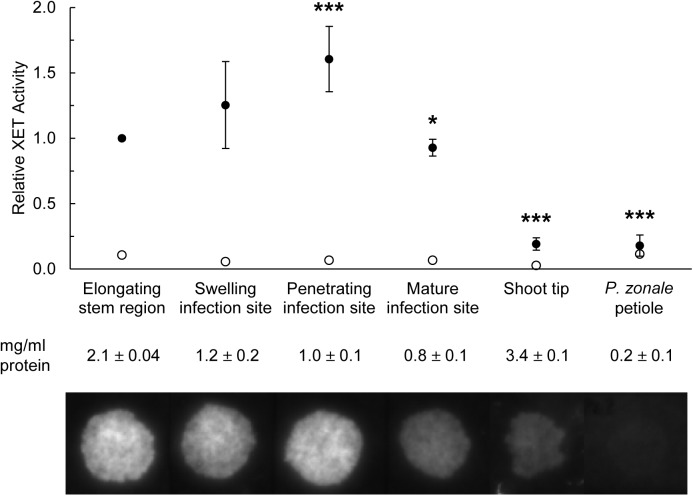
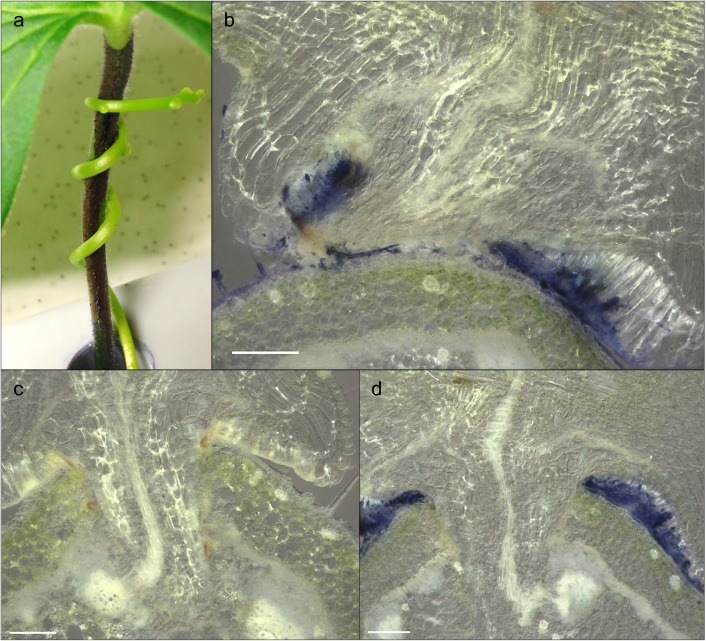
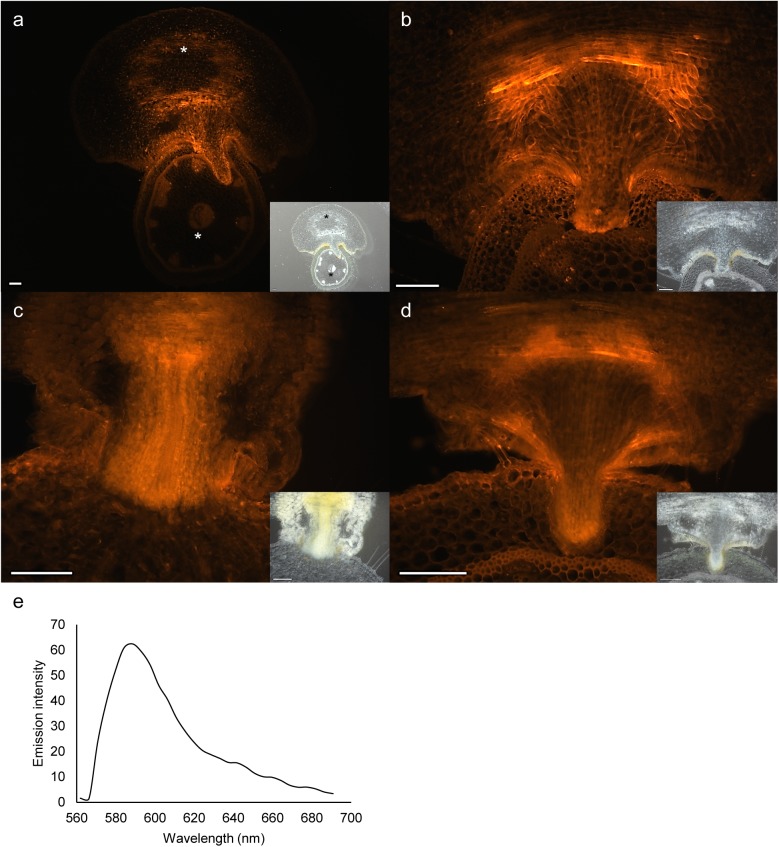
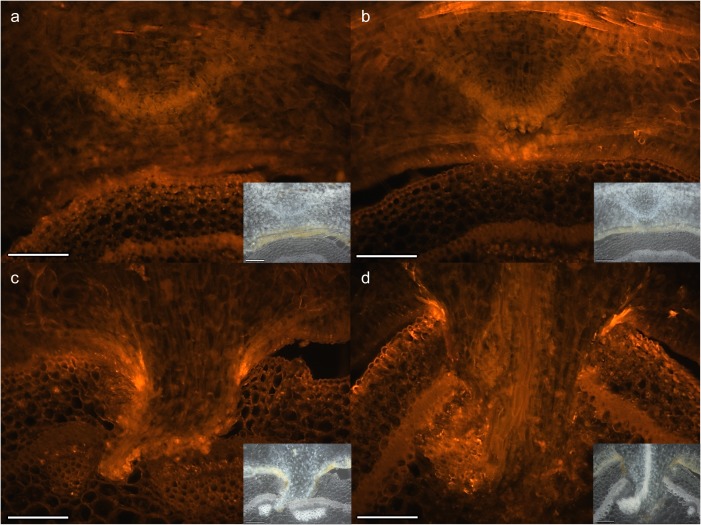
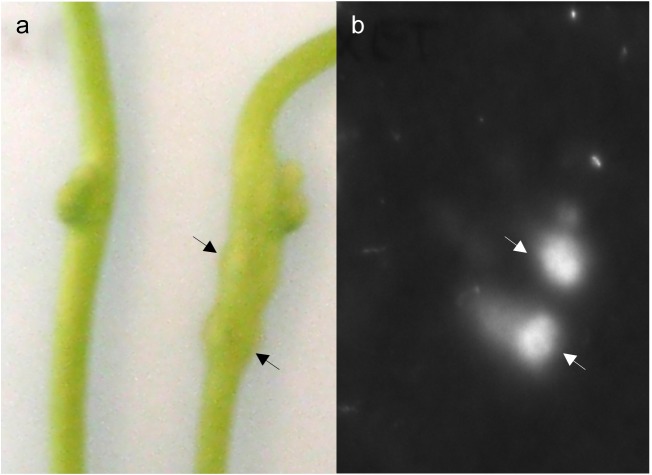
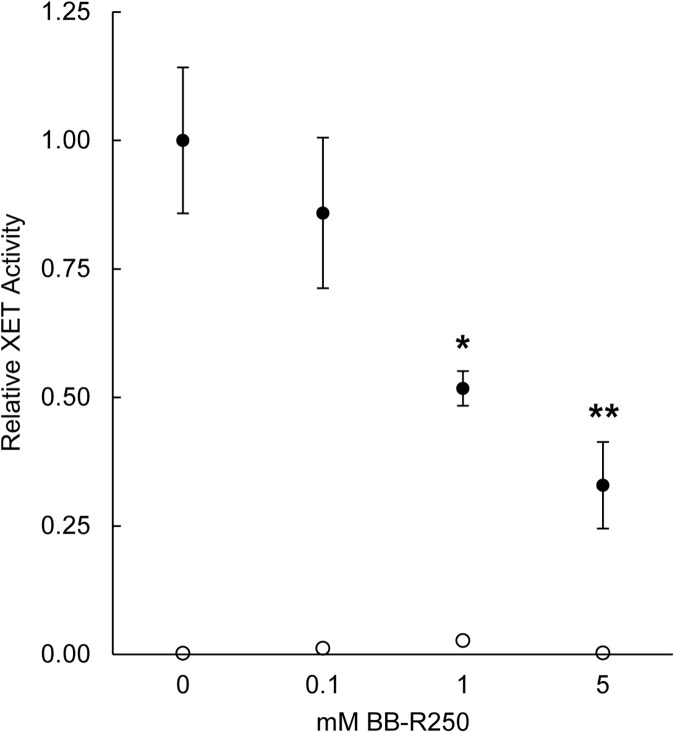
The parasitic vines of the genus Cuscuta form haustoria that grow into other plants and connect with their vascular system, thus allowing the parasite to feed on its host. A major obstacle that meets the infection organ as it penetrates the host tissue is the rigid plant cell wall. In the present study, we examined the activity of xyloglucan endotransglucosylases/hydrolases (XTHs) during the host-invasive growth of the haustorium. The level of xyloglucan endotransglucosylation (XET) activity was found to peak at the penetrating stage of Cuscuta reflexa on its host Pelargonium zonale. In vivo colocalization of XET activity and donor substrate demonstrated XET activity at the border between host and parasite. A test for secretion of XET-active enzymes from haustoria of C. reflexa corroborated this and further indicated that the xyloglucan-modifying enzymes originated from the parasite. A known inhibitor of XET, Coomassie Brilliant Blue R250, was shown to reduce the level of XET in penetrating haustoria of C. reflexa. Moreover, the coating of P. zonale petioles with the inhibitor compound lowered the number of successful haustorial invasions of this otherwise compatible host plant. The presented data indicate that the activity of Cuscuta XTHs at the host-parasite interface is essential to penetration of host plant tissue.
菟丝子属的寄生藤蔓植物形成吸器,这些吸器生长进入其他植物并与它们的维管系统相连,从而使寄生虫能够以宿主为食。当感染器官穿透宿主组织时遇到的一个主要障碍是坚硬的植物细胞壁。在本研究中,我们研究了木葡聚糖内转糖基酶/水解酶(XTHs)在吸器侵入宿主生长过程中的活性。发现木葡聚糖内转糖基化(XET)活性水平在菟丝子在其宿主天竺葵上的穿透阶段达到峰值。XET活性与供体底物的体内共定位证明了宿主与寄生虫边界处的XET活性。对菟丝子吸器分泌XET活性酶的测试证实了这一点,并进一步表明木葡聚糖修饰酶起源于寄生虫。一种已知的XET抑制剂考马斯亮蓝R250被证明可以降低菟丝子穿透吸器中的XET水平。此外,用抑制剂化合物处理天竺葵叶柄降低了这种原本相容性宿主植物成功吸器侵入的数量。所呈现的数据表明,菟丝子XTHs在宿主 - 寄生虫界面的活性对于穿透宿主植物组织至关重要。