Environmental Literacy Program, Unity College, Unity, ME 04988
Department of Mathematics, University of Portland, Portland, OR 97203.
CBE Life Sci Educ. 2017 Summer;16(2). doi: 10.1187/cbe.15-04-0096.
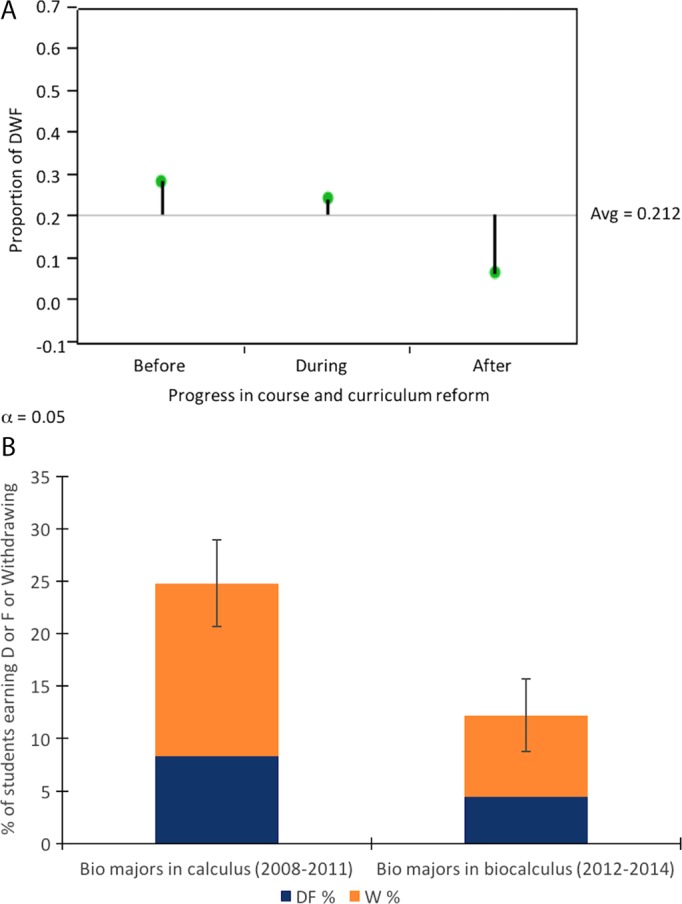
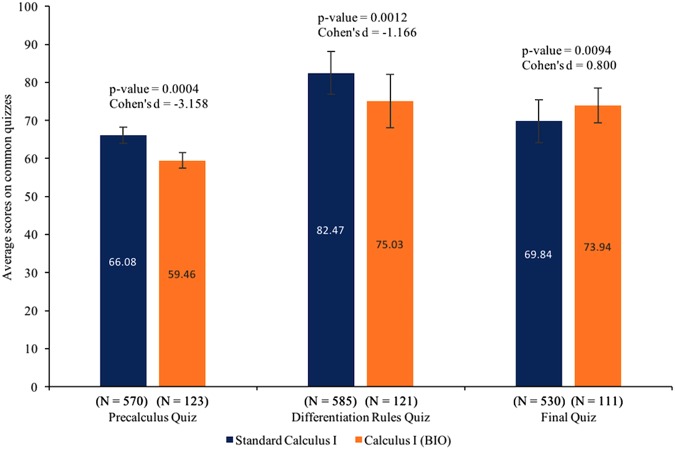
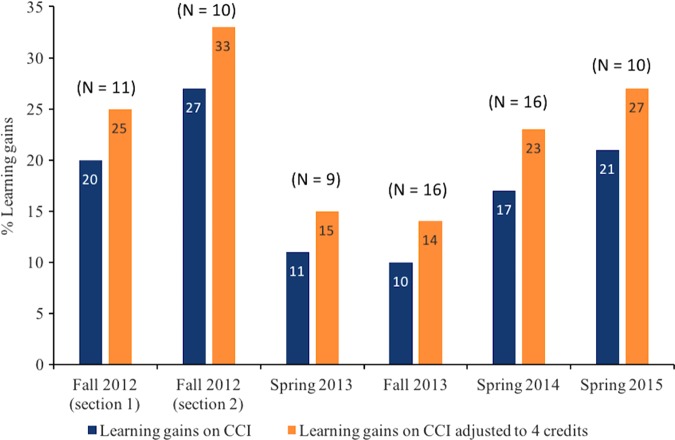
Calculus is one of the primary avenues for initial quantitative training of students in all science, technology, engineering, and mathematics fields, but life science students have been found to underperform in the traditional calculus setting. As a result, and because of perceived lack of its contribution to the understanding of biology, calculus is being actively cut from biology program requirements at many institutions. Here, we present an alternative: a model for learning mathematics that sees the partner disciplines as crucial to student success. We equip faculty with information to engage in dialogue within and between disciplinary departments involved in quantitative education. This includes presenting a process for interdisciplinary development and implementation of biology-oriented Calculus I courses at two institutions with different constituents, goals, and curricular constraints. When life science students enrolled in these redesigned calculus courses are compared with life science students enrolled in traditional calculus courses, students in the redesigned calculus courses learn calculus concepts and skills as well as their traditional course peers; however, the students in the redesigned courses experience more authentic life science applications and are more likely to stay and succeed in the course than their peers who are enrolled in traditional courses. Therefore, these redesigned calculus courses hold promise in helping life science undergraduate students attain recommended competencies.
微积分是所有科学、技术、工程和数学领域学生进行初步定量培训的主要途径之一,但生命科学专业的学生在传统的微积分环境中表现不佳。因此,并且由于微积分被认为对生物学理解没有贡献,微积分正在许多机构的生物学课程要求中被积极删除。在这里,我们提出了一种替代方案:一种学习数学的模式,将合作学科视为学生成功的关键。我们为教师提供信息,以便在参与定量教育的学科部门内部和之间进行对话。这包括在两个具有不同组成、目标和课程限制的机构中,为面向生物学的微积分 I 课程的跨学科发展和实施提供一个过程。当生命科学专业的学生参加这些重新设计的微积分课程与参加传统微积分课程的生命科学专业的学生进行比较时,参加重新设计的微积分课程的学生学习微积分的概念和技能以及他们的传统课程同学;然而,参加重新设计课程的学生体验到更多真实的生命科学应用,并且比参加传统课程的同学更有可能继续并成功完成课程。因此,这些重新设计的微积分课程有望帮助生命科学专业的本科生达到推荐的能力要求。