Tan Lunmei, Han Sen, Ding Shizhen, Xiao Weiming, Ding Yanbing, Qian Li, Wang Chenming, Gong Weijuan
Jiangsu Co-innovation Center for Prevention and Control of Important Animal Infectious Diseases and Zoonoses.
Department of Immunology, School of Medicine.
Int J Nanomedicine. 2017 Apr 13;12:3095-3107. doi: 10.2147/IJN.S128032. eCollection 2017.
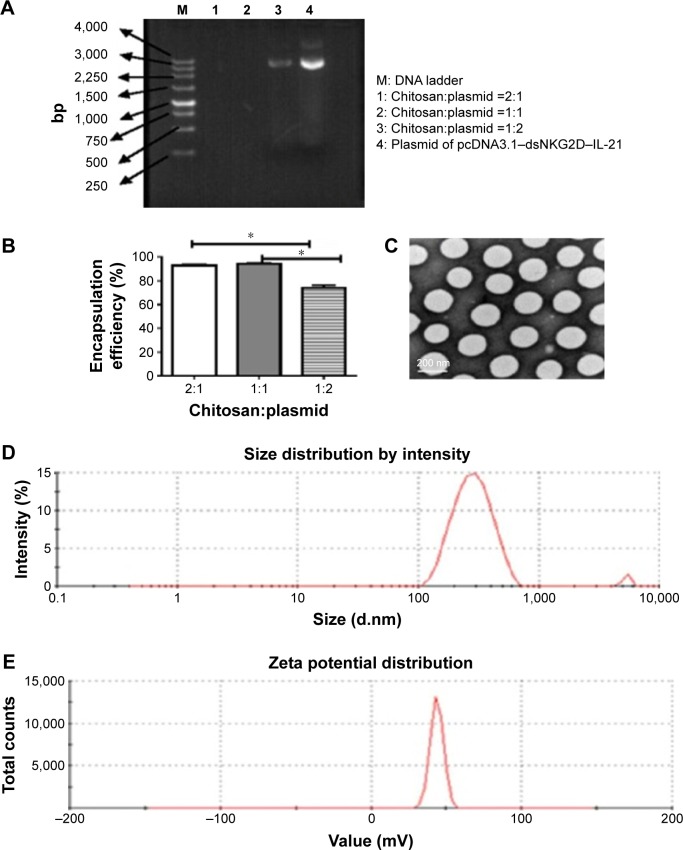
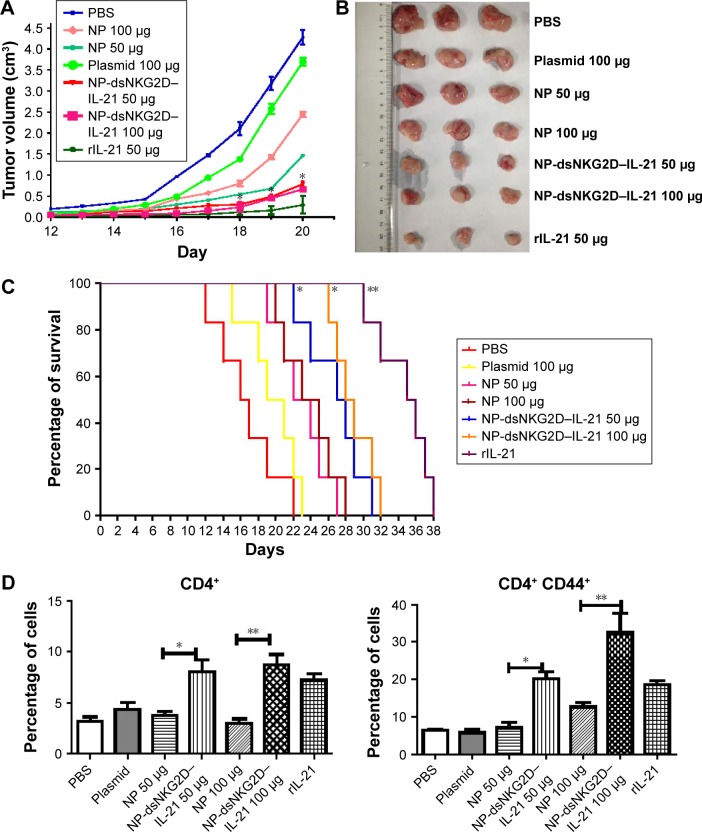
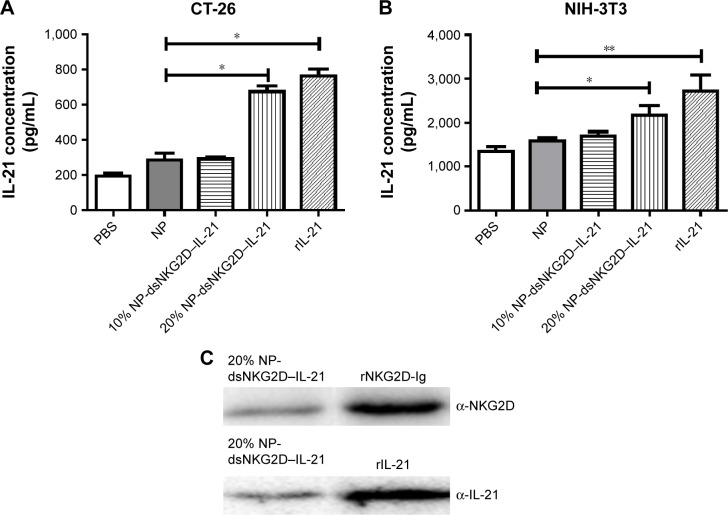
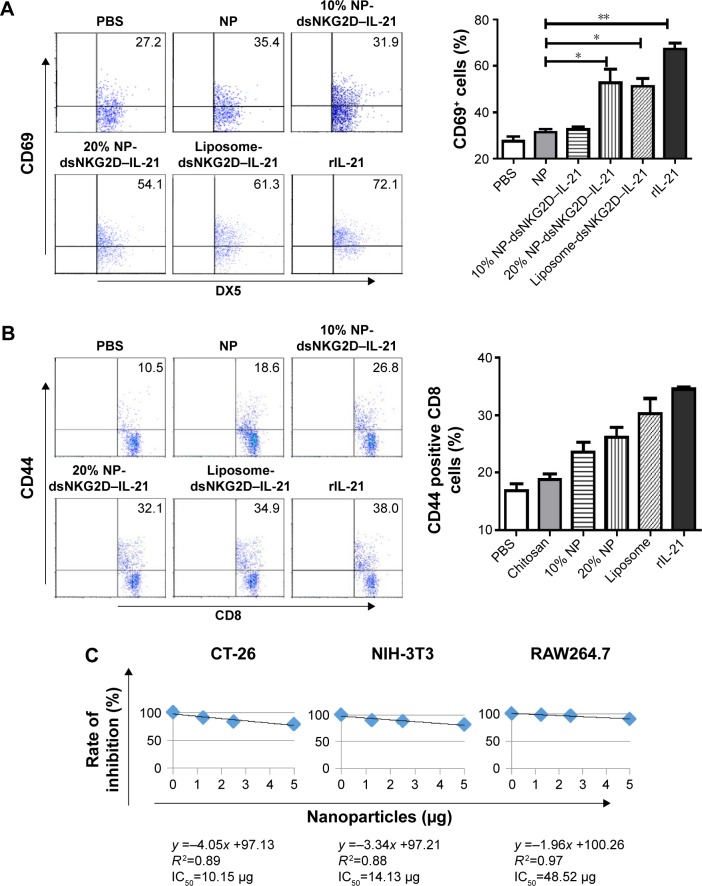
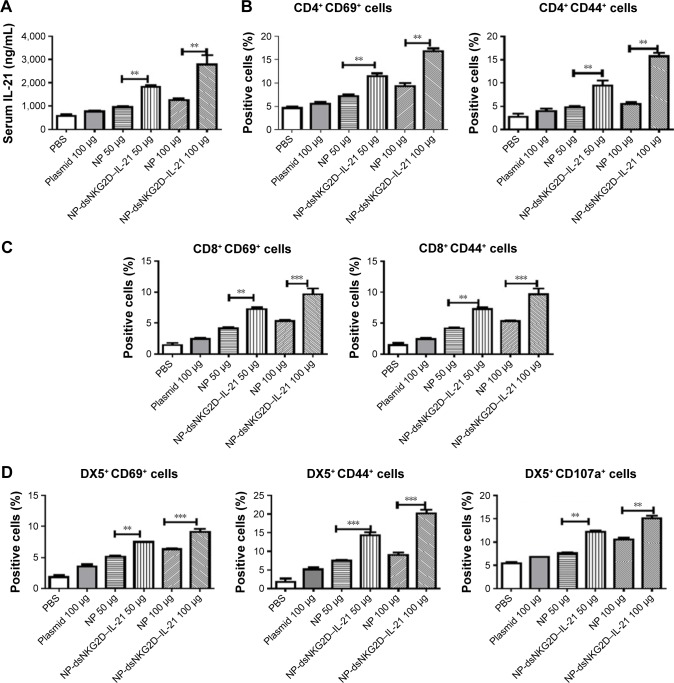
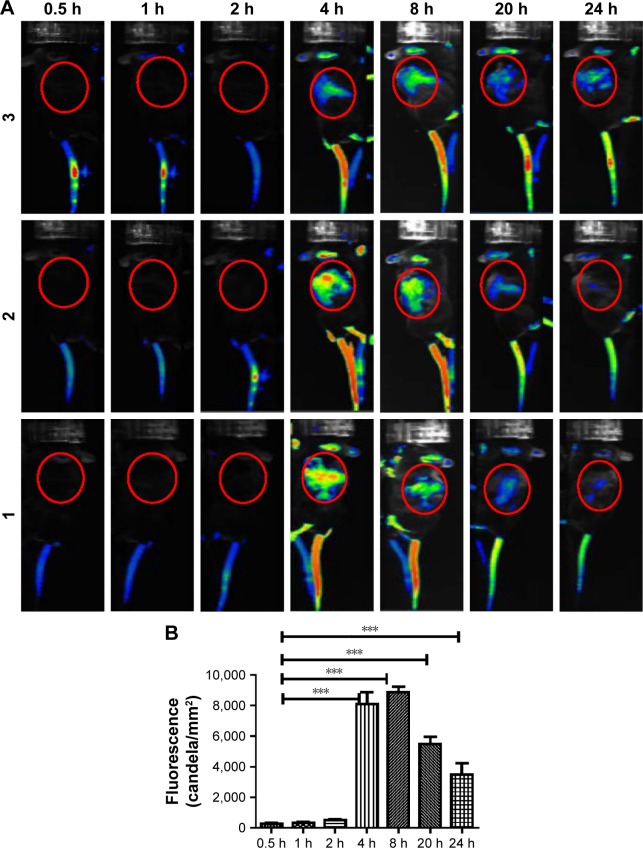
Nanoparticles can be loaded with exogenous DNA for the potential expression of cytokines with immune-stimulatory function. NKG2D identifies major histocompatibility complex class I chain-related protein in human and retinoic acid early induced transcript-1 in mouse, which acts as tumor-associated antigens. Biologic agents based on interleukin 21 (IL-21) have displayed antitumor activities through lymphocyte activation. The NKG2D-IL-21 fusion protein theoretically identifies tumor cells through NKG2D moiety and activates T cells through IL-21 moiety. In this study, double-gene fragments that encode the extracellular domains of NKG2D and IL-21 genes were connected and then inserted into the pcDNA3.1(-) plasmid. PcDNA3.1-dsNKG2D-IL-21 plasmid nanoparticles based on chitosan were generated. Tumor cells pretransfected with dsNKG2D-IL-21 gene nanoparticles can activate natural killer (NK) and CD8 T cells in vitro. Serum IL-21 levels were enhanced in mice intramuscularly injected with the gene nanoparticles. DsNKG2D-IL-21 gene nanoparticles accumulated in tumor tissues after being intravenously injected for ~4-24 h. Treatment of dsNKG2D-IL-21 gene nanoparticles also retarded tumor growth and elongated the life span of tumor-bearing mice by activating NK and T cells in vivo. Thus, the dsNKG2D-IL-21 gene nanoparticles exerted efficient antitumor activities and would be potentially used for tumor therapy.
纳米颗粒可以负载外源性DNA,用于潜在表达具有免疫刺激功能的细胞因子。NKG2D可识别人类中的主要组织相容性复合体I类链相关蛋白以及小鼠中的视黄酸早期诱导转录物-1,它们作为肿瘤相关抗原。基于白细胞介素21(IL-21)的生物制剂已通过淋巴细胞激活显示出抗肿瘤活性。理论上,NKG2D-IL-21融合蛋白通过NKG2D部分识别肿瘤细胞,并通过IL-21部分激活T细胞。在本研究中,编码NKG2D和IL-21基因胞外域的双基因片段被连接,然后插入到pcDNA3.1(-)质粒中。基于壳聚糖生成了PcDNA3.1-dsNKG2D-IL-21质粒纳米颗粒。用dsNKG2D-IL-21基因纳米颗粒预转染的肿瘤细胞在体外可激活自然杀伤(NK)细胞和CD8 T细胞。肌肉注射基因纳米颗粒的小鼠血清IL-21水平升高。静脉注射dsNKG2D-IL-21基因纳米颗粒约4-24小时后,其在肿瘤组织中蓄积。dsNKG2D-IL-21基因纳米颗粒治疗还通过在体内激活NK细胞和T细胞来抑制肿瘤生长并延长荷瘤小鼠的寿命。因此,dsNKG2D-IL-21基因纳米颗粒发挥了有效的抗肿瘤活性,有望用于肿瘤治疗。