Krippl B, Griep A E, Mahon K A, Böhnlein E, Gruss P, Westphal H
Laboratory of Molecular Genetics, National Institute of Child Health and Human Development, Bethesda, MD 20892.
Nucleic Acids Res. 1988 Sep 26;16(18):8963-76. doi: 10.1093/nar/16.18.8963.
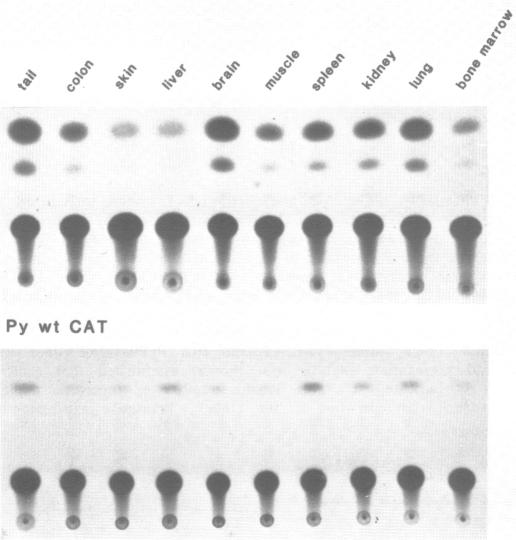
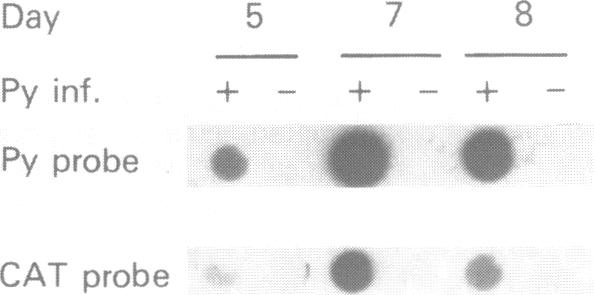
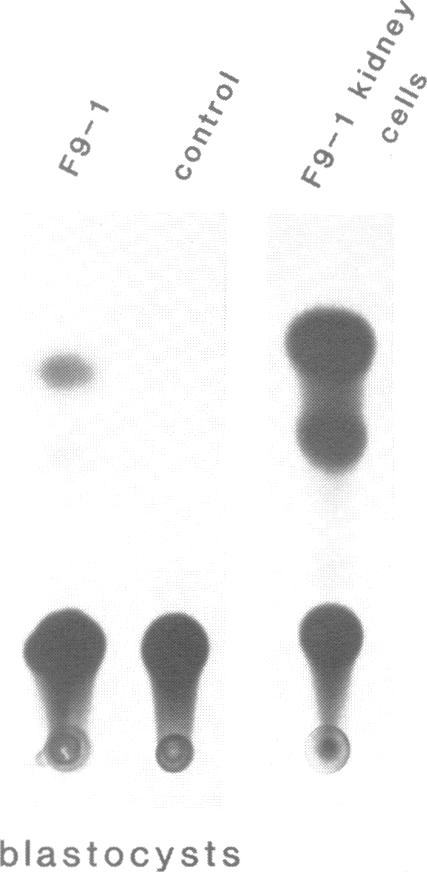
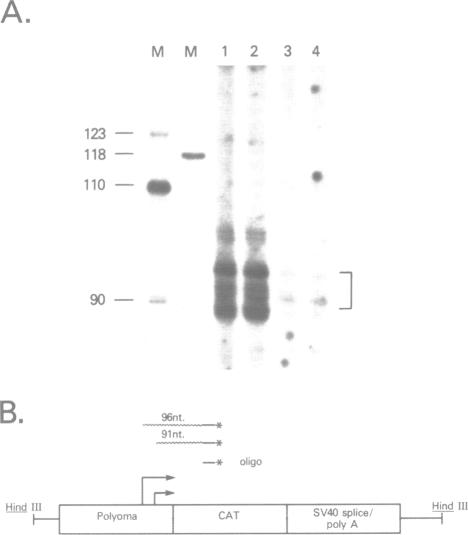
Two hybrid gene constructs consisting of wild-type and mutant polyoma regulatory regions fused to a bacterial reporter gene were inserted in the mouse germline. Both transgenes were expressed in a large number of different organs. However, marker gene expression controlled by the polyoma wild-type regulatory region was not detectable in the early embryo and remained low throughout the life of the animal while expression controlled by the polyoma F9-1 mutation was detectable in blastocysts and was significantly higher at later stages of development. The F9-1 hybrid gene was also amplifiable when large T-antigen was supplied in trans to mice or to kidney cells derived from these transgenic mice. Amplification resulted in the appearance of several hundred copies of episomal transgenes and a marked increase of marker gene RNA and protein. Our results suggest that the F9-1 mutation does not alter the target spectrum of gene expression in vivo but does create a more efficient enhancer element in the polyoma early control region. Transgene amplification based upon use of the polyoma regulatory elements may be a means of increasing expression of genes in transgenic mice.
将由野生型和突变型多瘤病毒调控区与一个细菌报告基因融合而成的两种杂交基因构建体插入小鼠种系。两种转基因均在大量不同器官中表达。然而,由多瘤病毒野生型调控区控制的标记基因表达在早期胚胎中无法检测到,并且在动物的整个生命过程中都保持在低水平,而由多瘤病毒F9 - 1突变控制的表达在囊胚中可检测到,并且在发育后期显著更高。当向小鼠或源自这些转基因小鼠的肾细胞反式提供大T抗原时,F9 - 1杂交基因也可扩增。扩增导致出现数百个附加型转基因拷贝以及标记基因RNA和蛋白质的显著增加。我们的结果表明,F9 - 1突变不会改变体内基因表达的靶标谱,但确实在多瘤病毒早期控制区产生了一个更有效的增强子元件。基于使用多瘤病毒调控元件的转基因扩增可能是增加转基因小鼠中基因表达的一种手段。