Brief Bioinform. 2018 Nov 27;19(6):1183-1202. doi: 10.1093/bib/bbx041.
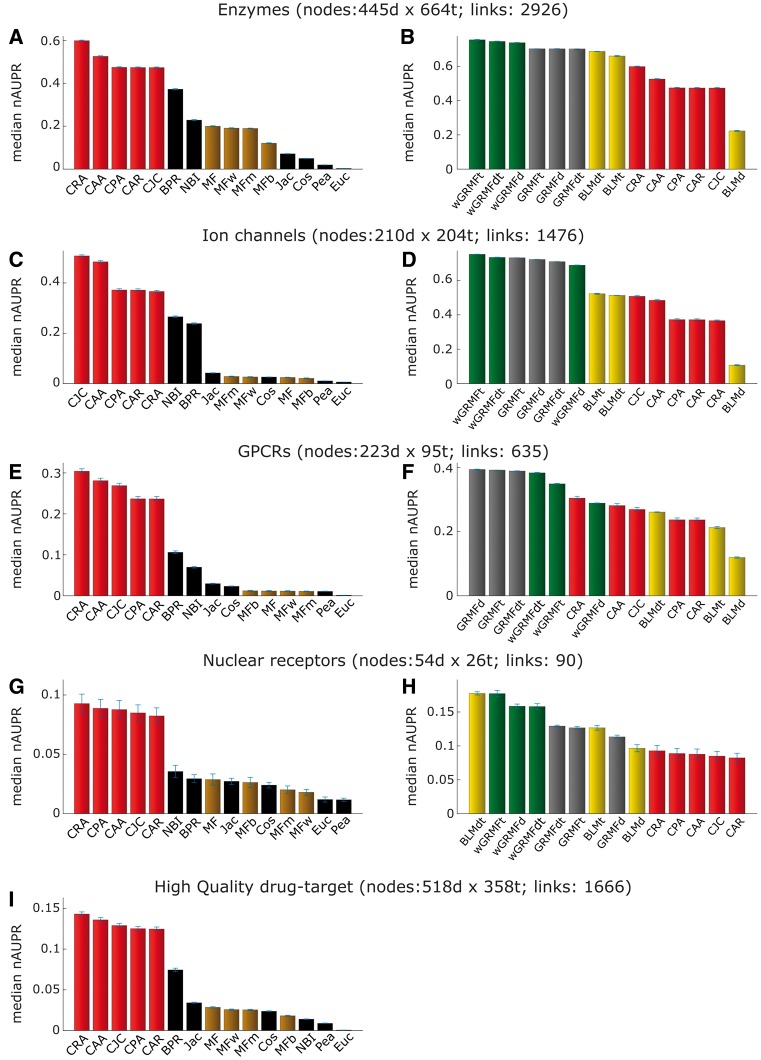
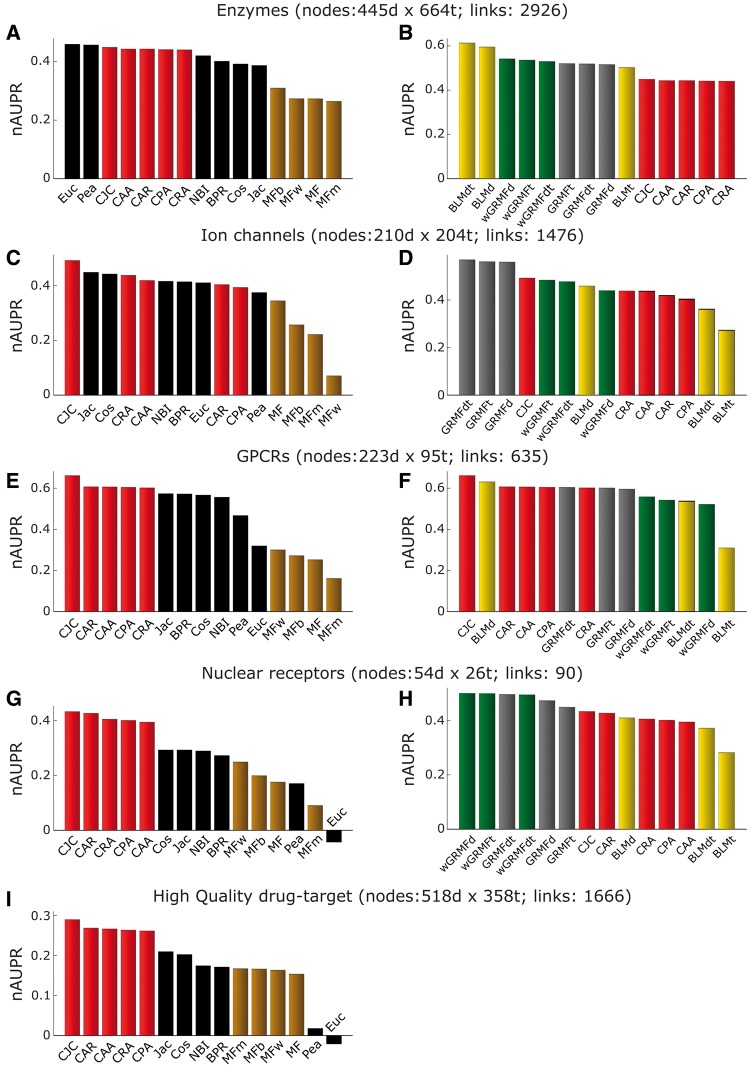
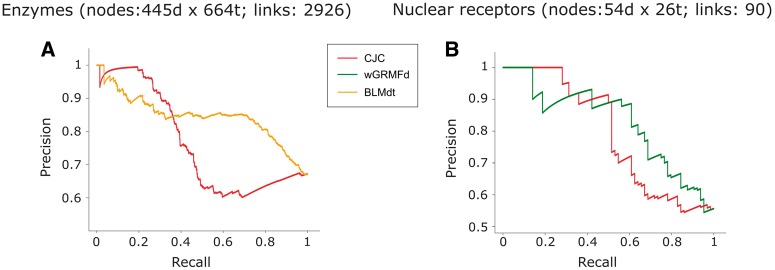
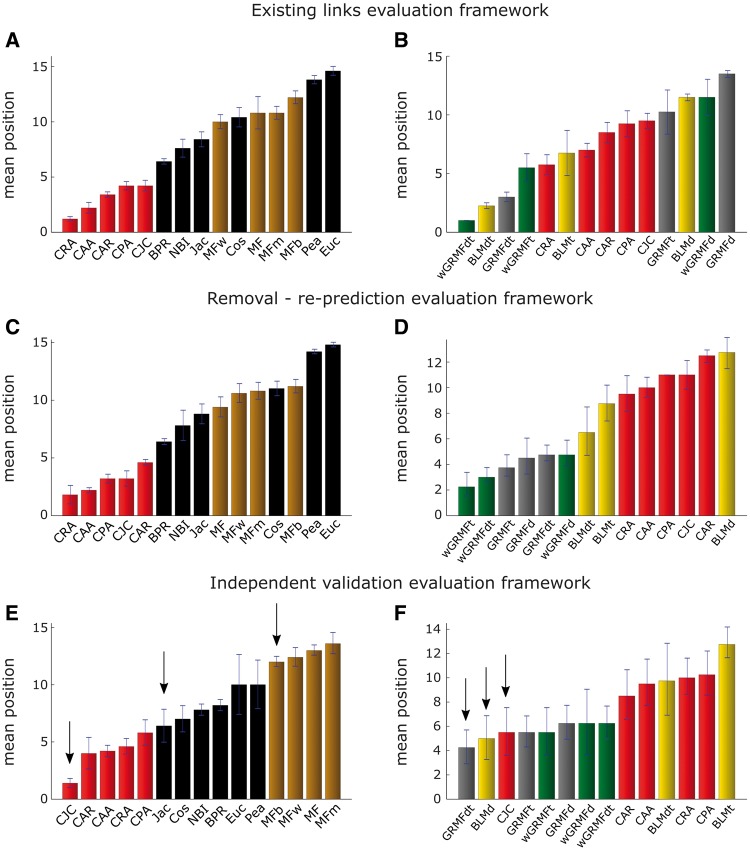
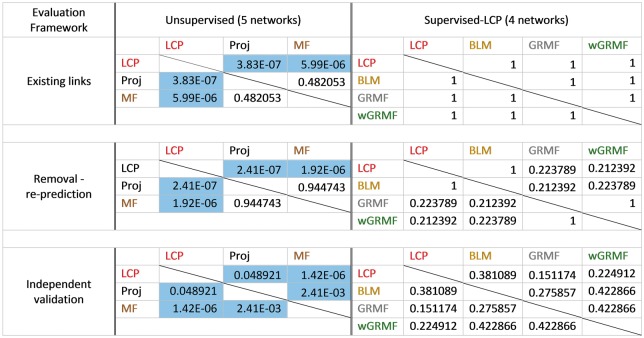
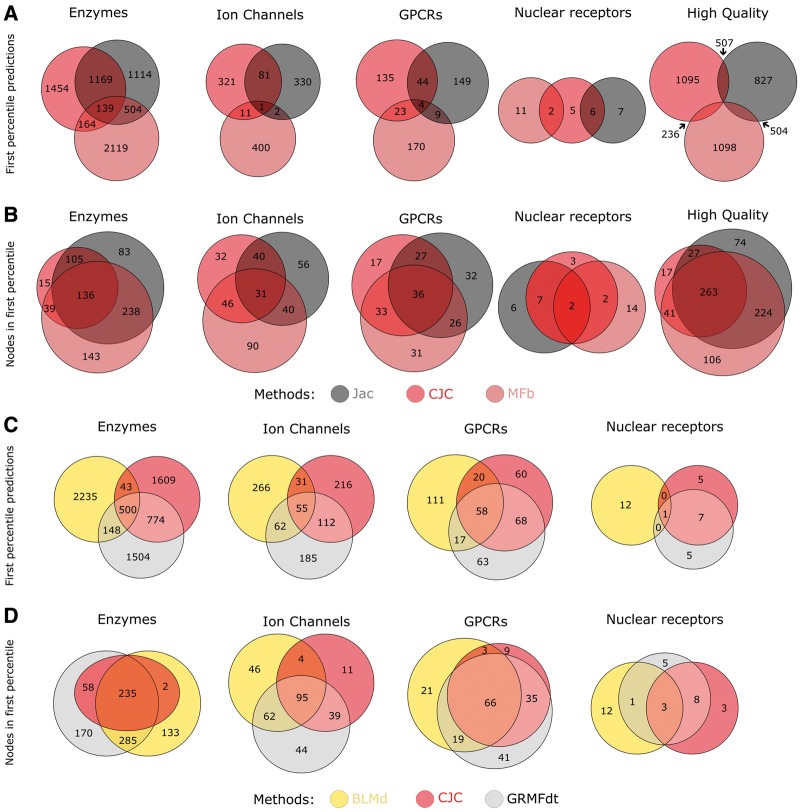
The bipartite network representation of the drug-target interactions (DTIs) in a biosystem enhances understanding of the drugs' multifaceted action modes, suggests therapeutic switching for approved drugs and unveils possible side effects. As experimental testing of DTIs is costly and time-consuming, computational predictors are of great aid. Here, for the first time, state-of-the-art DTI supervised predictors custom-made in network biology were compared-using standard and innovative validation frameworks-with unsupervised pure topological-based models designed for general-purpose link prediction in bipartite networks. Surprisingly, our results show that the bipartite topology alone, if adequately exploited by means of the recently proposed local-community-paradigm (LCP) theory-initially detected in brain-network topological self-organization and afterwards generalized to any complex network-is able to suggest highly reliable predictions, with comparable performance with the state-of-the-art-supervised methods that exploit additional (non-topological, for instance biochemical) DTI knowledge. Furthermore, a detailed analysis of the novel predictions revealed that each class of methods prioritizes distinct true interactions; hence, combining methodologies based on diverse principles represents a promising strategy to improve drug-target discovery. To conclude, this study promotes the power of bio-inspired computing, demonstrating that simple unsupervised rules inspired by principles of topological self-organization and adaptiveness arising during learning in living intelligent systems (like the brain) can efficiently equal perform complicated algorithms based on advanced, supervised and knowledge-based engineering.
生物系统中药物-靶标相互作用 (DTI) 的二分网络表示增强了对药物多方面作用模式的理解,为已批准药物的治疗转换提供了启示,并揭示了可能的副作用。由于 DTI 的实验测试既昂贵又耗时,因此计算预测器非常有帮助。在这里,首次比较了针对网络生物学定制的最先进的 DTI 监督预测器-使用标准和创新的验证框架-与专为二分网络通用链接预测而设计的无监督纯拓扑模型。令人惊讶的是,我们的结果表明,如果充分利用最近提出的局部社区范式 (LCP) 理论(最初在大脑网络拓扑自组织中检测到,后来推广到任何复杂网络)充分利用二分网络的拓扑结构,仅拓扑结构本身就能够提出高度可靠的预测,与利用额外(非拓扑,例如生化)DTI 知识的最先进监督方法具有可比的性能。此外,对新预测的详细分析表明,每类方法都优先考虑不同的真实相互作用;因此,基于不同原理的方法相结合是改善药物-靶标发现的有前途的策略。总之,这项研究促进了生物启发式计算的威力,证明了基于拓扑自组织和学习中出现的自适应等原则的简单无监督规则可以有效地与基于高级、监督和基于知识的工程的复杂算法相媲美。