Subramanian Saravanan, Pallati Pradeep K, Sharma Poonam, Agrawal Devendra K, Nandipati Kalyana C
Department of Clinical and Translational Science, Creighton University School of Medicine, Omaha, NE, USA.
Department of Surgery, Creighton University School of Medicine, 601 N. 30th Street, Suite # 3700, Omaha, NE, 68131, USA.
J Transl Med. 2017 Apr 28;15(1):85. doi: 10.1186/s12967-017-1187-7.
TREM-1 acts as an amplifier of inflammation expressed on macrophages. The objective of this study was to evaluate the relationship between TREM-1 and macrophage polarization, and association of TREM-1 and M1 macrophage polarization with insulin resistance (IR) in obese population compared to non-obese population.
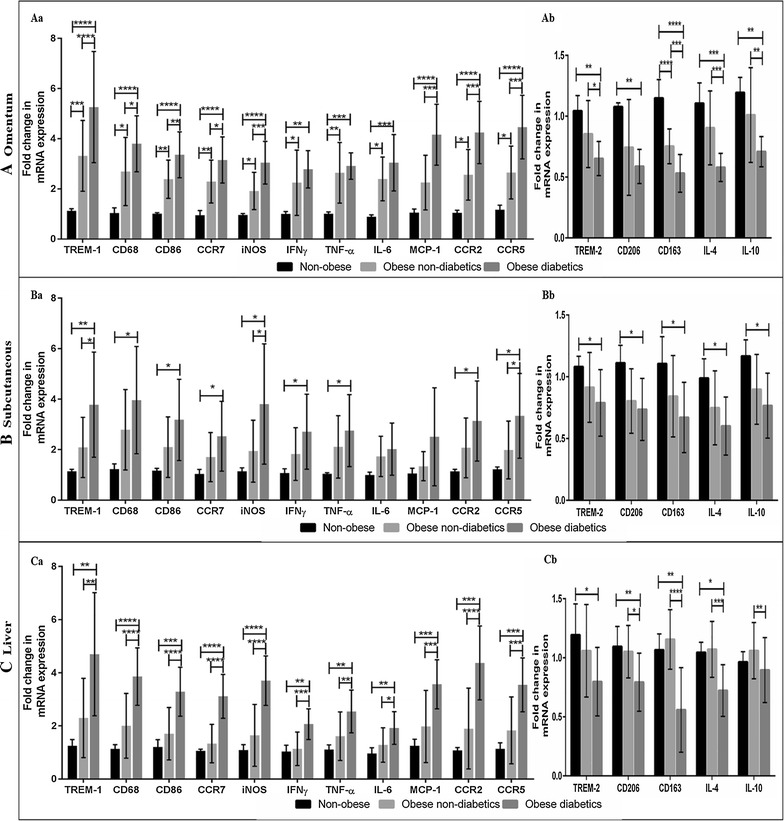
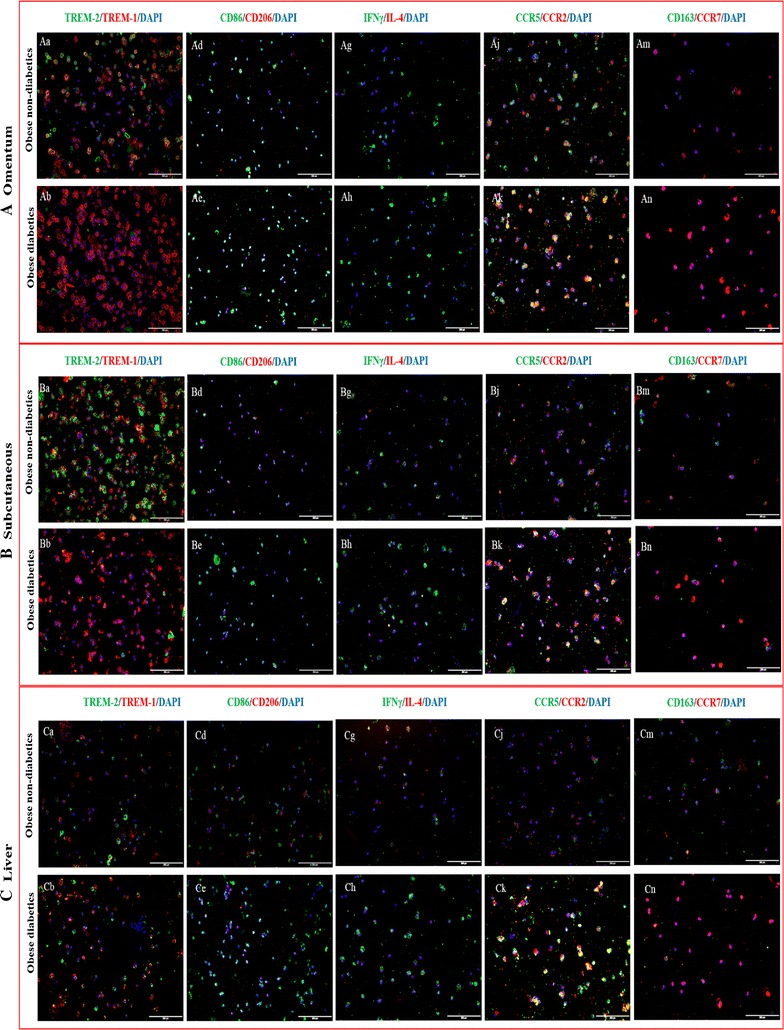
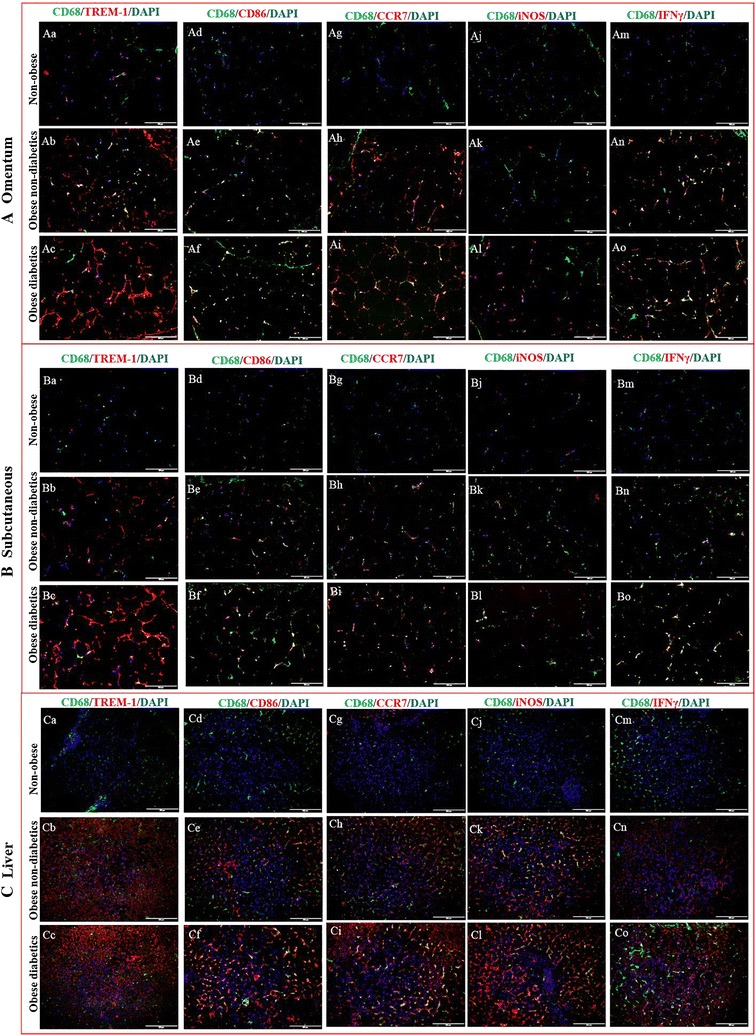
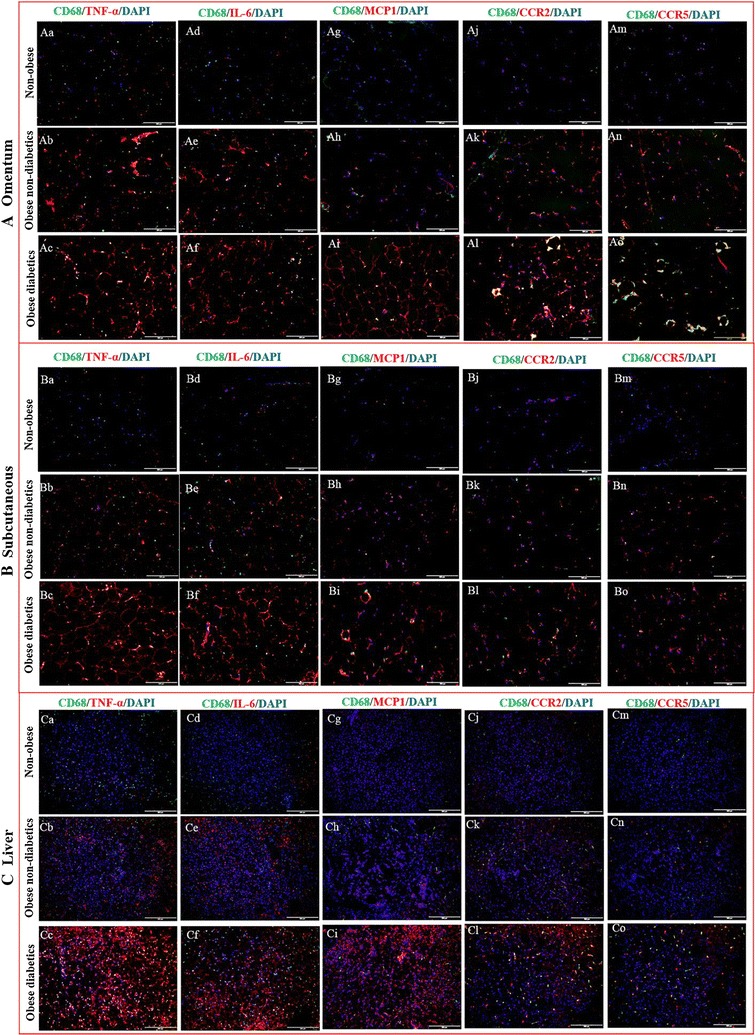
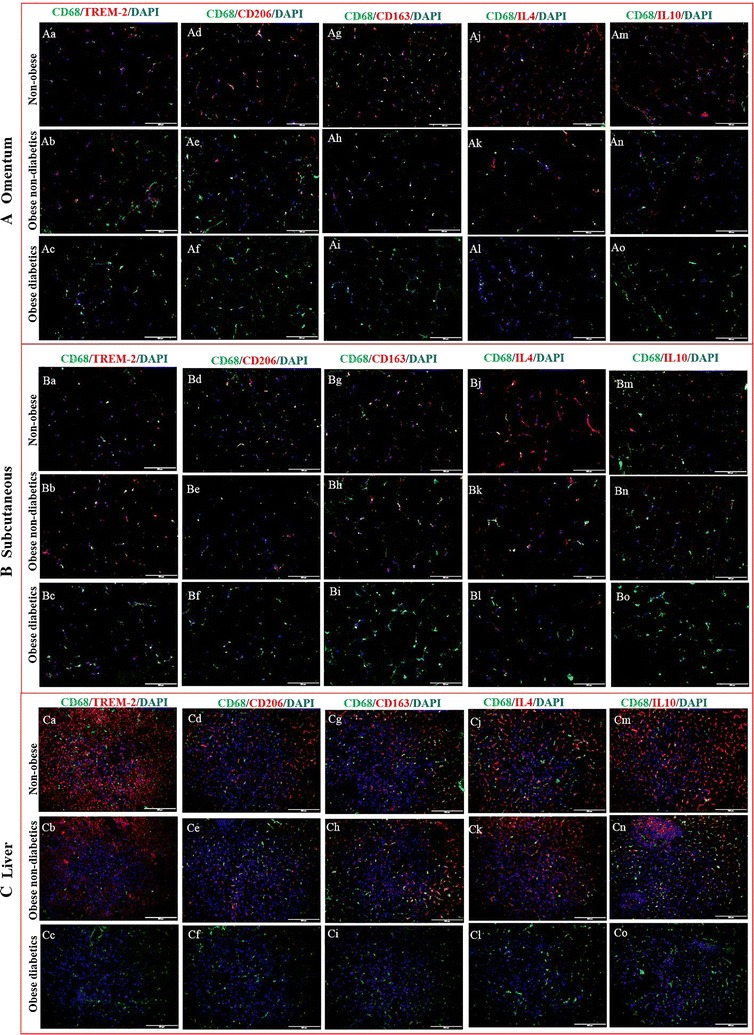
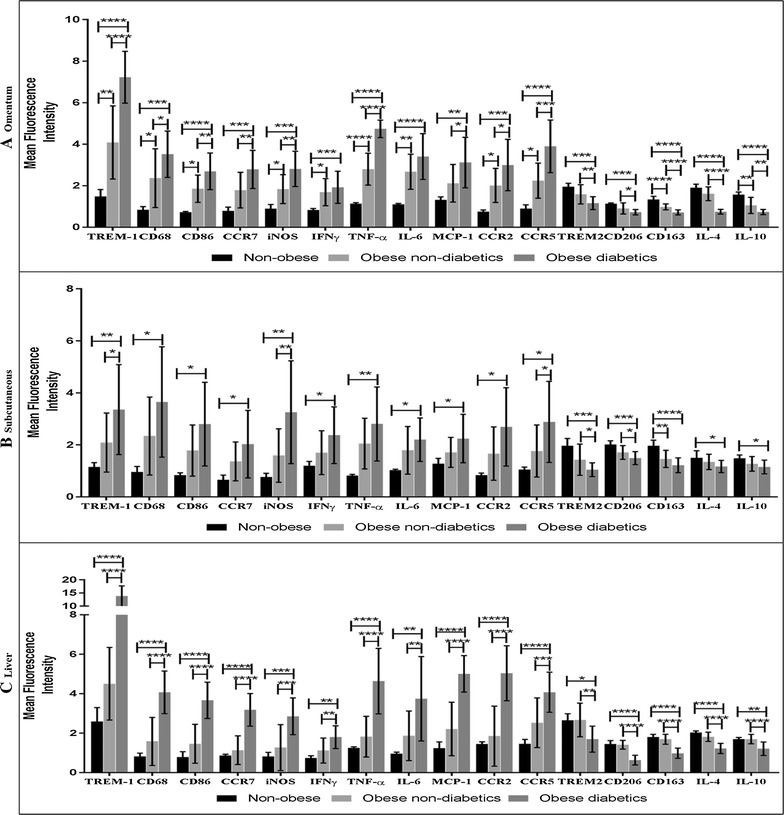
We enrolled 38 patients after obtaining IRB approval for this study. We evaluated the mRNA and protein expression levels of general macrophage marker (CD68), M1 marker (CD86, CCR7, iNOS, IFNγ, TNF-α and IL-6,), M2 marker (CD206, CD163, IL-10, IL-4) and chemokine axis (MCP-1, CCR2 and CCR5) along with TREM-1 and TREM-2 in omentum fat, subcutaneous fat, and liver biopsy tissues of non-obese (N = 5), obese non-diabetics, (N = 16) and obese diabetics (N = 17).
The results of our study showed over-expression of TREM-1, M1 markers and down-regulation of TREM-2 and M2 markers in the omentum, subcutaneous and liver biopsies of obese patients (diabetics and non-diabetics) compared to non-obese patients. Overall, the obese diabetic group showed a significant (p < 0.05) higher number of patients with over expression of M1 markers (TREM-1, CD68, CD86, CCR-7, iNOS, IFN-γ, TNF-α, IL-6, MCP-1, CCR-2 and CCR-5) and down-regulation of M2 markers (CD206, CD163 and IL-4) in liver biopsy compared to obese non-diabetics.
TREM-1 expression is significantly increased along with the M1 markers in liver biopsy of obese diabetic (17/17) and obese non-diabetic patients (9/16). Our data suggests that TREM-1 overexpression and M1 macrophage polarization are associated with obesity-induced IR.
触发受体表达于髓样细胞-1(TREM-1)作为巨噬细胞上表达的炎症放大器。本研究的目的是评估TREM-1与巨噬细胞极化之间的关系,以及与非肥胖人群相比,肥胖人群中TREM-1和M1巨噬细胞极化与胰岛素抵抗(IR)的关联。
在获得本研究的机构审查委员会(IRB)批准后,我们招募了38名患者。我们评估了非肥胖(N = 5)、肥胖非糖尿病(N = 16)和肥胖糖尿病(N = 17)患者的网膜脂肪、皮下脂肪和肝活检组织中一般巨噬细胞标志物(CD68)、M1标志物(CD86、CCR7、诱导型一氧化氮合酶(iNOS)、干扰素γ(IFNγ)、肿瘤坏死因子-α(TNF-α)和白细胞介素-6(IL-6))、M2标志物(CD206、CD163、IL-10、IL-4)和趋化因子轴(单核细胞趋化蛋白-1(MCP-1)、CCR2和CCR5)以及TREM-1和触发受体表达于髓样细胞-2(TREM-2)的mRNA和蛋白表达水平。
我们的研究结果显示,与非肥胖患者相比,肥胖患者(糖尿病患者和非糖尿病患者)的网膜、皮下和肝活检组织中TREM-1、M1标志物过表达,TREM-2和M2标志物下调。总体而言,与肥胖非糖尿病患者相比,肥胖糖尿病组肝活检中M1标志物(TREM-1、CD68、CD86、CCR-7、iNOS、IFN-γ、TNF-α、IL-6、MCP-1、CCR-2和CCR-5)过表达且M2标志物(CD206、CD163和IL-4)下调患者的数量显著更多(p < 0.05)。
肥胖糖尿病(17/17)和肥胖非糖尿病患者(9/16)的肝活检中,TREM-1表达与M1标志物一起显著增加。我们的数据表明,TREM-1过表达和M1巨噬细胞极化与肥胖诱导的IR相关。