Song Yongyan, Zhao Miaoyun, Cheng Xiao, Shen Jing, Khound Rituraj, Zhang Kezhong, Su Qiaozhu
The Department of Nutrition and Health Sciences, University of Nebraska-Lincoln, 316F Leverton Hall, Lincoln, NE, 68583-0806, USA.
Center for Molecular Medicine and Genetics, Wayne State University, School of Medicine, Detroit, MI, 48201, USA.
J Mol Med (Berl). 2017 Aug;95(8):839-849. doi: 10.1007/s00109-017-1534-4. Epub 2017 Apr 28.
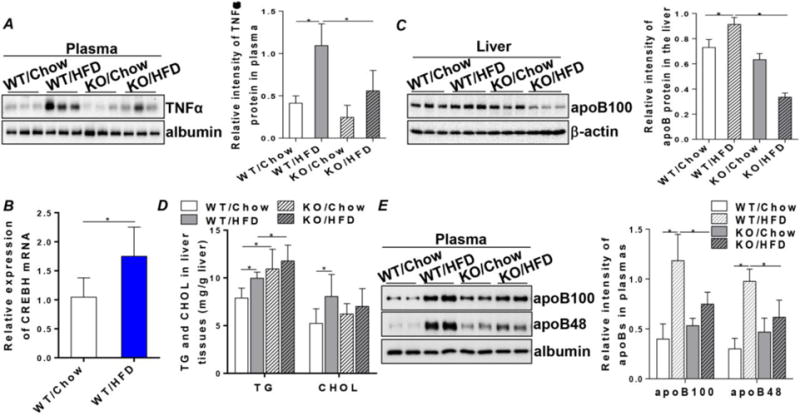
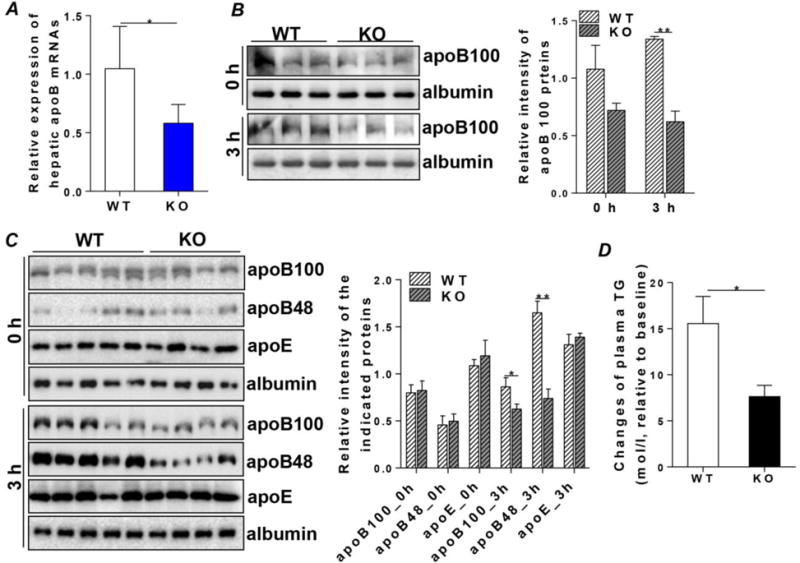
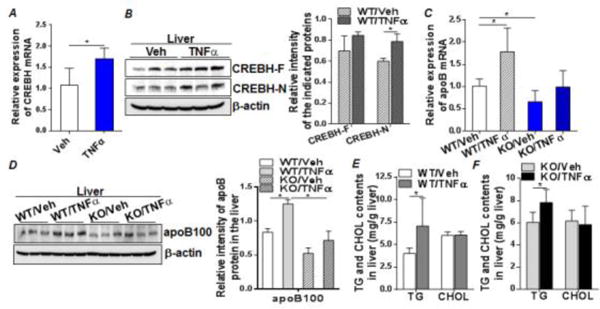
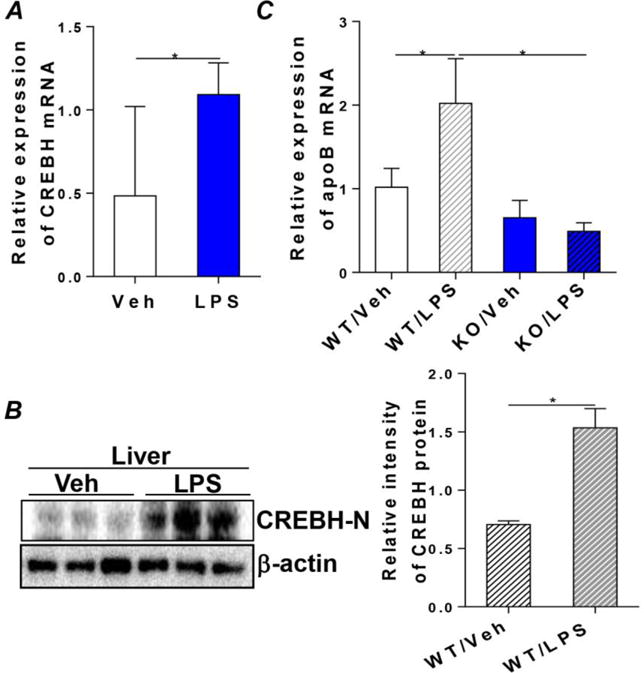
Metabolic inflammation is closely associated with hyperlipidemia and cardiovascular disease. However, the underlying mechanisms are not fully understood. The current study established that cAMP-responsive-element-binding protein H (CREBH), an acute-phase transcription factor, enhances very-low-density lipoprotein (VLDL) assembly and secretion by upregulating apolipoprotein B (apoB) expression and contributes to metabolic inflammation-associated hyperlipoproteinemia induced by TNFα, lipopolysaccharides (LPS), and high-fat diet (HFD) in mice. Specifically, overexpression of CREBH significantly induced mRNA and protein expression of apoB in McA-7777 cells. Luciferase assay further revealed that the presence of CREBH could significantly increase the activity of the apoB gene promoter. In contrast, genetic depletion of CREBH in mice resulted in significant reduction in expression of hepatic apoB mRNA. Challenging mice with an acute fat load led to upregulation of triglyceride (TG)-rich lipoprotein secretion in wild type mice, but not in CREBH-null mice. TNFα treatment activated hepatic CREBH expression, which in turn enhanced hepatic apoB biosynthesis and VLDL secretion. Metabolic inflammation induced by LPS or HFD also resulted in overproduction of apoB and hyperlipoproteinemia in wild type mice, but not in CREBH-null mice. This study demonstrates that CREBH could be a mediator between metabolic inflammation and hepatic VLDL overproduction in chronic metabolic disorders. This novel finding establishes CREBH as the first transcription factor that regulates apoB expression on the transcriptional level and the subsequent VLDL biosynthesis in response to metabolic inflammation. The study also provides novel insight into the pathogenesis of hyperlipidemia in metabolic syndrome.
CREBH mediates inflammatory signaling to VLDL overproduction in metabolic stress. Activation of CREBH in inflammation enhances mRNA and protein expression of apoB. CREBH presents a potential novel therapeutic target for hyperlipoproteinemia.
代谢性炎症与高脂血症和心血管疾病密切相关。然而,其潜在机制尚未完全明确。当前研究表明,急性期转录因子环磷酸腺苷反应元件结合蛋白H(CREBH)通过上调载脂蛋白B(apoB)的表达来增强极低密度脂蛋白(VLDL)的组装和分泌,并导致小鼠因肿瘤坏死因子α(TNFα)、脂多糖(LPS)和高脂饮食(HFD)诱导的与代谢性炎症相关的高脂蛋白血症。具体而言,CREBH的过表达显著诱导了McA-7777细胞中apoB的mRNA和蛋白表达。荧光素酶测定进一步显示,CREBH的存在可显著增加apoB基因启动子的活性。相反,小鼠体内CREBH的基因缺失导致肝脏apoB mRNA表达显著降低。给小鼠急性负荷脂肪会导致野生型小鼠中富含甘油三酯(TG)的脂蛋白分泌上调,但CREBH基因敲除小鼠则不会。TNFα处理激活了肝脏CREBH的表达,进而增强了肝脏apoB的生物合成和VLDL分泌。LPS或HFD诱导的代谢性炎症也导致野生型小鼠中apoB过量产生和高脂蛋白血症,但CREBH基因敲除小鼠则不会。本研究表明,CREBH可能是慢性代谢紊乱中代谢性炎症与肝脏VLDL过量产生之间的介质。这一新颖发现确立了CREBH作为首个在转录水平调节apoB表达以及随后响应代谢性炎症的VLDL生物合成的转录因子。该研究还为代谢综合征中高脂血症的发病机制提供了新的见解。
CREBH在代谢应激中介导炎症信号至VLDL过量产生。炎症中CREBH的激活增强了apoB的mRNA和蛋白表达。CREBH是高脂蛋白血症潜在的新型治疗靶点。