Department of Pediatric Oncology/Hematology, Beatrix Children's Hospital, University of Groningen, University Medical Center Groningen, PO Box 30.001, 9700 RB, Groningen, the Netherlands.
Department of Pediatric Oncology, Emma Children's Hospital, Academic Medical Center, Amsterdam, the Netherlands.
Support Care Cancer. 2017 Oct;25(10):3151-3160. doi: 10.1007/s00520-017-3723-7. Epub 2017 Apr 29.
Intensive therapies in pediatric malignancies increased survival rates but also occurrence of treatment-related morbidities. Therefore, supportive care fulfills an increasingly important role. In planning development of guidelines with incorporation of shared decision making, we noticed that little is known about the needs and preferences of patients and their parents. Our goals were therefore to investigate (1) which supportive care topics patients and parents regard as most important and (2) the preferred role they wish to fulfill in decision making.
This qualitative study consisted of three focus groups (two traditional, one online) with patients and parents of two Dutch pediatric oncology centers. Data were transcribed as simple verbatim and analyzed using thematic analysis.
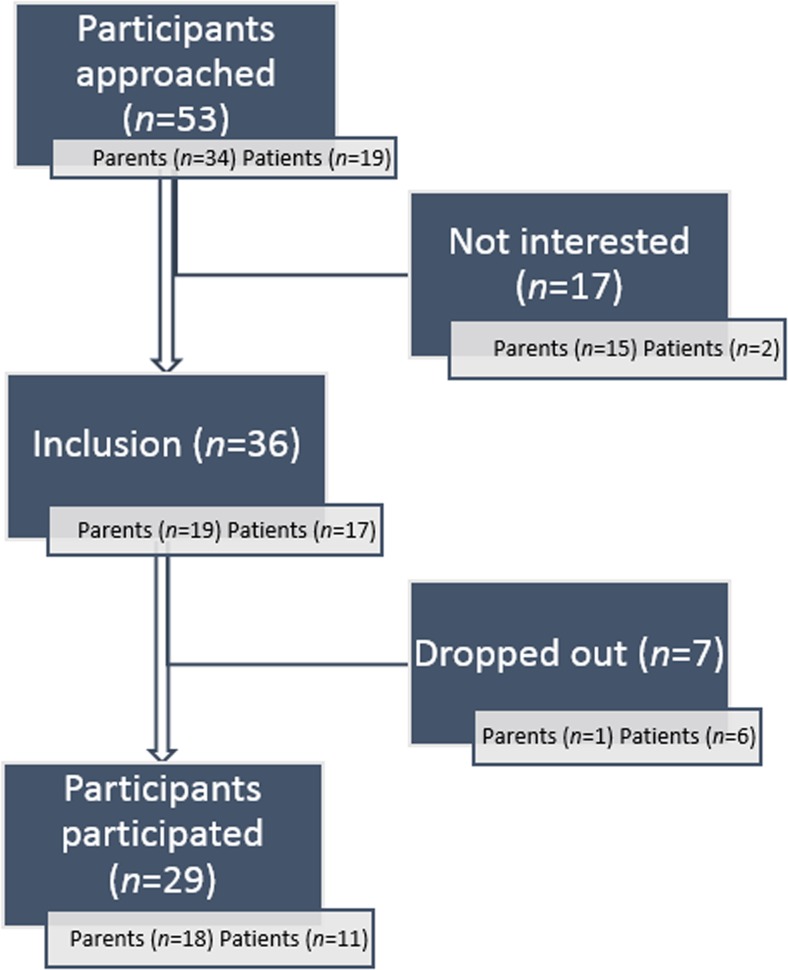
Eleven adolescent patients and 18 parents shared detailed views on various aspects of supportive care. Themes of major importance were communication between patient and physician (commitment, accessibility, proactive attitude of physicians), well-timed provision of information, and the suitability and accessibility of psychosocial care. In contrast to prioritized supportive care topics by medical professionals, somatic issues (e.g., febrile neutropenia) were infrequently addressed. Patients and parents preferred to be actively involved in decision making in selected topics, such as choice of analgesics and anti-emetics, but not in, e.g., choice of antibiotics.
Children with cancer and parents were provided a valuable insight into their views regarding supportive care and shared decision making. These results have important implications towards improving supportive care, both in selecting topics for guideline development and incorporating preferences of patients and parents herein.
儿科恶性肿瘤的强化治疗提高了生存率,但也增加了治疗相关的发病率。因此,支持性护理发挥着越来越重要的作用。在制定纳入共同决策的指南时,我们注意到,患者及其父母的需求和偏好知之甚少。因此,我们的目标是调查(1)患者和家长认为哪些支持性护理主题最重要,以及(2)他们希望在决策中扮演的角色。
本定性研究包括来自荷兰两个儿科肿瘤中心的 11 名青少年患者和 18 名家长参加的三个焦点小组(两个传统小组,一个在线小组)。数据以简单的逐字记录转录,并使用主题分析进行分析。
11 名青少年患者和 18 名家长详细分享了他们对支持性护理各个方面的看法。最重要的主题是医患之间的沟通(承诺、可及性、医生的积极态度)、及时提供信息,以及心理社会护理的适宜性和可及性。与医疗专业人员优先考虑的支持性护理主题相比,躯体问题(如发热性中性粒细胞减少症)很少被提及。患者和家长更愿意在选定的主题中积极参与决策,例如选择镇痛药和止吐药,但不愿意在抗生素的选择等方面参与决策。
本研究为儿童癌症患者及其家长提供了有关支持性护理和共同决策的宝贵意见。这些结果对于改善支持性护理具有重要意义,包括为指南制定选择主题以及纳入患者和家长的偏好。