You Jie, Zhang Huxiang, Shen Yanyan, Chen Chuanzhi, Liu Wenyue, Zheng Minghua, Van Poucke Sven, Guo Guilong, Huang Zonghai
Department of General Surgery, Zhujiang Hospital, Southern Medical University, Guangzhou.
Department of Oncological Surgery.
Onco Targets Ther. 2017 Apr 18;10:2199-2208. doi: 10.2147/OTT.S132621. eCollection 2017.
The aim of this study was to evaluate the prognostic value of both platelet to lymphocyte ratio (PLR) and metabolic syndrome (MetS) in colorectal cancer (CRC) patients.
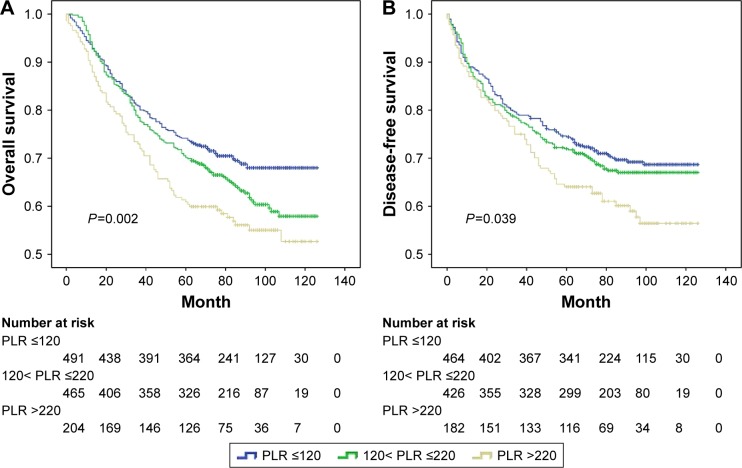
We retrospectively enrolled 1,163 CRC patients. Preoperative values of PLR were stratified into three groups according to cut-off values of 120 and 220. The Kaplan-Meier analysis was used to calculate cumulative survival rate related to PLR and MetS. Cox proportional hazard regression models were used to analyze potential risk factors and the prognosis associated with PLR and MetS in CRC patients.
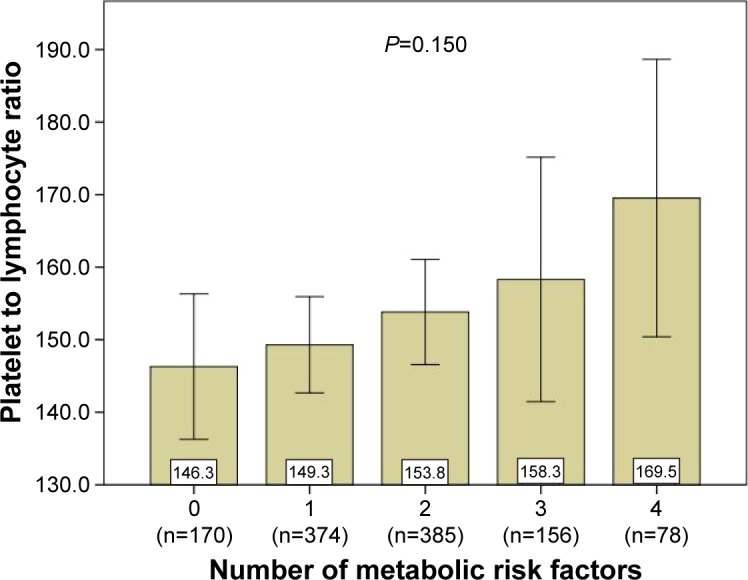
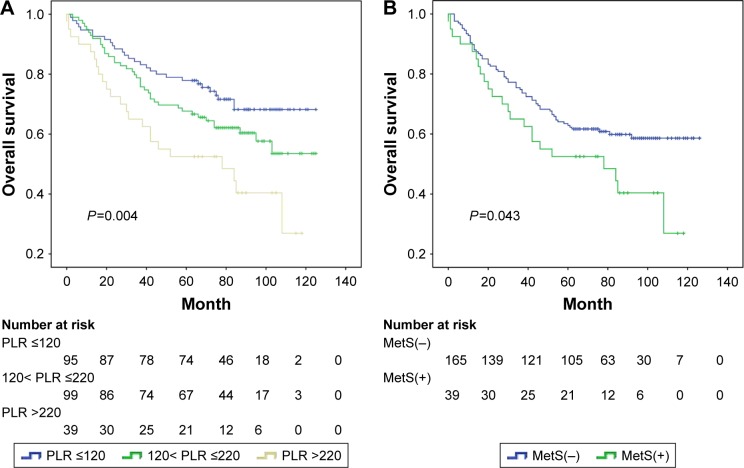
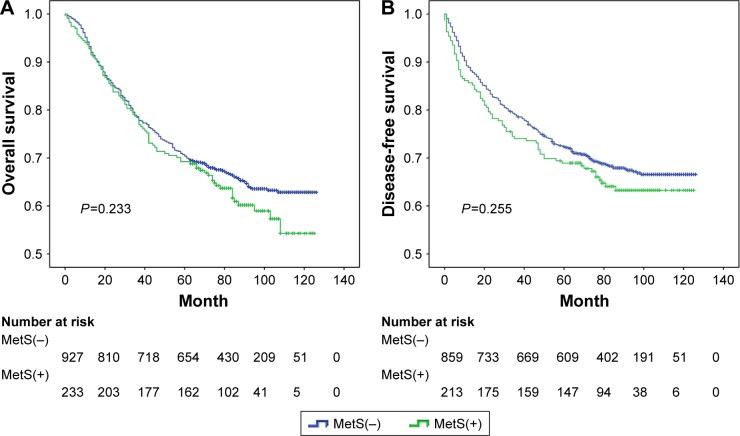
PLR was significantly higher in the MetS(+) group as compared to MetS(-) group (=0.039). An elevated PLR was significantly associated with mortality (=0.014), but not the existence of MetS (=0.235). In multivariate regression analysis, PLR was an independent risk factor for overall survival (OS) (=0.046). For the subgroup with a PLR >220, MetS was an independent predictor for both OS and disease-free survival (=0.039 and =0.047, respectively) by multivariate analysis adjusting for confounding covariates. In addition, the presence of MetS was associated with a 2-fold increased risk of mortality and tumor recurrences (hazard ratio [HR] =2.0 and HR =1.9, <0.05, respectively).
Preoperative PLR was associated with MetS in CRC patients. Testing for the combined presence of PLR and MetS could potentially improve the predictive accuracy of CRC prognosis.
本研究旨在评估血小板与淋巴细胞比值(PLR)和代谢综合征(MetS)在结直肠癌(CRC)患者中的预后价值。
我们回顾性纳入了1163例CRC患者。根据120和220的临界值将PLR的术前值分为三组。采用Kaplan-Meier分析计算与PLR和MetS相关的累积生存率。使用Cox比例风险回归模型分析CRC患者中与PLR和MetS相关的潜在风险因素及预后。
与MetS(-)组相比,MetS(+)组的PLR显著更高(P=0.039)。PLR升高与死亡率显著相关(P=0.014),但与MetS的存在无关(P=0.235)。在多因素回归分析中,PLR是总生存期(OS)的独立危险因素(P=0.046)。对于PLR>220的亚组,在多因素分析中,通过调整混杂协变量,MetS是OS和无病生存期的独立预测因素(分别为P=0.039和P=0.047)。此外,MetS的存在与死亡和肿瘤复发风险增加2倍相关(风险比[HR]=2.0和HR=1.9,P均<0.05)。
CRC患者术前PLR与MetS相关。检测PLR和MetS的联合存在可能会提高CRC预后的预测准确性。