Hu Dan, Zhang Meijin, Zhang Hejun, Xia Yan, Lin Jinxiu, Zheng Xiongwei, Peng Feng, Niu Wenquan
Department of Pathology, Fujian Cancer Hospital & Fujian Medical University Cancer Hospital, Fuzhou, China.
Department of Cardiology, First Affiliated Hospital of Fujian Medical University, Fuzhou, China.
Front Oncol. 2019 Apr 17;9:281. doi: 10.3389/fonc.2019.00281. eCollection 2019.
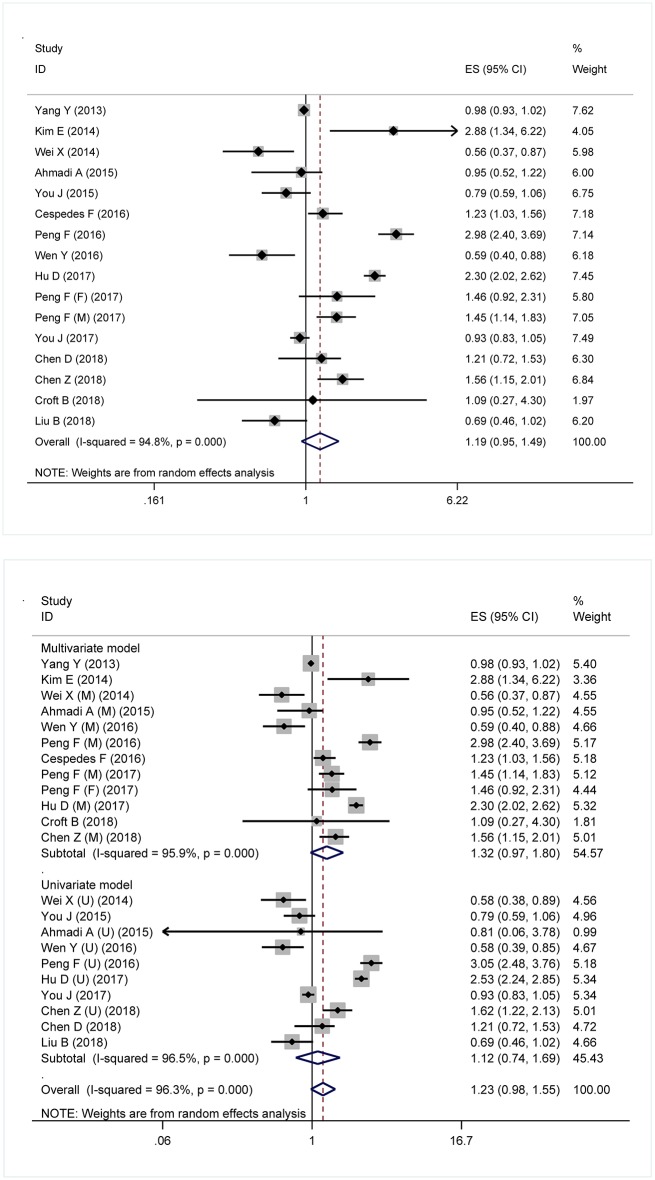
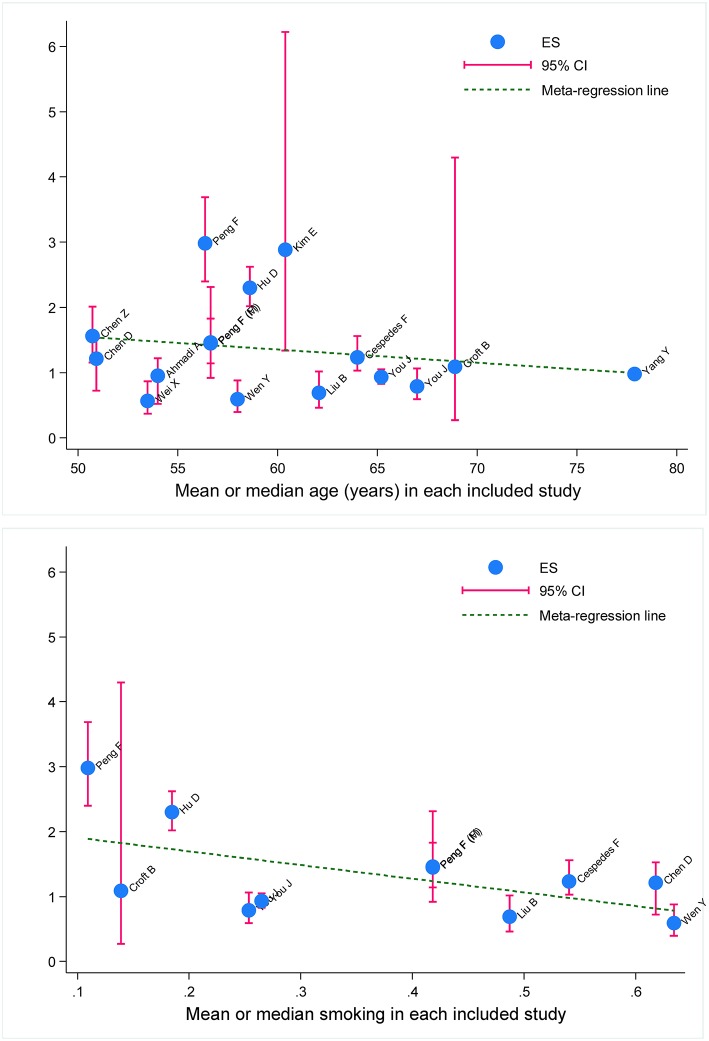
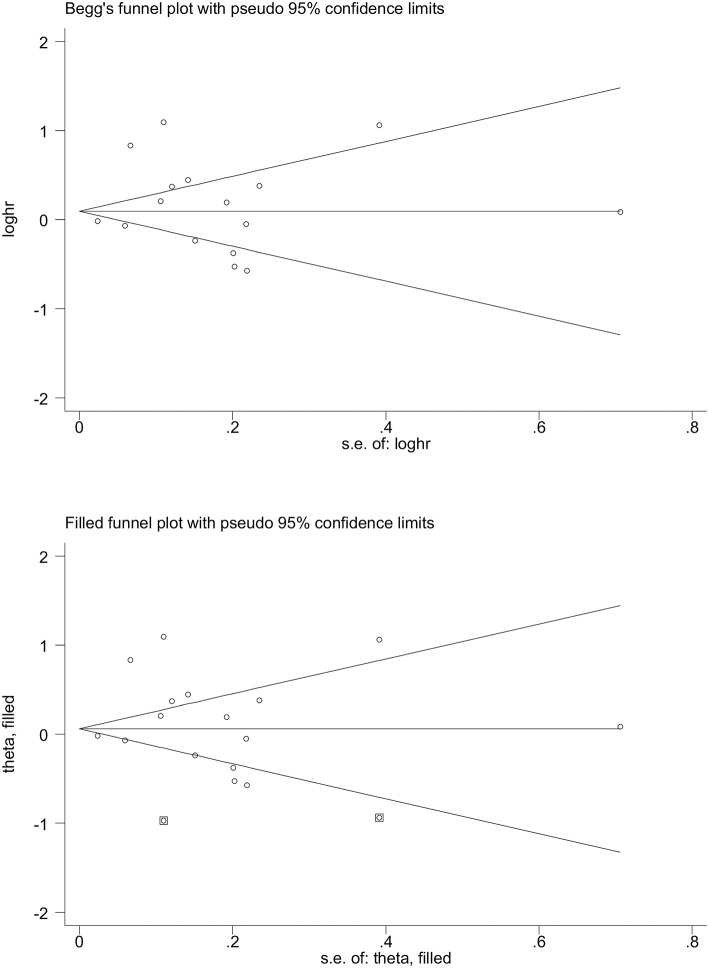
Growing evidence indicates that metabolic syndrome confers a differential risk for the development and progression of many types of cancer, especially in the digestive tract system. We here synthesized the results of published cohort studies to test whether baseline metabolic syndrome and its components can predict survival in patients with esophageal, gastric, or colorectal cancer. Literature retrieval, publication selection and data extraction were performed independently by two authors. Analyses were done using STATA software (version 14.1). A total of 15 publications involving 54,656 patients were meta-analyzed. In overall analyses, the presence of metabolic syndrome was associated with a non-significant 19% increased mortality risk for digestive tract cancer (hazard ratio [HR]: 1.19; 95% confidence interval [CI]: 1.45 to 2.520.95 to 1.49, = 0.130; : 94.8%). In stratified analyses, the association between metabolic syndrome and digestive tract cancer survival was statistically significant in prospective studies (HR: 1.64, 95% CI: 1.18 to 2.28), in studies involving postsurgical patients (HR: 1.42, 95% CI: 1.06 to 1.92), and in studies assessing cancer-specific survival (HR: 1.91, 95% CI: 1.45 to 2.52). Further meta-regression analyses indicated that age and smoking were potential sources of between-study heterogeneity (both < 0.001). The shape of the Begg's funnel plot seemed symmetrical (Begg's test = 0.945 and Egger's test = 0.305). Our findings indicate that metabolic syndrome is associated with an increased risk of postsurgical digestive tract cancer-specific mortality. Continued investigations are needed to uncover the precise molecule mechanism linking metabolic syndrome and digestive tract cancer.
越来越多的证据表明,代谢综合征会使多种类型癌症的发生和发展风险存在差异,尤其是在消化系统中。我们在此综合已发表队列研究的结果,以检验基线代谢综合征及其组成成分是否能预测食管癌、胃癌或结直肠癌患者的生存率。文献检索、出版物筛选和数据提取由两位作者独立进行。使用STATA软件(版本14.1)进行分析。对总共15篇涉及54656名患者的出版物进行了荟萃分析。在总体分析中,代谢综合征的存在与消化道癌症死亡率风险非显著增加19%相关(风险比[HR]:1.19;95%置信区间[CI]:0.95至1.49,P = 0.130;I²:94.8%)。在分层分析中,代谢综合征与消化道癌症生存率之间的关联在前瞻性研究中具有统计学意义(HR:1.64,95%CI:1.18至2.28),在涉及术后患者的研究中(HR:1.42,95%CI:1.06至1.92),以及在评估癌症特异性生存率的研究中(HR:1.91,95%CI:1.45至2.52)。进一步的荟萃回归分析表明,年龄和吸烟是研究间异质性的潜在来源(两者P均<0.001)。Begg漏斗图的形状似乎对称(Begg检验P = 0.945,Egger检验P = 0.305)。我们的研究结果表明,代谢综合征与术后消化道癌症特异性死亡风险增加相关。需要继续进行研究以揭示代谢综合征与消化道癌症之间联系的确切分子机制。