Gibbs Adrian J, Ohshima Kazusato, Yasaka Ryosuke, Mohammadi Musa, Gibbs Mark J, Jones Roger A C
Emeritus Faculty, Australian National University, Canberra, ACT 2601, Australia.
Laboratory of Plant Virology, Department of Applied Biological Sciences, Faculty of Agriculture, Saga University, 1-banchi, Honjo-machi, Saga 840-8502, Japan.
Virus Evol. 2017 Mar 2;3(1):vex002. doi: 10.1093/ve/vex002. eCollection 2017 Jan.
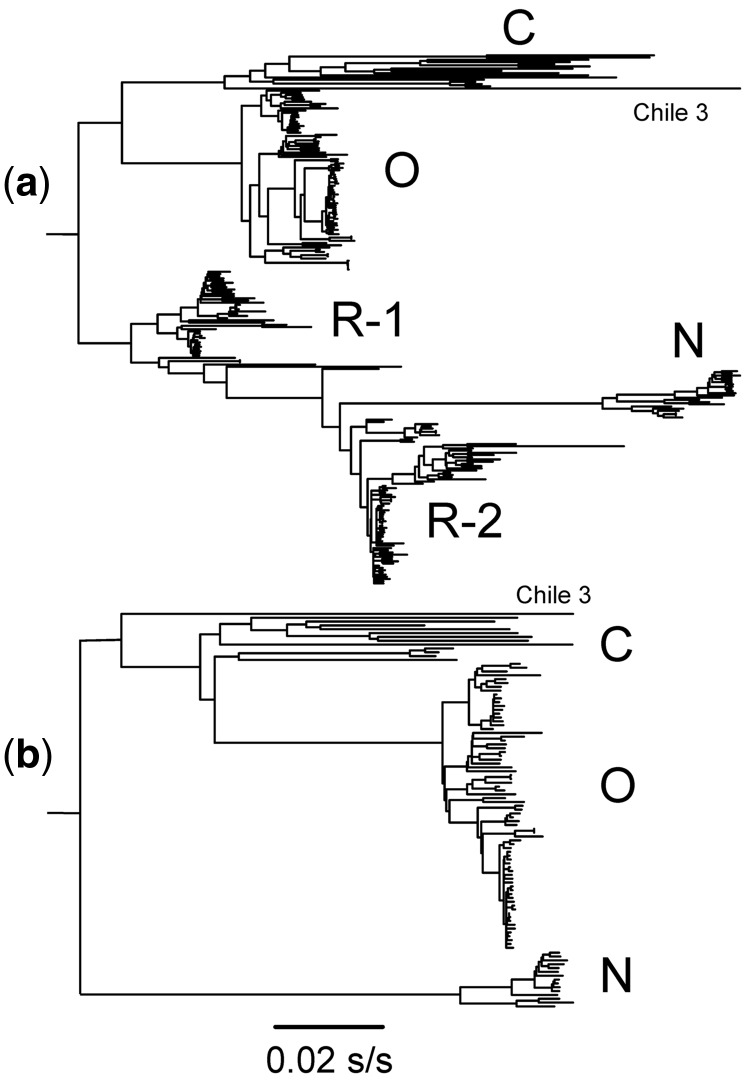
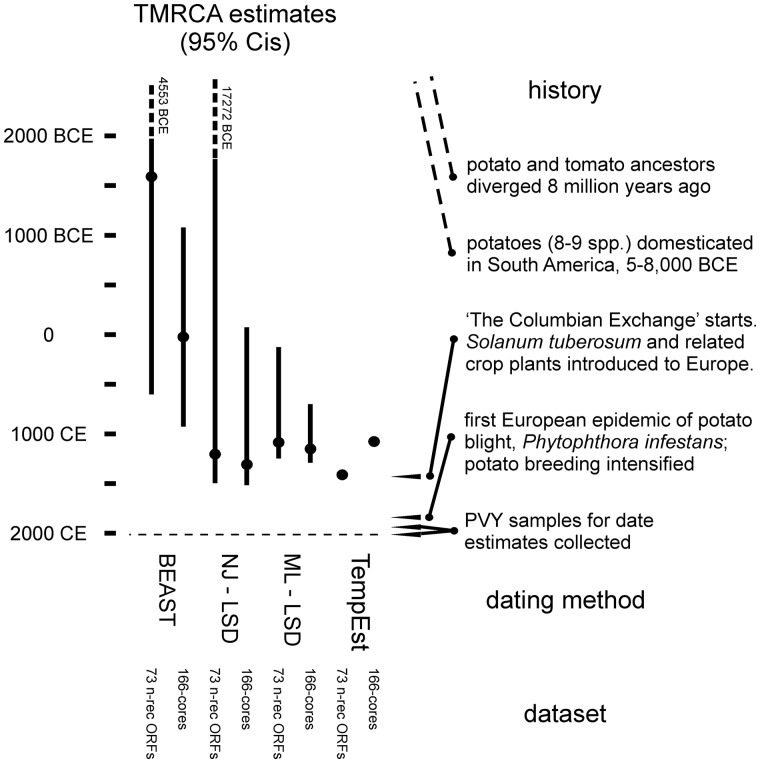
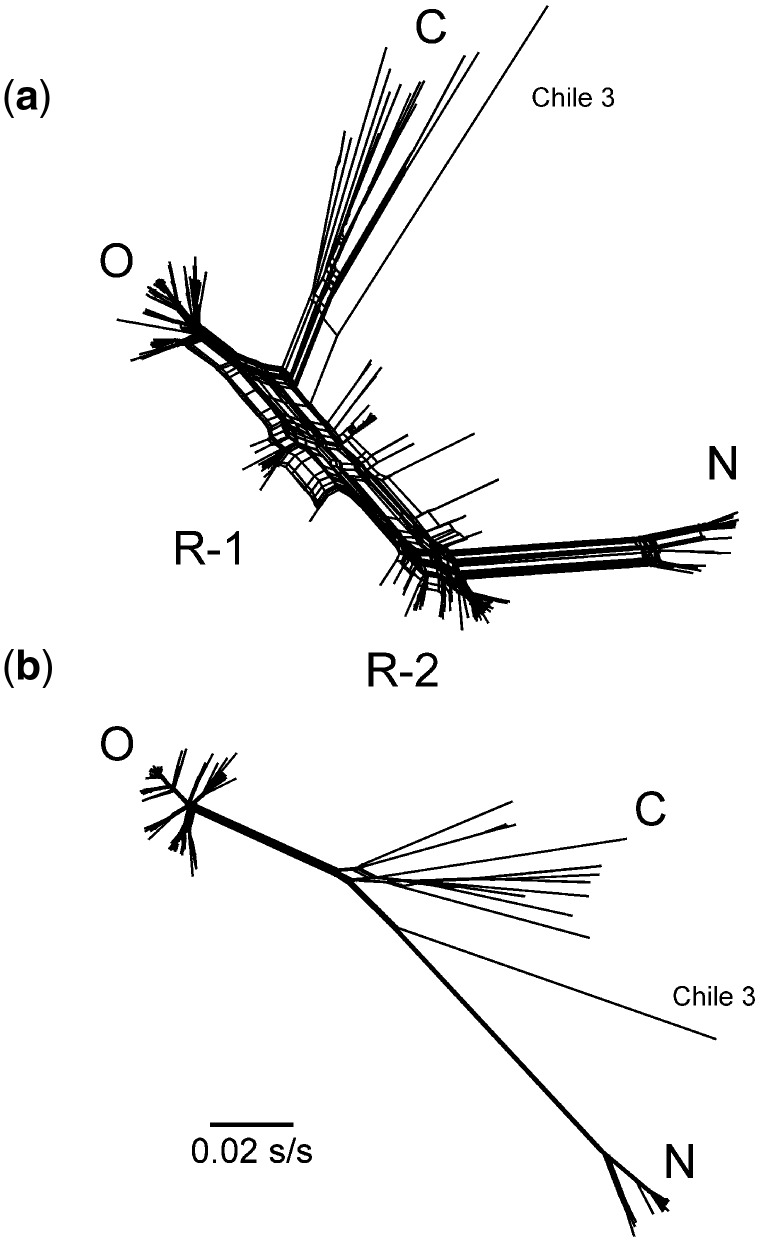
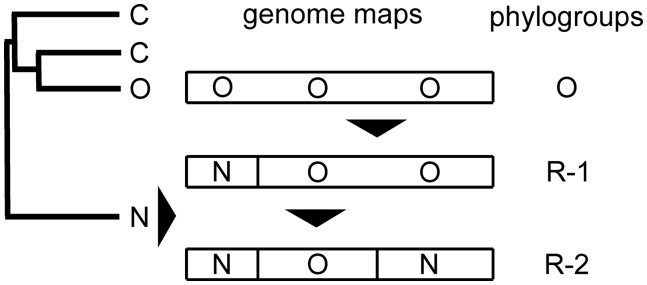
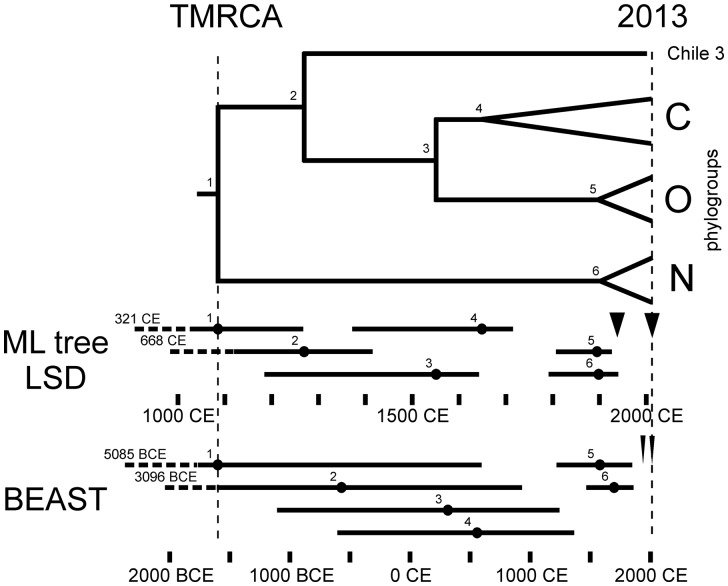
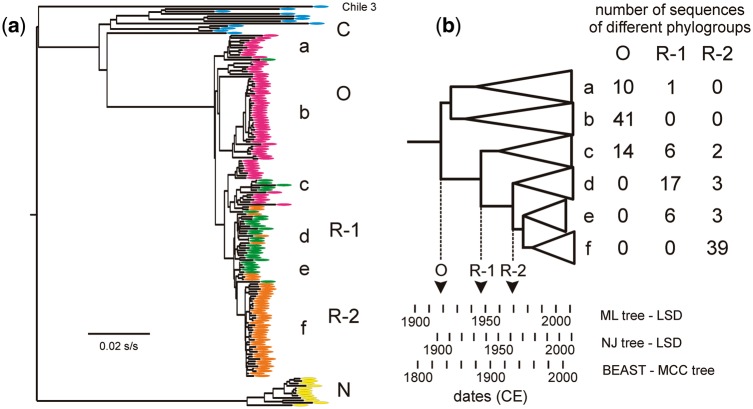
Potato virus Y (PVY) is a major pathogen of potatoes and other solanaceous crops worldwide. It is most closely related to potyviruses first or only found in the Americas, and it almost certainly originated in the Andes, where its hosts were domesticated. We have inferred the phylogeny of the published genomic sequences of 240 PVY isolates collected since 1938 worldwide, but not the Andes. All fall into five groupings, which mostly, but not exclusively, correspond with groupings already devised using biological and taxonomic data. Only 42 percent of the sequences are not recombinant, and all these fall into one or other of three phylogroups; the previously named C (common), O (ordinary), and N (necrotic) groups. There are also two other distinct groups of isolates all of which are recombinant; the R-1 isolates have N (5' terminal minor) and O (major) parents, and the R-2 isolates have R-1 (major) and N (3' terminal minor) parents. Many isolates also have additional minor intra- and inter-group recombinant genomic regions. The complex interrelationships between the genomes were resolved by progressively identifying and removing recombinants using partitioned sequences of synonymous codons. Least squared dating and BEAST analyses of two datasets of gene sequences from non-recombinant heterochronously-sampled isolates (seventy-three non-recombinant major ORFs and 166 partial ORFs) found the 95% confidence intervals of the TMRCA estimates overlap around 1,000 CE (Common Era; AD). We attempted to identify the most accurate datings by comparing the estimated phylogenetic dates with historical events in the worldwide adoption of potato and other PVY hosts as crops, but found that more evidence from gene sequences of non-potato isolates, especially from South America, was required.
马铃薯Y病毒(PVY)是全球马铃薯及其他茄科作物的主要病原体。它与最早或仅在美洲发现的马铃薯Y病毒属病毒关系最为密切,几乎可以肯定它起源于安第斯山脉,其寄主植物在那里被驯化。我们推断了自1938年以来在全球(但不包括安第斯山脉)收集的240个PVY分离株已发表基因组序列的系统发育。所有分离株分为五个组,这些组大多(但并非全部)与已根据生物学和分类学数据设计的分组相对应。只有42%的序列不是重组的,所有这些序列都属于三个系统发育组中的一个或另一个;即先前命名的C(常见)、O(普通)和N(坏死)组。还有另外两个不同的分离株组,所有这些分离株都是重组的;R-1分离株有N(5'末端次要)和O(主要)亲本,R-2分离株有R-1(主要)和N(3'末端次要)亲本。许多分离株还具有额外的组内和组间次要重组基因组区域。通过使用同义密码子的分区序列逐步识别和去除重组体,解决了基因组之间复杂的相互关系。对来自非重组异时采样分离株的两个基因序列数据集(73个非重组主要开放阅读框和166个部分开放阅读框)进行的最小二乘年代测定和BEAST分析发现,TMRCA估计值的95%置信区间在公元1000年左右重叠。我们试图通过将估计的系统发育日期与全球马铃薯和其他PVY寄主作为作物的采用历史事件进行比较来确定最准确的年代,但发现需要更多来自非马铃薯分离株基因序列的证据,特别是来自南美洲的证据。